Last updated November 18, 2026








Free written scope consultation - allowances, timeline, and change-order rules on paper before a single trade is scheduled
Bathroom Remodeling Maintenance Schedule: What to Do and When
The average bathroom exhaust fan fails within eight years when it is never cleaned, cutting a rated 15-year service life nearly in half and dragging moisture damage along behind it. Most post-remodel maintenance guides do not mention the fan at all. They talk about wiping down tile and resealing grout and stop there. That gap is where a ten-thousand-dollar bathroom starts to age ahead of schedule in Enterprise, NV, where the dry desert air changes what fails first. What follows is a dated maintenance log for the first five years after a remodel: what to do at 90 days, six months, twelve months, and beyond, which tasks you can handle yourself, which ones disturb a waterproofing membrane, and how to document all of it so it holds up at resale.
Quick Answer
A bathroom remodel should be maintained on a dated schedule: seal grout at 90 days after install, inspect and touch up caulk lines at 6 months, test and clean the exhaust fan at 12 months, then repeat the cycle yearly while checking waterproofing and fixtures seasonally. The tasks you perform yourself (sealing, caulking, fan cleaning) preserve material warranties; anything that touches the tile membrane, shower pan, or supply lines requires a licensed contractor. Keep dated photos and receipts for every task.
Styles & brands we work with
- Kitchen remodeling
- Bathroom remodeling
- Home additions & ADU
- Roofing
- Windows & doors
- Driveway & pavers
- Fence
Table of Contents
- The First-Year Maintenance Calendar: Month by Month
- Exhaust Fan CFM: The Benchmark Most Homeowners Skip
- Which Brands Require Maintenance to Honor Their Warranties
- The $12 Tube vs. the Task That Ruins a Membrane
- The Five-Year Rolling Calendar for Enterprise’s Climate
- How to Document Maintenance for Resale
- Common Mistakes to Avoid
- When to Call a Professional
The First-Year Maintenance Calendar: Month by Month
The first year after a bathroom remodel is the most consequential for long-term durability, because that is when fresh materials cure, settle, and reveal how they handle real use. New grout and caulk shrink slightly as they cure, so the first inspection points matter more than the ones that follow. Here is the schedule we recommend to every homeowner we finish a bathroom for in Enterprise.
- Days 1-30 – Cure and observe. Do not seal new grout yet; most cementitious grout needs to cure fully first, and epoxy grout never needs sealing at all. Keep the bathroom well ventilated after every shower. Note any caulk that pulls away at the tub or shower base.
- Day 90 – Seal the grout. Apply a penetrating sealer to cementitious grout on floors and shower walls. This is the single most important first-year task, especially on the shower floor where water pools.
- Month 6 – Inspect every caulk line. Check the joints at the tub, shower pan, sink, and backsplash. Caulk flexes with temperature swings and can crack where two materials meet. Remove failing caulk and reapply a mold-resistant silicone.
- Month 12 – Clean and test the exhaust fan. Pull the grille, vacuum the blades and housing, and confirm airflow. Test it against the CFM benchmarks below.
- Month 12 – Re-seal high-traffic grout. Shower floors and entry tile wear the sealer fastest. Reapply where water beads less.
Write the dates down. A date on a calendar is what separates a maintained bathroom from a neglected one, and it is the record a buyer’s inspector wants to see.
Exhaust Fan CFM: The Benchmark Most Homeowners Skip
Exhaust fan capacity is measured in CFM, or cubic feet per minute, and the benchmark depends on your bathroom’s size. A fan that is undersized for the room, or clogged with dust, leaves moisture behind to condense on walls, ceilings, and grout. In Enterprise’s low-humidity climate this rarely shows up as the visible mold you would see in a humid region, which is exactly why it goes unnoticed until paint peels or drywall softens. Use these benchmarks as your annual test target:
- Under 50 square feet: 50 CFM minimum.
- 50 to 100 square feet: 1 CFM per square foot (a 75-square-foot bath needs at least 75 CFM).
- Over 100 square feet: add 50 CFM per toilet, shower, or tub beyond the first fixture.
To test yours, hold a tissue against the grille on high speed; it should pull flat and stay. If it struggles, the fan is either clogged or undersized. A dirty fan can lose half its rated airflow, and a fan that never gets cleaned fails years early. Cleaning it is a fifteen-minute job with a vacuum and a damp cloth. Replacing or upsizing it is a licensed electrical task.
Which Brands Require Maintenance to Honor Their Warranties
Manufacturer warranties on bathroom products are conditional, and the conditions usually include maintenance. This is the part most homeowners learn only after a claim is denied. The brands you will find in a Rowan bathroom – Kohler and Toto fixtures, Schluter waterproofing systems, and American Standard – all expect the installer and homeowner to follow published care instructions. What they ask for in a claim:
- Tile and grout (any brand): proof that a penetrating sealer was applied and reapplied per schedule, plus receipts for the sealer.
- Kohler and Toto fixtures: evidence the finish was cleaned with non-abrasive products and that the installation matched the spec sheet.
- Schluter membrane systems: documentation of the correct installation and confirmation that no penetrating fastener or chemical was introduced afterward.
- American Standard: proof of purchase and a record of normal use and cleaning, not a maintenance log per se, but dated photos help.
Keep the product manuals, the sealer receipts, and a dated photo of each task. A warranty is only as good as the paper trail behind it. When we install these systems in Enterprise, the written warranty we hand over is backed by that same discipline – and our 365-Day Done Right Promise covers the first year regardless.
The $12 Tube vs. the Task That Ruins a Membrane
Some maintenance is a homeowner’s job and always will be. Other jobs look small but can void the waterproofing that keeps your remodel intact. Knowing the line between them is what protects your investment. Reread that sentence – it is the whole section in miniature, because the difference is not difficulty, it is consequence.
Safe to do yourself: sealing grout with a penetrating sealer, reapplying caulk along a tub or backsplash with a $12 tube of GE Silicone II, cleaning the exhaust fan grille, wiping fixtures with non-abrasive cleaner, and touching up paint. These tasks either sit on top of the finished surface or involve wear items.
Call a licensed contractor: anything that requires removing a fixture or opening a wall. That includes re-grouting a shower floor (which can break the seal at the drain), replacing a shower valve or cartridge, resetting a loose tile, or addressing water that has gotten behind the tile. The Schluter and similar membrane systems behind your tile are the actual waterproof layer; a penetrating repair can compromise them. Once water reaches a membrane breach, the damage spreads into the substrate and the repair grows.
Waterproofing and the framing behind it are where our trades overlap, which is why our crews treat every bathroom as a system rather than a set of surfaces. If you are weighing a larger change, our Rowan Construction Group Enterprise home page shows how the seven trades fit together.
The Five-Year Rolling Calendar for Enterprise’s Climate
Enterprise sits in a desert climate with low humidity and wide temperature swings. That changes what you look for. In humid regions, grout problems usually mean mold. In Enterprise, grout more often dry-cracks because it dries too fast and loses its flexibility, so the failure you spot is a hairline crack, not a black stain. Here is a five-year rolling format that accounts for it:
- Every spring: inspect grout for dry-cracking and re-seal shower floors and walls before the dry season sets in. Check caulk at the tub and shower pan.
- Every fall: clean and test the exhaust fan before the colder months, when windows stay closed and indoor moisture has nowhere to go. Check the exterior vent flap for debris.
- Every two years: inspect the shower drain seal and the caulk line at the pan. Have the supply lines and shutoff valves checked – the age of a valve is a common cause of slow leaks in a bathroom.
- Every three to five years: re-grout or have grout professionally restored where it has thinned. Consider having the fan motor replaced if it is struggling past its cleaning schedule.
This seasonal rhythm matters more than any single task. A bathroom maintained on this schedule in Enterprise will outlast one that gets the same products with no plan at all. The same principle of planned, dated upkeep applies to other upgrades – see how it works on the exterior with Driveway & Pavers in Enterprise.
How to Document Maintenance for Resale
When you sell a home, a buyer’s inspector will ask how the bathroom has been maintained. The homeowner who answers with a dated log and photos removes doubt before it forms. Here is how to build that record in a way that supports resale:
- Keep a simple log sheet. One line per task: date, what was done, product used. A paper notebook or a shared document is enough.
- Photograph each task. A dated photo of freshly sealed grout or a cleaned fan housing is proof. Take before and after shots.
- Keep product receipts. Sealer, caulk, and any replacement parts. Receipts prove the work was done and show what was used.
- File the installation documentation. Warranty cards, spec sheets, and the written scope from the remodel. They answer the buyer’s question about materials.
- Note professional visits. Any contractor task, with the date and what was found.
A tidy file answers the question the buyer is about to ask and quietly signals that the home has been cared for. We include a documented photo record on every visit as standard, not an upgrade – the same habit, applied to a professional’s work. If you are planning a sale and want the records in order, our Home Additions & ADU in Enterprise page shows how that documentation carries through larger projects.
Common Mistakes to Avoid
- Skipping the exhaust fan entirely. It is the most-often-missed item on this list and the one that shortens a bathroom’s life fastest. If you clean nothing else on schedule, clean the fan.
- Sealing grout too soon. Sealing within days of install traps moisture in grout that has not cured. Wait the 90 days.
- Using the wrong caulk. A basic painter’s caulk will fail in a wet area within a season. Use mold-resistant silicone designed for bathrooms.
- Re-grouting the shower floor yourself. This can break the seal at the drain and let water past the membrane – a small job with a large repair bill.
- Relying on abrasive cleaners. Powdered or acidic cleaners dull Kohler and Toto finishes and can void the warranty. Use non-abrasive products.
- Keeping no records. Without a log and photos, a legitimate warranty claim can be denied and a resale inspection question goes unanswered.
- Assuming low humidity means no moisture problem. In Enterprise, water still gets behind tile; it just cracks grout instead of growing mold, which makes it easier to miss.
When to Call a Professional
Call a licensed contractor when the task touches waterproofing, plumbing, or electrical inside the wall: a shower valve that will not hold temperature, water staining on the ceiling below the bathroom, a loose or hollow-sounding tile, a membrane that may have been breached, or an exhaust fan that needs replacing or upsizing. Those are the jobs where a small saving up front turns into a large repair later. Caulk and grout sealer are yours to handle; the systems behind them are not.
Rowan Construction Group Enterprise offers free estimates in Enterprise and a free second opinion on any written estimate you already have – bring a competitor’s quote and we will review it line by line at no charge. Because the price is written before any work starts, you know the number before anyone picks up a tool. Call (833) 630-4077 to schedule your free estimate. Our technicians have up to 19 years of experience, and we are background-checked, uniformed, and answer the phone with a live person around the clock.
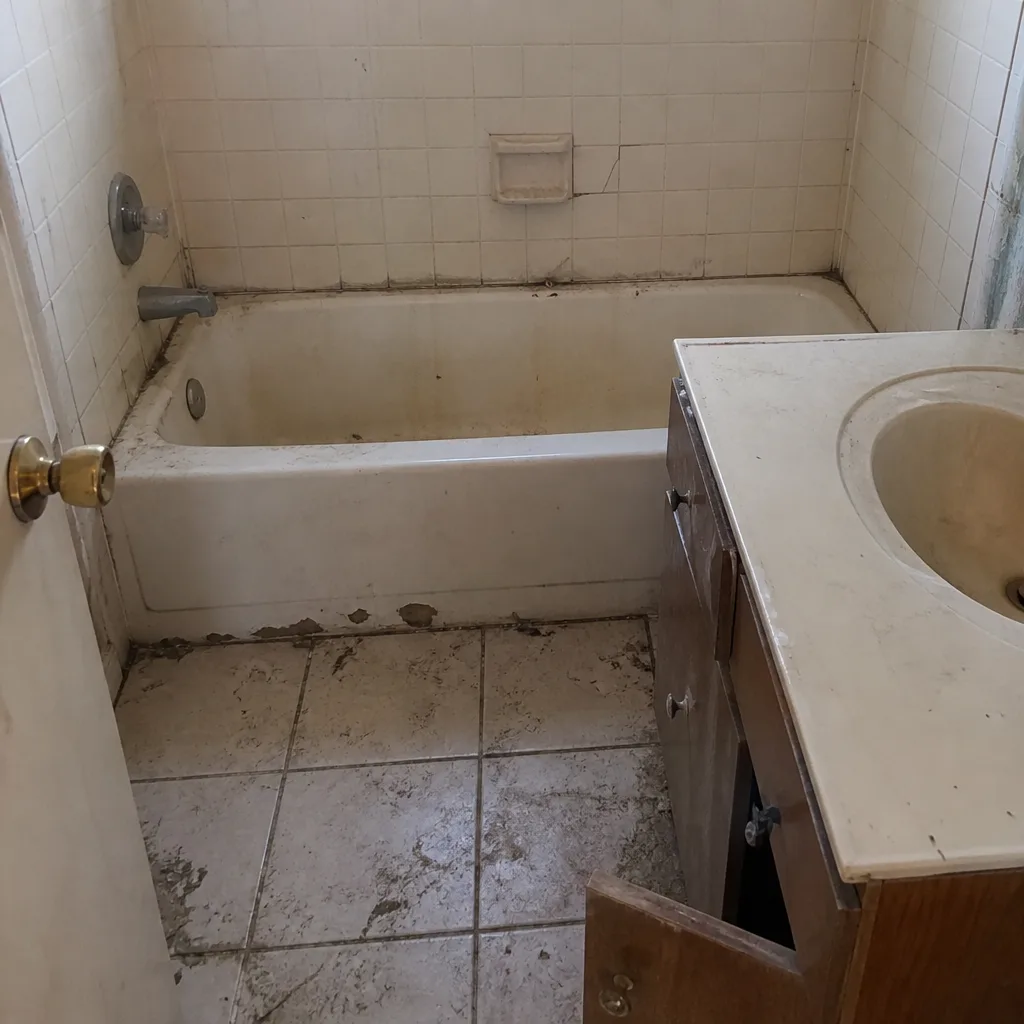
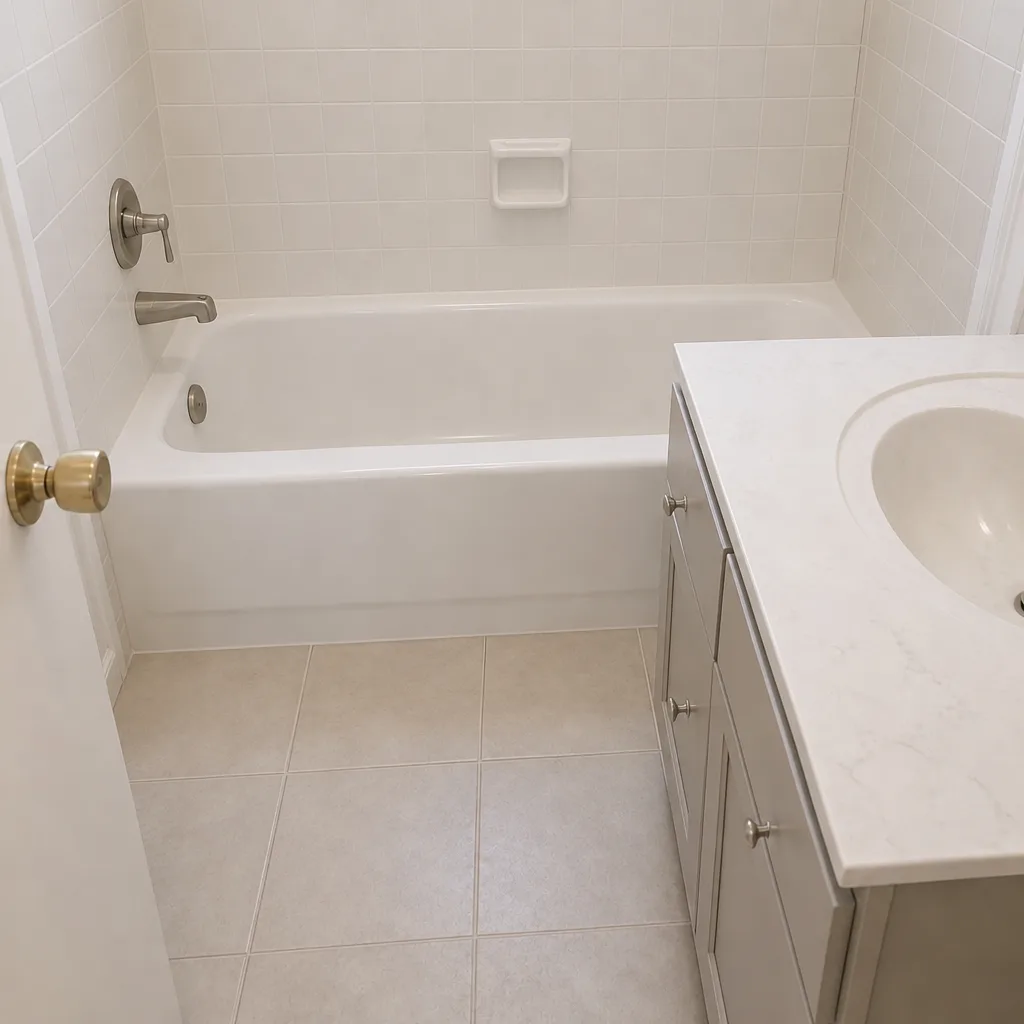
See the difference
 Before
 After
 Before
 After
 Before
 After
Frequently Asked Questions
Seal cementitious grout 90 days after installation, then re-seal shower floors and high-traffic areas every 12 months, or whenever water stops beading on the surface. In Enterprise’s dry climate, grout dries fast and can crack, so check for hairline cracks at each re-seal. Call (833) 630-4077 if you are unsure whether your grout is cementitious or epoxy – epoxy grout never needs sealing.
A cleaned exhaust fan can reach its rated 15-year lifespan; one that is never cleaned often fails within eight years. The difference is dust on the blades and housing cutting airflow. Clean and test it yearly against the CFM benchmarks for your bathroom size. If it is undersized, replacing it is a licensed electrical job.
Skipping scheduled maintenance can void manufacturer warranties on tile, grout, and fixtures, and it can complicate a workmanship claim. Kohler, Toto, American Standard, and Schluter all expect published care instructions to be followed. Keep dated photos and receipts for your own tasks – that record is what honors or protects a claim. Call (833) 630-4077 for the written warranty terms we provide in Enterprise.
No – a cracked shower tile usually means moisture has reached the waterproofing membrane, and a surface patch will not fix what is behind it. Resetting the tile can also break the drain seal. This is a licensed contractor task. Call (833) 630-4077 for a free estimate in Enterprise before the damage spreads into the substrate.
Wipe quartz and stone with a non-abrasive cleaner, avoid acidic products, and check the caulk line where the countertop meets the backsplash at least twice a year. Most brands only ask for normal cleaning; the record of that cleaning is what helps a claim. If your countertop is Cambria or Caesarstone, keep the care guide that came with it.
Match the CFM rating to your square footage: 50 CFM for baths under 50 square feet, 1 CFM per square foot for 50 to 100 square feet, and add 50 CFM per extra fixture above 100 square feet. A tissue test gives a quick read – if it cannot pull the tissue flat, it is clogged or undersized. Call (833) 630-4077 for an assessment.
The Bottom Line
A bathroom remodel’s lifespan depends less on the material and more on whether you follow a dated maintenance log in the first five years. Seal at 90 days, inspect caulk at six months, clean and test the exhaust fan at twelve, then repeat yearly. Document every task with a date, a photo, and a receipt. Know the line between the $12 tube of caulk you can handle and the membrane repair that needs a licensed contractor. In Enterprise’s dry climate, look for grout that cracks rather than molds. Do the small things on schedule and the big repairs stay away.
Rowan Construction Group Enterprise delivers a written price before any work starts, a background-checked and uniformed crew, and a documented photo record on every visit. The 365-Day Done Right Promise covers the first year – if it is not done right, we make it right. To schedule a free estimate or a free second opinion on any written estimate, call (833) 630-4077. You can also see how our work carries to the outside of the home on our Fence Installation in Enterprise page.
Written by the team at Rowan Construction Group Enterprise.