
5 Mistakes to Avoid With Driveway & Pavers
Four of the five most expensive paver mistakes we see in Enterprise are made on the day the contract gets signed, not on the day the crew shows up. The homeowner chooses a contractor before reading a written scope, accepts a quote with no base spec, skips the permit, picks a paver by color instead of load rating, and never gets a change order policy in writing. By the time the first pallet lands on the driveway, the expensive part is already done. Here are the five, in the order they tend to bite.
If you’d rather not sort through this alone, call (833) 630-4077 and we’ll walk your written quote line by line at no charge.
Mistake 1: Accepting a Quote With No Base Specification
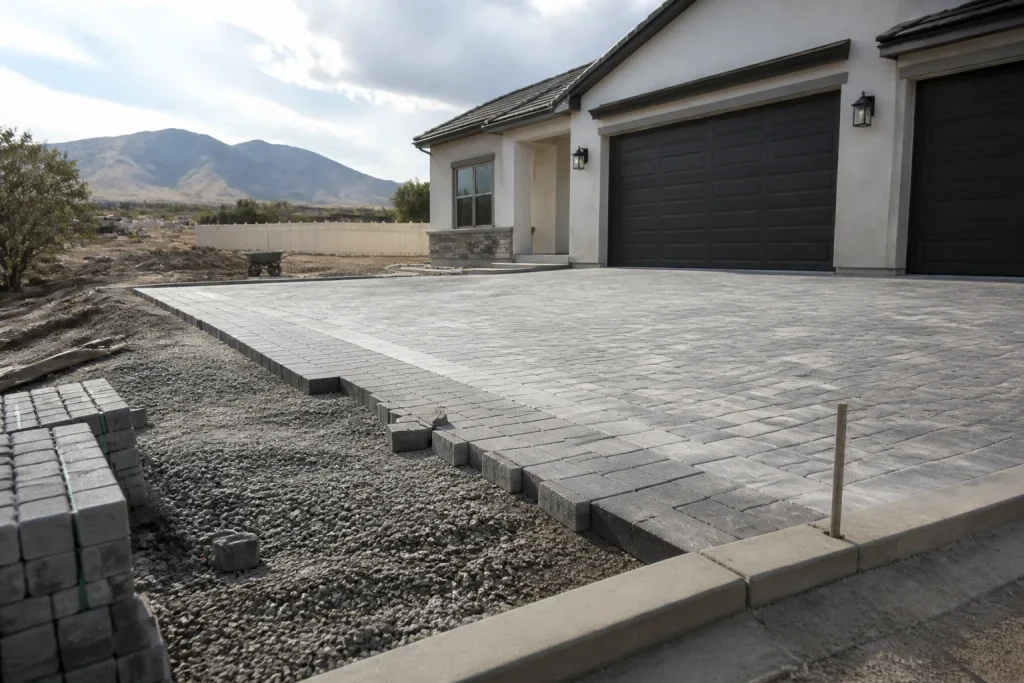
The base is the compacted layer of aggregate under the pavers, and it is where most paver driveways in Enterprise actually fail. A quote that lists “standard base preparation” as a line item tells you nothing you can enforce. A complete base specification names three things: the material, the depth, and the compaction standard.
- Material: Class II aggregate or crushed stone with a stated gradation, not “gravel.”
- Depth: Typically 4 to 6 inches compacted for a residential driveway, more where the subgrade is soft.
- Compaction: A stated standard, such as compacted in lifts to 95% relative density, verified with a plate compactor and not a hand tamper.
Why does this matter so much in Enterprise? The soil here runs heavy in clay and caliche, and both drain poorly when water gets trapped. A base that isn’t excavated to the right depth and compacted in lifts will pump and settle within a couple of seasons, and the pavers on top will show it as ruts and rocking edges. When we’re reviewing a competitor’s written estimate for a homeowner, this is the first line we look for. If it says “standard base prep,” we ask what that means in inches and in aggregate type. A contractor who can answer without hesitating is a contractor who planned the work.
The written price should be a flat number with a written scope, not “call for a quote.” A scope without a base spec is a placeholder, and placeholders get interpreted in the contractor’s favor, not yours.
Mistake 2: Choosing Paver Thickness by Look Rather Than Load Rating
A paver’s thickness is a structural decision, not a design one. The two common residential sizes are 60mm (about 2 3/8 inches) and 80mm (about 3 1/8 inches). Sixty-millimeter pavers are built for patios and walkways where foot traffic is the load. Eighty-millimeter pavers are built for driveways where a vehicle sits, turns, and parks.
The cost difference is modest: roughly $0.80 to $1.20 per square foot, depending on the line. On a two-car driveway of about 500 square feet, that’s a few hundred dollars to step up to 80mm. The cost of replacing a 60mm driveway that should have been 80mm is the full square-footage price again, plus demolition of the base, plus a season of disruption. That’s the trade, and it is not close.
If you’re comparing paver lines, brands like Belgard and Techo-Bloc both publish the load ratings and thicknesses for every product. Bring those spec sheets to the quote conversation. If the contractor suggests 60mm for a driveway because “it’s what everyone uses,” ask what the manufacturer’s rating says for vehicular traffic. The spec sheet settles it.
How to check a paver’s thickness claim
Measure a pallet sample with a tape, in front of the contractor. Sixty millimeters reads just under 2.4 inches; eighty reads just over 3.1. A verbal promise of 80mm and a pallet of 60mm is not an unusual discrepancy, and a tape measure catches it before delivery.
Mistake 3: Not Pulling the Permit
Which Enterprise paver projects need a Clark County permit? Generally, any work in the public right-of-way (an approach, a widened driveway apron, a curb cut) needs one, and structural changes to drainage or grade can trigger one. Interior lot hardscaping often doesn’t, but “often” isn’t the same as “never,” and it depends on the scope. The honest answer is that you confirm it with Clark County before work starts, not after.
Here’s why this one matters so much more than people expect. If unpermitted work is later discovered, an insurance claim tied to that work can be denied. A paver driveway that fails and causes water to pool against the foundation is exactly the kind of issue an adjuster will investigate. An unpermitted project gives the insurer a reason to walk away, and that reason sits on the homeowner’s side of the ledger, not the contractor’s.
- Ask for the permit number in writing before the crew arrives.
- Confirm the permit status directly with Clark County’s building department; the contractor shouldn’t be the only source.
- If no permit is required, ask for that in writing too, so there’s a record of why.
Under Clause 1 of the Haven Standard, a written price and scope come before any work starts. The permit check and the written scope belong on the same page.
Mistake 4: No Written Change Order Policy
This is the one that quietly eats budgets. A paver project runs into changes: a hidden layer of old concrete, a drainage issue under the surface, a homeowner who decides to extend the driveway by fifteen feet mid-project. The question is not whether changes happen. It’s what the change costs when it does.
Any solid paver contract should state the change order policy in plain language. The language we recommend accepting goes roughly like this: “Any change to the scope, materials, or schedule will be documented in a written change order specifying the added cost and time. No change proceeds until the change order is signed by the homeowner.”
If that language is missing, write it in or move on. And understand what verbal approval means legally in Nevada: essentially nothing. A contractor who says “we’ll work it out later” after a handshake on a change is asking you to trust a memory over a document, and memories get expensive at the end of a job. Rowan’s founding discipline is that no work proceeds on a change until the change order is signed. It’s the reason projects finish within a few percent of the agreed number.
Mistake 5: Skipping the Joint Sand and Sealer
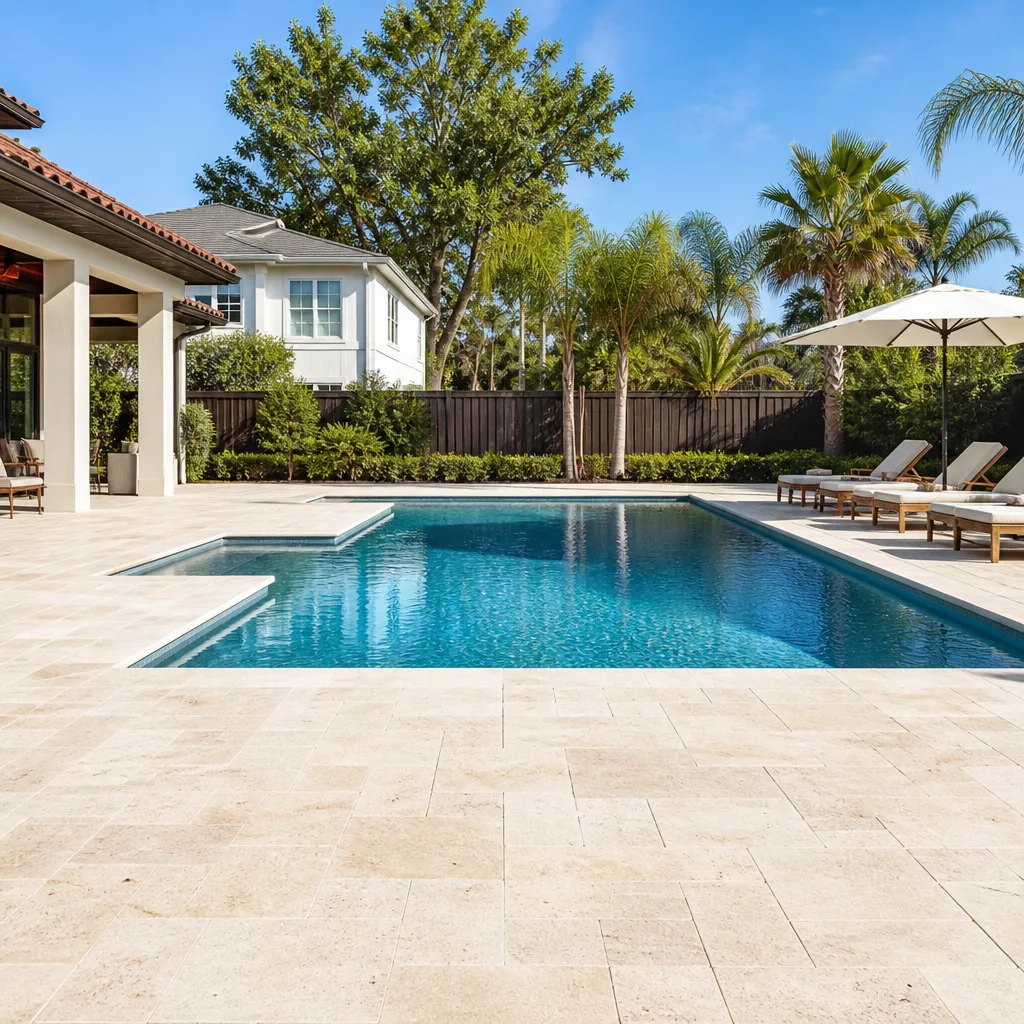
Polymeric sand fills the joints between pavers and locks them in place; a penetrating sealer goes into the surface and slows water absorption. Neither is an upsell in Enterprise. Both are functional requirements, because the climate here swings between dry heat and monsoon rain, and pavers that lose their joint sand will shift, rock, and lose their edge restraint in a season or two.
In our experience, homeowners regularly try to retrofit both steps after the fact, and it costs more than doing it during the install. The pavers have to be cleaned and dried, old sand has to be worked out, and the polymeric sand takes a specific moisture condition to set. It’s not a hard job, but it’s a slow one, and a driveway that has been driven on for a year has more embedded grit and weeds in the joints than a fresh install.
Ask the contractor which brand of polymeric sand and which sealer they use, in writing. If they can’t name it, that’s a sign the step is coming out of the scope to save a number, and you’ll pay for it later when the joints fail. If you’re weighing pavers against a concrete pour, our Driveway & Pavers in Enterprise page breaks down the real differences.
When to call a pro
If you’re at the point of reviewing a written paver quote and something feels off, the base spec is vague, the thickness doesn’t match a driveway, or the change order language is missing, that’s the moment to bring in a second set of eyes. We offer a free second opinion on any written estimate, and we’ll read it line by line without trying to sell you on the job. If the quote is solid, we’ll tell you.
The Bottom Line
Every one of these five mistakes happens before a paver is laid: a quote without a base spec, a thickness chosen by appearance, a permit passed over, no written change order policy, and polymer sand and sealer treated as optional. The fix to all five is the same: a written price, a written scope, and a written warranty, all in hand before anyone picks up a tool.
Rowan Construction Group Enterprise works across seven trades, and driveway and pavers is one we take as seriously as a kitchen or an addition. Every project gets a flat written price with a written scope and a written warranty before work starts, and because of the 365-Day Done Right Promise, if something isn’t right a year later, we make it right. You get the same treatment on our Fence Installation in Enterprise work and our Home Additions & ADU in Enterprise projects. If you’re ready to price a driveway, our Rowan Construction Group Enterprise home page is the place to start.
If you’re in Enterprise and need help, Rowan Construction Group Enterprise offers free estimates. Call (833) 630-4077, and we’ll put the number on paper before anything else happens.
Frequently Asked Questions
Most residential paver driveways in Enterprise land in the range of $12 to $22 per square foot installed, depending on thickness, base conditions, and paver line. A 500-square-foot driveway typically runs $6,000 to $11,000 for a complete installation with base, pavers, polymeric sand, and sealer. Call (833) 630-4077 for an exact quote; estimates are free and we’ll bring the written number.
It depends on the scope. Work in the public right-of-way or that changes drainage or grade generally requires a permit from Clark County. Interior lot hardscaping often does not. Confirm before work starts, and get the answer in writing either way so there’s a documented record. If your contractor won’t help you check, call us and we’ll walk through it with you.
80mm for a driveway, in almost every residential case. Sixty-millimeter pavers are rated for foot traffic and patios. The cost difference is roughly $0.80 to $1.20 per square foot, which is small against the cost of replacing a cracked 60mm driveway. Ask to see the spec sheet and measure a sample before you sign.
A properly installed paver driveway with a correct base, 80mm pavers, polymeric sand, and a penetrating sealer typically lasts 25 to 30 years or more. Where they fail, it’s almost always the base or the joint sand, not the paver itself. Reapply sealer every two to three years to keep the surface protected against the desert sun and monsoon cycles. Call (833) 630-4077 if you’d like a written inspection of an existing driveway.
Related Services in Enterprise
If you’re planning a full exterior scope, we also handle Fence Installation in Enterprise and more on the Rowan Construction Group Enterprise home page.
Written by the team at Rowan Construction Group Enterprise.
What happens when you call
- 1
A real person answersNo phone trees – you reach a local pro.
- 2
You get an upfront price rangeHonest numbers before anyone is dispatched.
- 3
A background-checked tech heads outLicensed & insured, dispatched right away.
- 4
You approve before work beginsNothing starts until you say go.
Need Construction Help?
Call Rowan Construction Group Enterprise - licensed & insured, here with fast after-hours help in Enterprise.
(833) 630-4077