
5 Mistakes to Avoid With Fence Installation
The most common fence installation mistake in Enterprise isn’t a construction error at all. It’s a contract that never specifies post depth, which lets a crew set 24-inch posts in soil that needs 36, and you find out the fence fails during the first strong wind out of the desert. Four of the five costliest mistakes on this list happen before a single post goes in the ground, which means they’re entirely preventable if you know what to read for in a quote document. Here’s what each one costs, in dollars, and how to catch it before you sign.
If you’d rather not referee a contractor through all of this yourself, call (833) 630-4077 and we’ll walk you through what a proper written quote should contain.
Key Takeaways
- Every fence quote should specify post embedment depth in inches, matched to fence height and local wind load.
- A property survey runs $300 to $500. A boundary dispute can run into the thousands and can force you to remove a finished fence.
- HOA covenants in Enterprise restrict fence materials and heights by subdivision. Check them before you pick panels, not after.
- A lump-sum bid that doesn’t name the post gauge, panel brand, and hardware grade is a bid you can’t compare to anything.
- Gate additions and grade changes need a signed change order before work proceeds. Verbal “we’ll work it out” is how projects finish 20 percent over budget.
Mistake 1: A Contract With No Post-Depth Specification
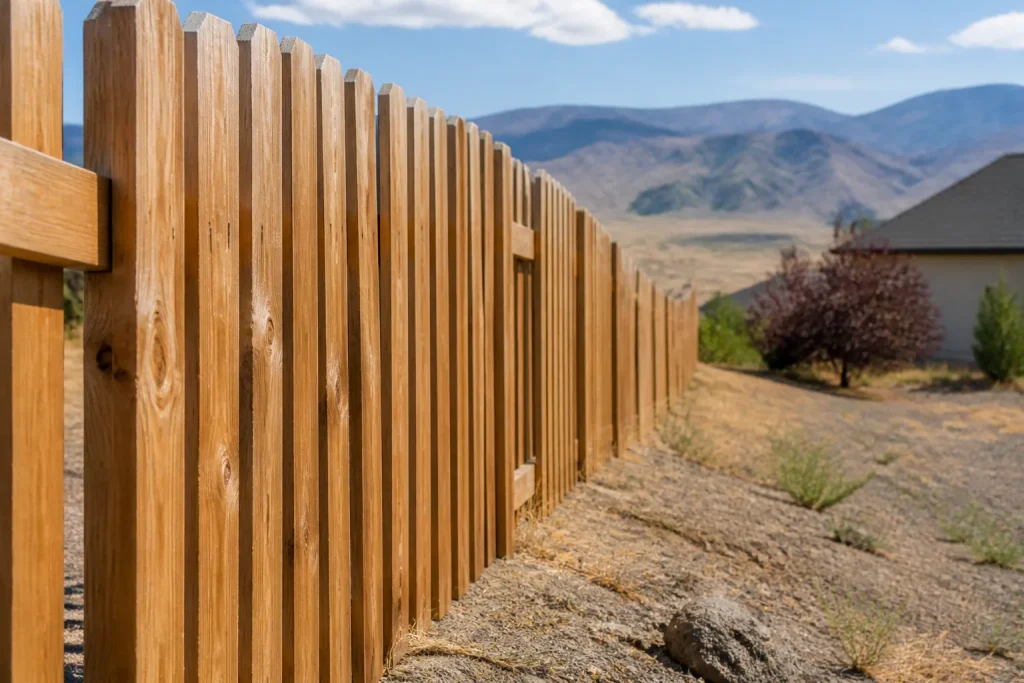
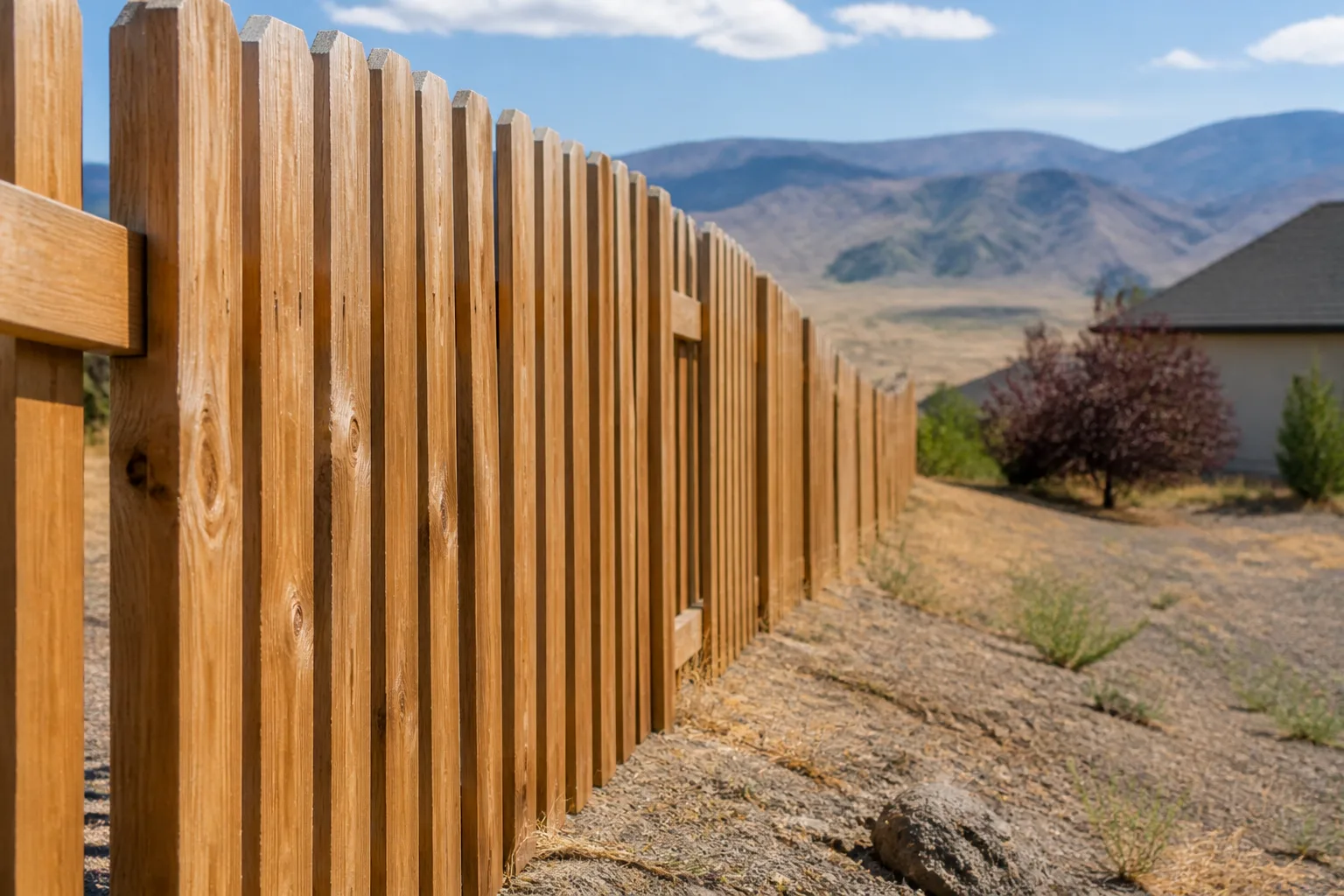
The post is the fence. The panel is decoration. If your quote doesn’t state an embedment depth in inches, you can’t tell whether the contractor plans to set 24-inch posts or 36-inch posts, and in Enterprise’s soil and wind exposure that difference decides how long the fence stands.
Wind load is the number that drives this, and Clark County sits in a region where design wind speeds for most residential structures fall in the 90 to 110 mph range depending on exposure category. A fence is a sail. A six-foot privacy fence built from dense composite panels catches far more wind than a four-foot picket, and the engineering that keeps it upright lives entirely underground.
A general rule our crews work to:
- Up to 4 feet: minimum 24 inches of embedment in stable, compacted soil.
- 5 to 6 feet: 30 to 36 inches, with concrete collar or compacted gravel depending on soil condition.
- Over 6 feet, or any solid panel in high-wind exposure: 36 inches minimum, often more, and post spacing tightens from 8 feet to 6 feet.
These are minimums, not universal answers. Soil that’s been disturbed by utility trenching, or desert fill that hasn’t been compacted, needs deeper embedment. The point is that the number should be written down in the quote so you can hold the contractor to it. A quote that says “posts set in concrete” tells you nothing. A quote that says “6-foot composite privacy fence, 4×4 posts at 6-foot on center, 36-inch embedment, 3,000 PSI concrete” is a document you can compare against three others and against the finished fence.
Mistake 2: Skipping the Property Survey
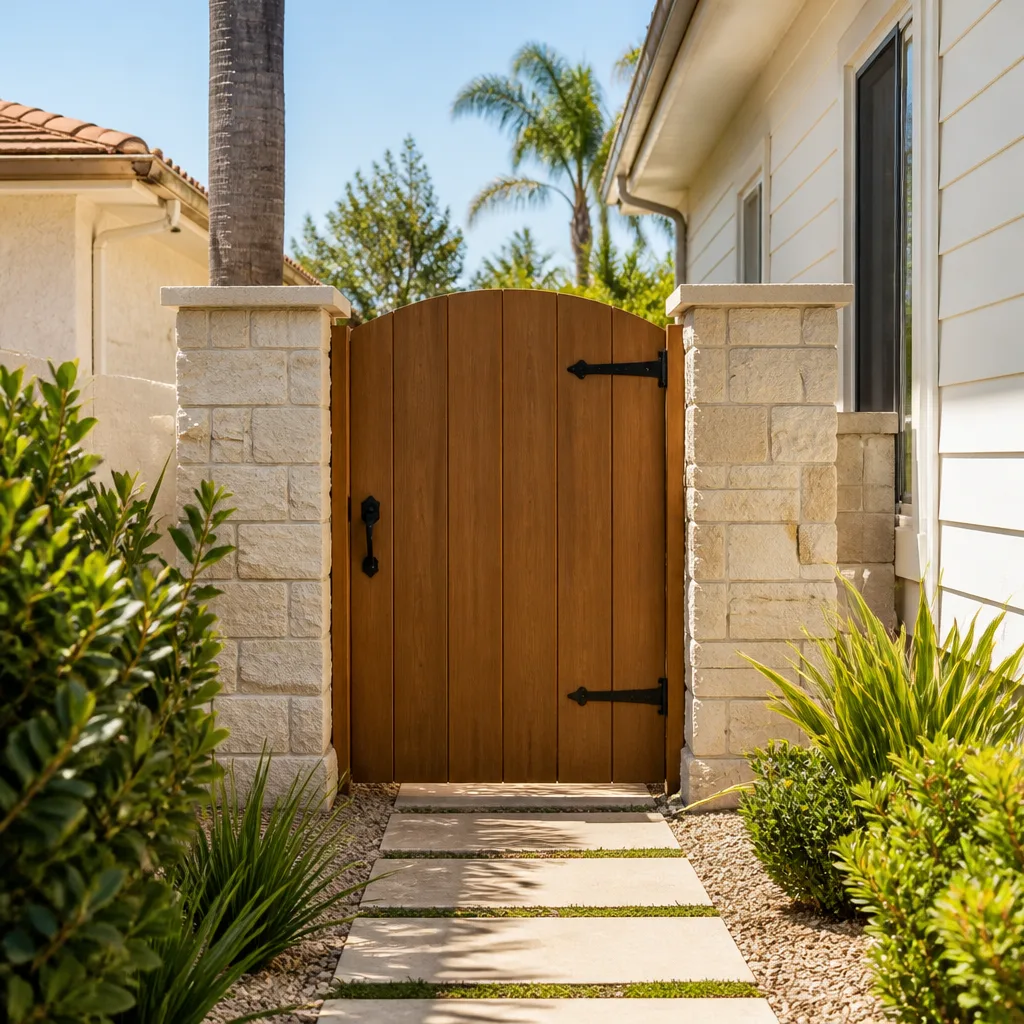
A professional survey in the Enterprise area typically runs $300 to $500 for a residential lot. A boundary dispute over a fence can run past $10,000 in legal fees, and the worst-case outcome is a court order to remove the fence you just paid to install.
The math is obvious once you write it down. The reason people skip the survey is that they assume the fence line looks right, or that the previous fence sat in the correct place. Both assumptions fail more often than you’d think. Older Enterprise subdivisions frequently have fence lines that drifted a foot or two across multiple ownership cycles, and nobody noticed until the new owner’s neighbor pulled a survey.
The survey is also not the same thing as a plot plan. A plot plan is the rough drawing attached to your closing documents. A survey is a licensed surveyor setting stakes at your corners and marking the line. For fence installation, you want the stakes. Ask the contractor to stake the line before digging and to photograph the stakes. If a contractor resists the idea of you getting a survey, treat that as information about how the rest of the job will go.
One more thing worth knowing: many Enterprise HOAs require a survey or plot plan as part of the architectural review application. Having one on file shortens that process.
Mistake 3: Picking Panels by Appearance Instead of HOA Covenants
Enterprise associations regulate fence material, height, color, and sometimes post style, and the restrictions vary by subdivision. A quote built around a panel that the HOA rejects is a quote you’ll pay to redo.
Common restrictions we run into across Enterprise-area associations:
- Height caps. Front-yard fences are often limited to 3 or 4 feet. Side and rear yards commonly cap at 6 feet. Some subdivisions cap at 5 feet total, measured from the finished grade.
- Material bans. Chain link is prohibited in a number of master-planned associations. So are unfinished wood and most bamboo or reed fencing. Wire-topped wrought iron is usually allowed in front yards, sometimes required.
- Color and finish rules. Stucco and masonry walls are frequently required along the street-facing side, with the color matched to the house. Composite panels are usually permitted but sometimes restricted to specific neutral color families.
- Corner and drainage rules. Corner lots often have sight-line restrictions. Some associations prohibit solid fencing over drainage swales.
The right order of operations is: read the CC&Rs, submit the architectural review application, get written approval, then order material. If you’re comparing composite panels, ask the supplier for the product data sheet, because some associations want to see the wind rating and the warranty terms, not just a color chip. That’s the kind of detail that separates a smooth install from a torn-out one. If you’re also planning groundwork at the same time, this is the same discipline that applies to Driveway & Pavers in Enterprise: get the written approval before the truck arrives.
Mistake 4: Accepting a Lump-Sum Bid With No Brand Callouts
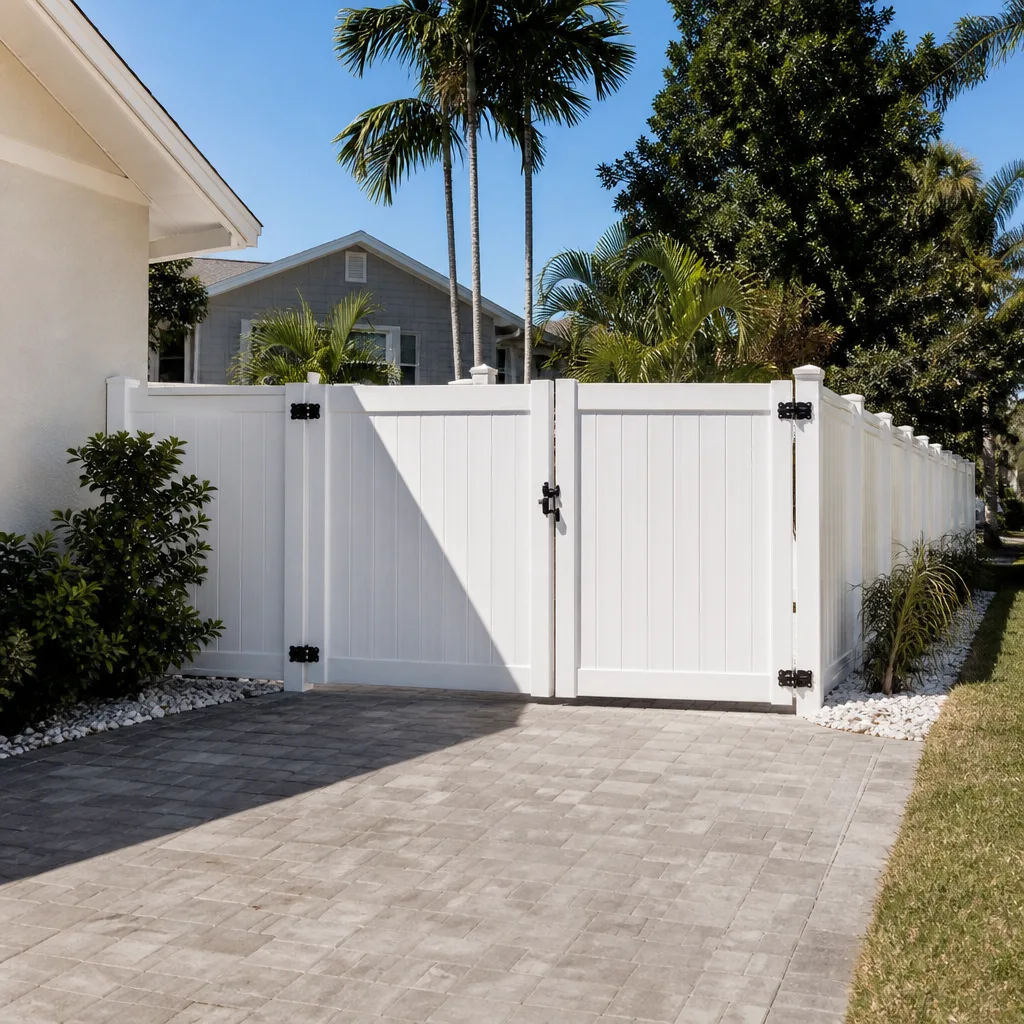
A lump-sum bid with no material specifications isn’t a price. It’s a placeholder. You cannot compare a $6,200 quote to a $4,900 quote if neither one names the post gauge, the panel brand, or the hardware grade, because the difference is usually hidden in exactly those three lines.
What a written fence quote should name, in plain terms:
- Post gauge and wall thickness. For steel posts, 16-gauge is a real difference from 14-gauge. For wood posts, ground-contact rated matters. The quote should say which.
- Panel brand and product line. A branded panel with a published wind rating and a written warranty is a different product from an unbranded one that looks similar on a sample board.
- Hardware grade. Stainless or hot-dip galvanized fasteners versus standard screws. In desert heat and seasonal moisture, this is where a fence develops rust at year six.
- Gate hardware. Hinge type, latch type, and whether the gate frame is welded or bolted.
- Finish and warranty terms. Manufacturer warranty in years, and whether the installer passes it through or replaces it with their own.
When we write a fence quote, the material lines are specific enough that you can hand the document to a competitor and get a real comparison. If you have a bid in hand you’re not sure about, our free second opinion on any written estimate is exactly that: we’ll review it line by line at no charge and tell you what’s missing.
Mistake 5: No Signed Change Order Process
Mid-project gate additions and grade changes become the most expensive line item on the job when nobody writes them down. A gate sounds like a minor add. In practice, adding a walk gate after the fence line is set means pouring a new post, resetting a section, adding hinges rated for the panel weight, and possibly rerouting the run. That’s a $150 request that turns into a $900 line at the end.
Grade changes are the other one. On a sloped lot, the fence line takes several runs at different heights to avoid a gap at the bottom or an awkward step at the top. If that slope wasn’t in the original quote, the contractor has three options: step the panels, rack the panels (which only works within limits), or extend the posts. The third option is the right one and it’s the one that wasn’t priced.
The discipline that prevents all of this is simple. No work proceeds on a change until the change order is signed. Under Clause 1 of the Haven Standard, the price is written before anyone starts, and the change order is the same principle applied mid-job. It’s also why we can tell you, on a project that hits an unexpected rock layer or a grade issue the quote didn’t anticipate, that you’ll see the number before you see the invoice. Our projects land within a few percent of the agreed cost across thousands of jobs for exactly this reason.
When to Call a Pro
Post-hole digging, concrete work, and gate alignment are the three parts of fence installation where an experienced crew saves you money over the long run. Setting a post plumb and at the correct embedment is straightforward until you hit caliche or a buried utility line. Gate hinges and latches fail early when they’re under-specified for the panel weight, and fixing that means resetting posts. Our technicians have up to 19 years of experience on fence installation, and the crews we send are background-checked and uniformed, with a documented photo record of every visit included as standard.
For the full scope of what we install, see Fence Installation in Enterprise. If you’re weighing a larger yard project alongside the fence, the same planning discipline applies to Home Additions & ADU in Enterprise, where site survey and written scope matter just as much.
The Bottom Line
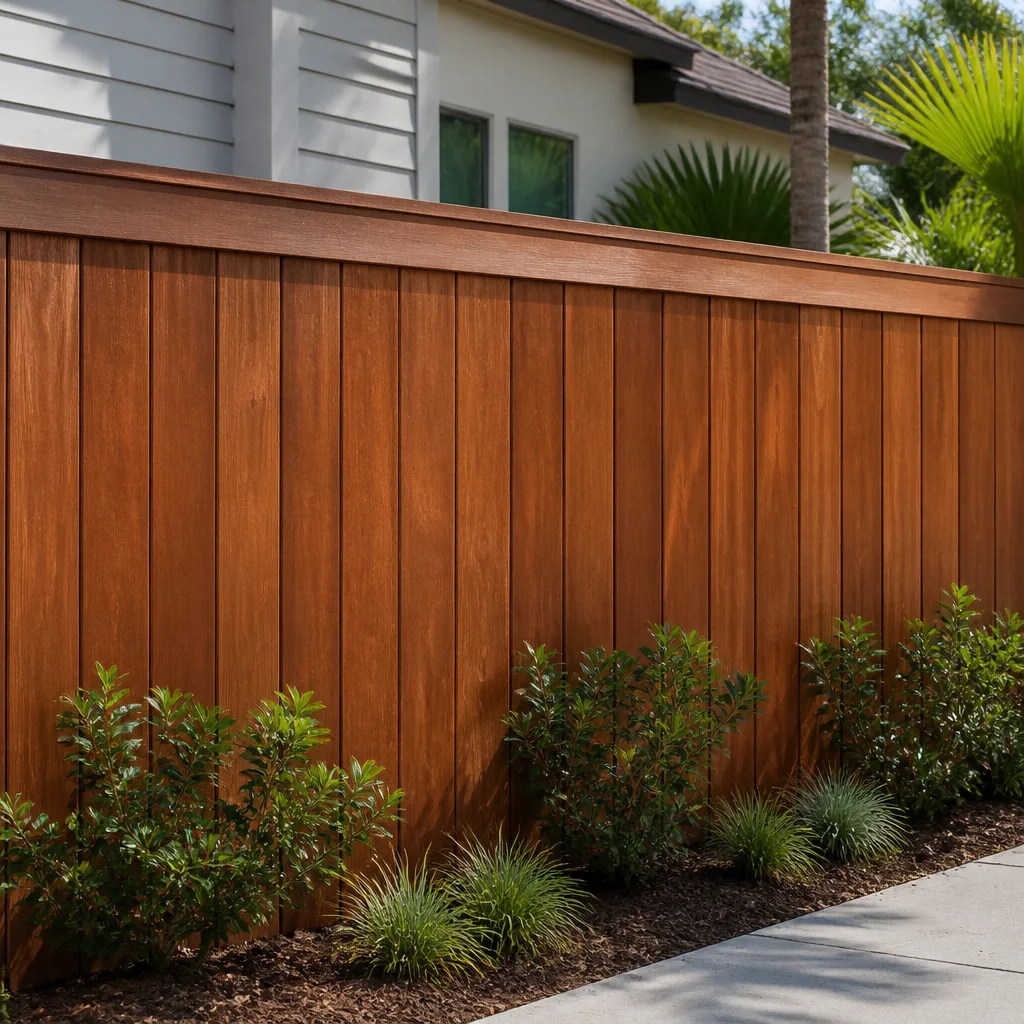
Four of the five costly fence mistakes happen in the planning and contracting phase, and every one of them is preventable with a written document. Specify post depth. Get a survey. Read the HOA covenants before you fall in love with a panel. Insist on a quote that names the material brands and hardware. And require a signature on every change.
Every project we quote gets a flat written price and a written scope before work begins, with the 365-Day Done Right Promise behind it and a documented photo record on every visit. If you’re in Enterprise and want a real number to compare against the bids you already have, Rowan Construction Group Enterprise offers free estimates. Call (833) 630-4077. For the wider range of work we handle, start at the Rowan Construction Group Enterprise home page.
Frequently Asked Questions
Most residential fence installation in the Enterprise area runs roughly $28 to $65 per linear foot installed, depending on material. Wood privacy fencing sits at the lower end; composite and steel systems sit higher; masonry and stucco walls run considerably more. A 150-foot yard with a walk gate typically lands between $5,500 and $9,500. Call (833) 630-4077 for an exact quote on your property, because grade, access, and post depth all move the number.
No. Most Enterprise-area associations require architectural review approval before any fence material arrives on site, and installing without it can result in a removal order at your expense. Read the CC&Rs, submit the application, and get approval in writing. If your association doesn’t regulate fences, check the city code for height and setback limits before you order.
Not without a signed change order. A written quote covers the agreed scope; anything that adds to that scope, like a gate addition or an unforeseen grade change, gets priced and signed before the work proceeds. That’s the discipline that keeps a project within a few percent of the number you agreed to. Call (833) 630-4077 if you have a bid you’d like reviewed line by line.
A 6-foot privacy fence in Enterprise’s wind exposure needs at least 36 inches of embedment, and more if the soil has been disturbed or the panels are solid. Fences under 4 feet can generally go to 24 inches, and 5-foot fences to 30. These should be stated in your quote in inches, not as “set in concrete.” Call (833) 630-4077 if you want a second read on a bid before you sign.
Written by the team at Rowan Construction Group Enterprise.
Need Construction Help?
Call Rowan Construction Group Enterprise - licensed & insured, here with fast after-hours help in Enterprise.
(833) 630-4077