
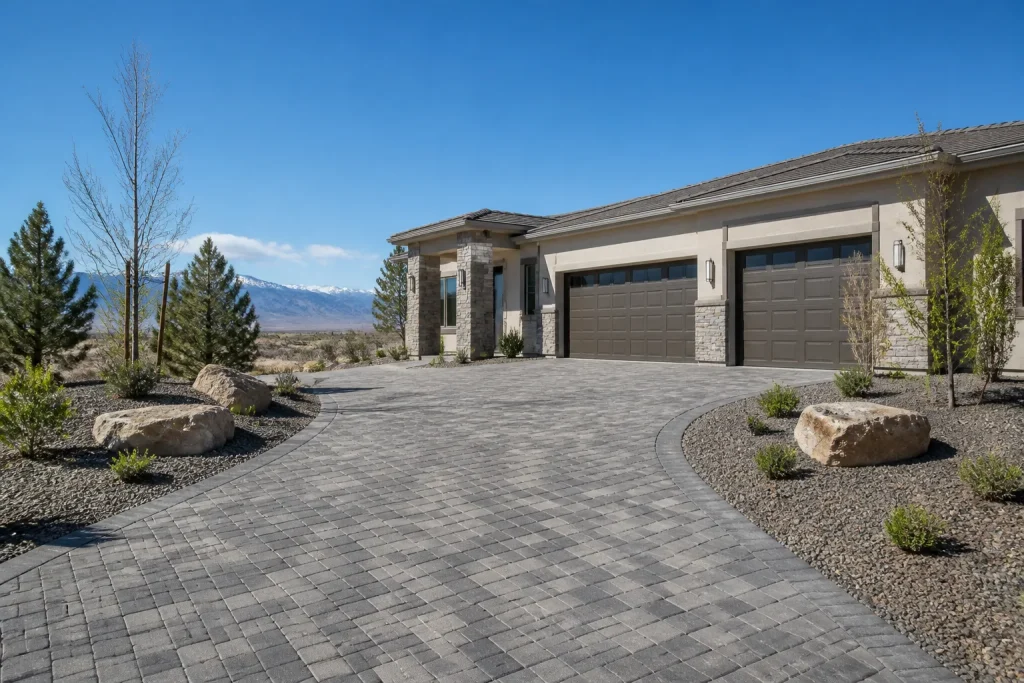
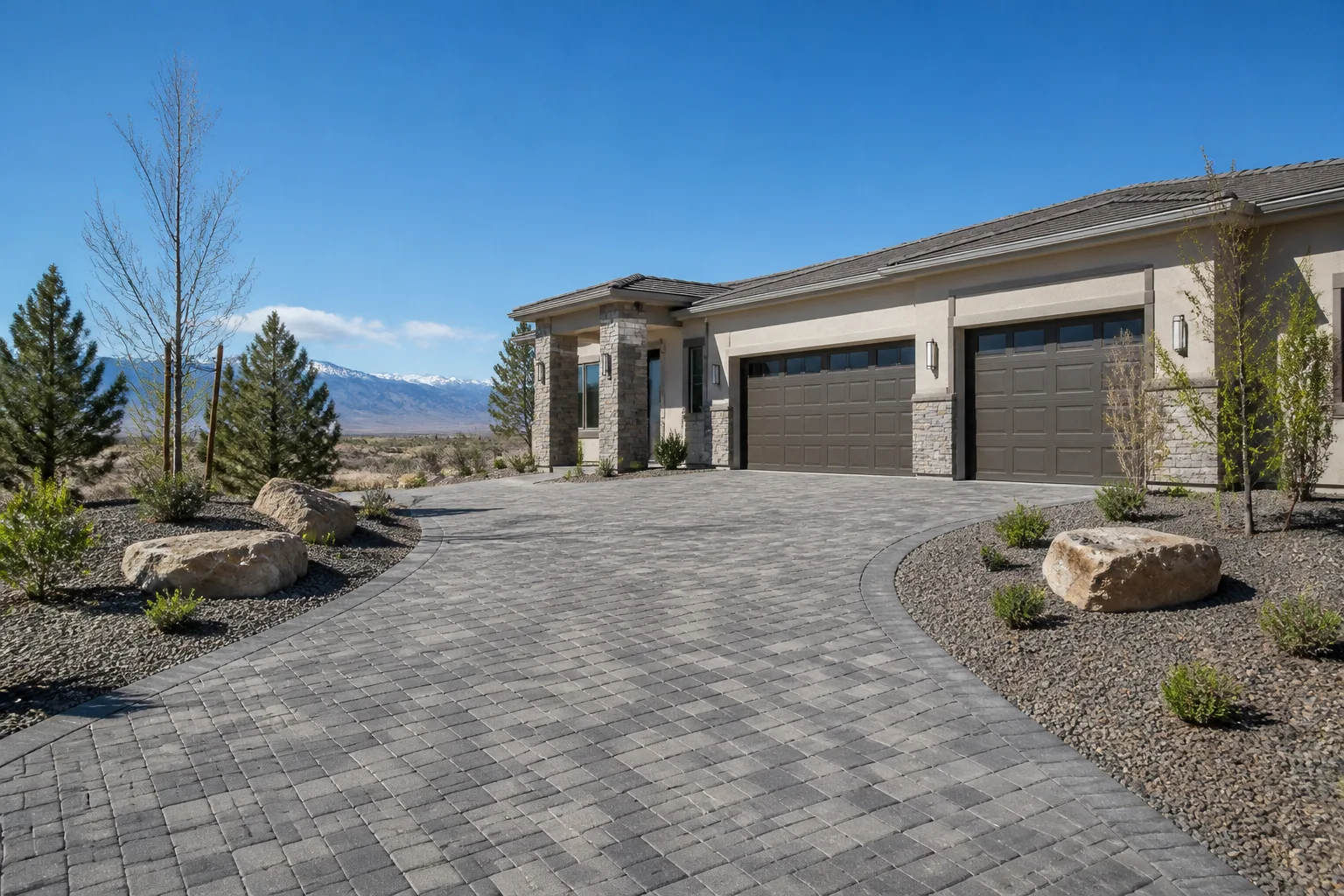
CWS Driveway & Pavers in Enterprise: A Homeowner’s Guide
A contractor who bids CWS pavers without citing the specific product line and thickness is leaving you to guess whether you’re getting a vehicular-rated paver or a garden path unit at the same per-square-foot price. CWS makes both. The brand’s catalog spans thin decorative units and thicker structural pavers, and the two are not interchangeable under a vehicle. This guide tells you which CWS products belong in an Enterprise driveway spec, what a fair installed price looks like in dollars, and where the warranty gets voided before the first paver is even laid.
If reading through this brings up questions about your own driveway, call (833) 630-4077 and we’ll talk it through.
Which CWS Pavers Are Actually Rated for a Driveway in Enterprise?
For a passenger-vehicle driveway, a paver needs a minimum thickness of 2 3/8 inches (60 mm) and a compressive strength typically rated above 8,000 psi. CWS structural paver lines meet that bar. CWS thin-veneer and garden-path units, often sold at 1 5/8 inches or less, do not. Any CWS product specified for a driveway should be named by product line and thickness on the written quote.
Here’s the practical test. When a bid says “CWS pavers” with no model, ask two questions:
- Which product line? A structural line rated for vehicular traffic, or a decorative face unit intended for patios and walkways?
- What thickness? 60 mm minimum for a residential driveway. 80 mm is the safer spec where a heavy truck, RV, or delivery vehicle regularly parks.
In our experience, most of the confusion comes when a homeowner compares two bids at the same price per square foot and one is using a thin decorative paver. The material cost is lower, the paver looks similar in a sample, and the driveway fails within three or four seasons under load. In Enterprise, where summer surface temperatures routinely push past 150°F on unshaded pavement, thin pavers flex more and show hairline cracking along joints sooner. That heat matters. It’s why we spec thicker units on south-facing driveways here even when a thinner one technically passes code.
How Does CWS Compare to Other Mid-Market Pavers Available in Enterprise?
CWS occupies a middle price position: more expensive than big-box concrete pavers, less expensive than premium Belgian-block style products from Belgard or Techo-Bloc. On compressive strength and abrasion resistance, CWS structural lines hold their own against mid-market competitors, but the comparison depends entirely on which specific product you’re pricing. A CWS structural line versus a comparable concrete paver is a fair fight. A CWS decorative veneer versus a structural competitor is not.
Here’s how the tiers stack up for an Enterprise driveway:
- Entry tier: Standard concrete pavers from box retailers, typically 6,000 – 7,000 psi. Fine for foot traffic; marginal under vehicles.
- Mid-market tier (CWS structural lines live here): 8,000+ psi, 60 – 80 mm thickness. Adequate for a residential driveway when base prep is correct.
- Premium tier: Belgard and Techo-Bloc structural lines, higher abrasion ratings, wider color and texture range, higher material cost.
The honest comparison: if your driveway is a standard two-car residential apron with no heavy loads, a CWS structural paver at 60 mm is a reasonable value. If you’re parking a boat, a work truck, or an RV, we’d usually steer you toward an 80 mm unit, whether that’s CWS or a premium line. Material brands matter, but base prep wins or loses the driveway before the paver is even laid. For the full picture on how base prep and paver selection work together, see our guide to Driveway & Pavers in Enterprise. That’s the page we hand most homeowners who are starting to price this work.
What Does a CWS Driveway Cost in Enterprise, Installed?

A CWS paver driveway in Enterprise typically runs $14 to $24 per square foot installed, all-in. That breaks down to roughly $4 – $8 per square foot for material, $4 – $7 for base prep and excavation, and $6 – $9 for labor and finishing. A standard 400-square-foot two-car driveway lands between $5,600 and $9,600 total.
Here’s the line-item breakdown we’d put on a written quote:
| Line item | Range (per sq ft) |
|---|---|
| CWS paver material | $4 – $8 |
| Excavation & sub-base (6 – 8″ compacted aggregate) | $4 – $7 |
| Setting bed & labor | $6 – $9 |
| Installed total | $14 – $24 |
Where a bid lands in that range depends on three things: site access, base depth, and the paver you choose. A flat driveway with easy truck access and existing base in good shape sits at the low end. A sloped property with a failed concrete slab to demo, tight access, or a need for a new retaining edge sits at the top. Polymeric joint sand, edging, and a proper geotextile fabric under the base are typically included in a fair bid; if they’re line-item add-ons after the fact, ask why.
We had a job up in the Eldorado neighborhood a while back where the original bid didn’t mention demo of the old concrete. The homeowner got three quotes; two were “all-in” and one was $2,200 lower with demo listed separately. The two honest bids were within $300 of each other. The third would have climbed past them once the slab came out. Under Clause 1 of the Haven Standard, our written price is complete before anyone picks up a shovel, and no change proceeds without a signed change order. It’s the same discipline we hold across every trade we run, from that driveway page to Home Additions & ADU in Enterprise.
What Does the CWS Warranty Actually Cover, and What Voids It in Nevada?
CWS warrants its pavers against manufacturing defects, not against installation failures. The paver warranty covers the unit itself; the workmanship warranty is what covers how it was set. For a CWS warranty to apply in Nevada’s climate, installation has to meet specific conditions: adequate base depth, proper compaction, a stabilized joint sand, and edge restraint. Fail any of those and the warranty claim lands on the installer, not CWS.
The installation conditions that matter most here:
- Base depth and compaction. A minimum of 6 inches of compacted aggregate base, in lifts, for a residential driveway. Skip the compaction and the driveway ruts through the first summer heat cycle.
- Edge restraint. Properly anchored edge restraint is non-negotiable in Enterprise because of the expansive soil movement we see during the dry months. Without it, the field pavers spread at the edges.
- Joint sand. Polymeric joint sand is the standard for a Nevada driveway. Plain sand washes out and invites weeds indoors by year two.
- Drainage slope. Pavers must shed water away from the slab and foundation, typically 1% to 2% slope. Flat is not acceptable.
Before you sign a bid, ask the installer for their workmanship warranty in writing. It should name the term (our 365-Day Done Right Promise stands on every job, printed on the page, not buried in an asterisk) and describe what “made right” means. A paver warranty that only covers the unit leaves you holding the cost of the reinstall if the base was wrong. So keep the units, keep the paper, and keep the installer’s warranty on the same page in your file.
One detail specific to Enterprise and the broader Las Vegas Valley: exterior paver sealers and joint sand compounds can fail faster here than in milder climates if they’re applied in direct summer sun. Most manufacturers specify applying below 90°F surface temperature. That usually means a spring or fall installation window, not July. A crew that’s scheduling your driveway for August without mentioning temperature is telling you something.
Pattern and Joint Options in the CWS Line, and What They Cost You
CWS paver lines offer three standard layout families: running bond (the classic offset brickwork pattern), herringbone (a 45-degree or 90-degree interlocking weave), and basketweave. Running bond is the fastest to install and cheapest on labor. Herringbone interlocks tighter under vehicle load and holds up better long-term, but adds 15% to 25% to installation labor. Basketweave sits between the two and reads as a more traditional, higher-end look on a residential driveway.
The trade-off you should know about before picking:
- Running bond: Lowest labor, most forgiving cuts at the edges, but the least resistance to vehicular shifting over time. Fine for a light-use driveway.
- Herringbone: Highest labor cost, tightest interlock, the best long-term performer under rolling loads. Our default recommendation for any driveway taking regular vehicle traffic in Enterprise.
- Basketweave: Middle labor, good interlock, visually distinctive. A reasonable compromise for homeowners who want something other than herringbone.
On joints, CWS offers both sand-set and mortar-set installation options. Sand-set is the standard for a driveway in our climate; polymeric joint sand stabilizes the field and holds up to the sun better than plain sand. Mortar-set is rarely the right call for a residential driveway in Enterprise because it cracks under the seasonal ground movement we get here. If a bid quotes mortar-set on a driveway, ask why.
Color and texture choice runs across all three patterns and doesn’t change labor, but it does change lead time. Standard color blends in structural lines ship quickly; custom-order colors can add one to three weeks to the timeline. If you’re scheduling around an event, get the color locked before the base work begins.
When to Call a Pro (and When to Keep Reading)
A paver driveway is honest work but not casual work. The base prep alone, excavation, compaction in lifts, geotextile, and edge restraint, is where the job succeeds or fails, and it’s where an experienced crew earns their labor cost. In our experience, the DIY paver driveway fails on the base, not the paver, about nine times out of ten. If your property slopes, if there’s an old slab to demo, or if you’re parking anything heavier than a passenger sedan, that’s the moment to call us. We’ve pulled more than one failed DIY driveway out of a garage over in the Mountain’s Edge area where the homeowner skipped compaction and learned it the hard way by year three.
If you’re also thinking about the perimeter while the driveway is torn up, most homeowners do the Fence Installation in Enterprise in the same window; separating the two projects usually means tearing up finished grade twice. And if the project grows into something structural, our Rowan Construction Group Enterprise home page covers every trade we run.
The Bottom Line
The CWS products that belong in an Enterprise driveway spec are the structural paver lines at 60 mm minimum, ideally 80 mm if you’re parking anything heavy. The ones that don’t belong are the thin decorative and garden-path units priced at the same per-square-foot number. Get the specific product line and thickness on the written quote. Get the workmanship warranty in writing. Get the base depth and compaction spec documented. Then the price, $14 to $24 per square foot installed, means something you can compare bid to bid.
If you’re in Enterprise and want a written price before anyone touches the driveway, Rowan Construction Group Enterprise offers free estimates and a free second opinion on any written bid you’ve already received. Call (833) 630-4077. Every visit includes a documented photo record, so you’ll know exactly what we found and what was done.
Frequently Asked Questions
60 mm (2 3/8 inches) is the minimum for a passenger-vehicle driveway; 80 mm is safer if you park an RV, boat, or heavy truck. Any CWS product thinner than 60 mm is a patio or path unit, not a driveway paver, regardless of how it’s priced. Call (833) 630-4077 for a free estimate that names the exact product line and thickness.
Between $14 and $24 per square foot installed, all-in. A standard 400-square-foot two-car driveway lands between $5,600 and $9,600. Material runs $4 – $8 per square foot, base prep $4 – $7, and labor $6 – $9. Call (833) 630-4077 for an exact quote, the estimate is free.
Under our written-price discipline, no. Every quote is a flat written price with a written scope, and no change proceeds without a signed change order. If the base turns out worse than the pre-job inspection suggested, you’ll see the change order before any work happens, and you can accept or decline it on paper. Call (833) 630-4077 to schedule a free estimate.
No. CWS covers the paver unit against manufacturing defects; installation failures (base compaction, edge restraint, drainage) fall under the installer’s workmanship warranty. Ask for that warranty in writing before you sign. Our 365-Day Done Right Promise stands on every job, printed on the page. Call (833) 630-4077 for details on your specific project.
Written by the team at Rowan Construction Group Enterprise.
Need Construction Help?
Call Rowan Construction Group Enterprise - licensed & insured, here with fast after-hours help in Enterprise.
(833) 630-4077