
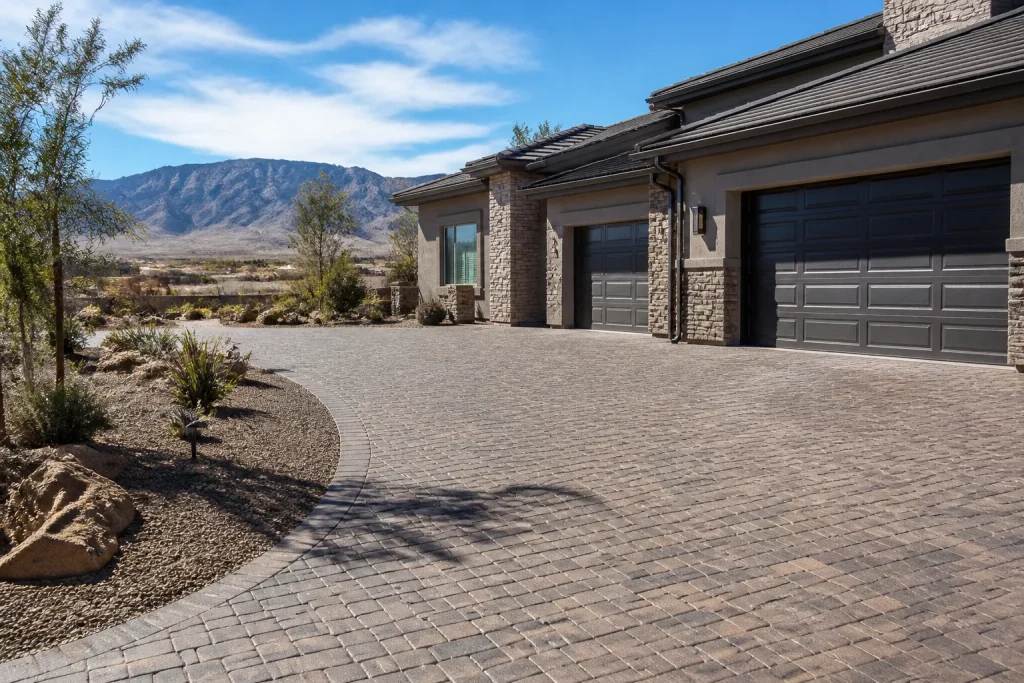
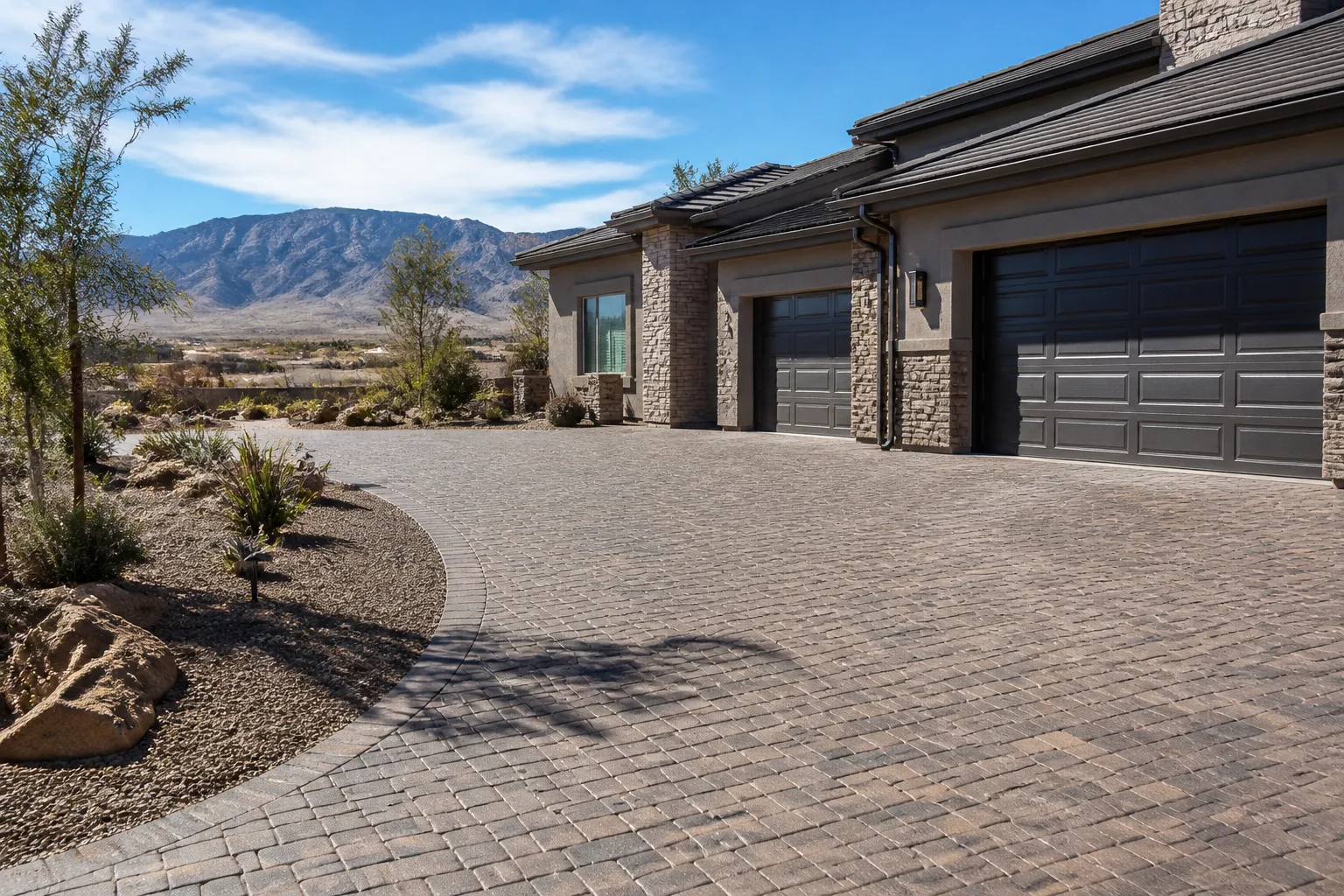
ES Windows Driveway & Pavers in Enterprise: A Homeowner’s Guide
If your contractor’s bid references ES Windows in a driveway paver context, ask them to show you the product sheet, because ES Windows manufactures glazing systems, not pavers. That mix-up has a way of surfacing as a substitution error on delivery day, when a pallet shows up with the wrong product and nobody can point to the line in the contract that says otherwise. Here’s what the search actually points to, and what a correctly specified Enterprise driveway should include.
If you’d rather skip the research and get a written number, call (833) 630-4077. Estimates are free, and the price is in writing before anyone lifts a tool.
What Does ES Windows Actually Manufacture?
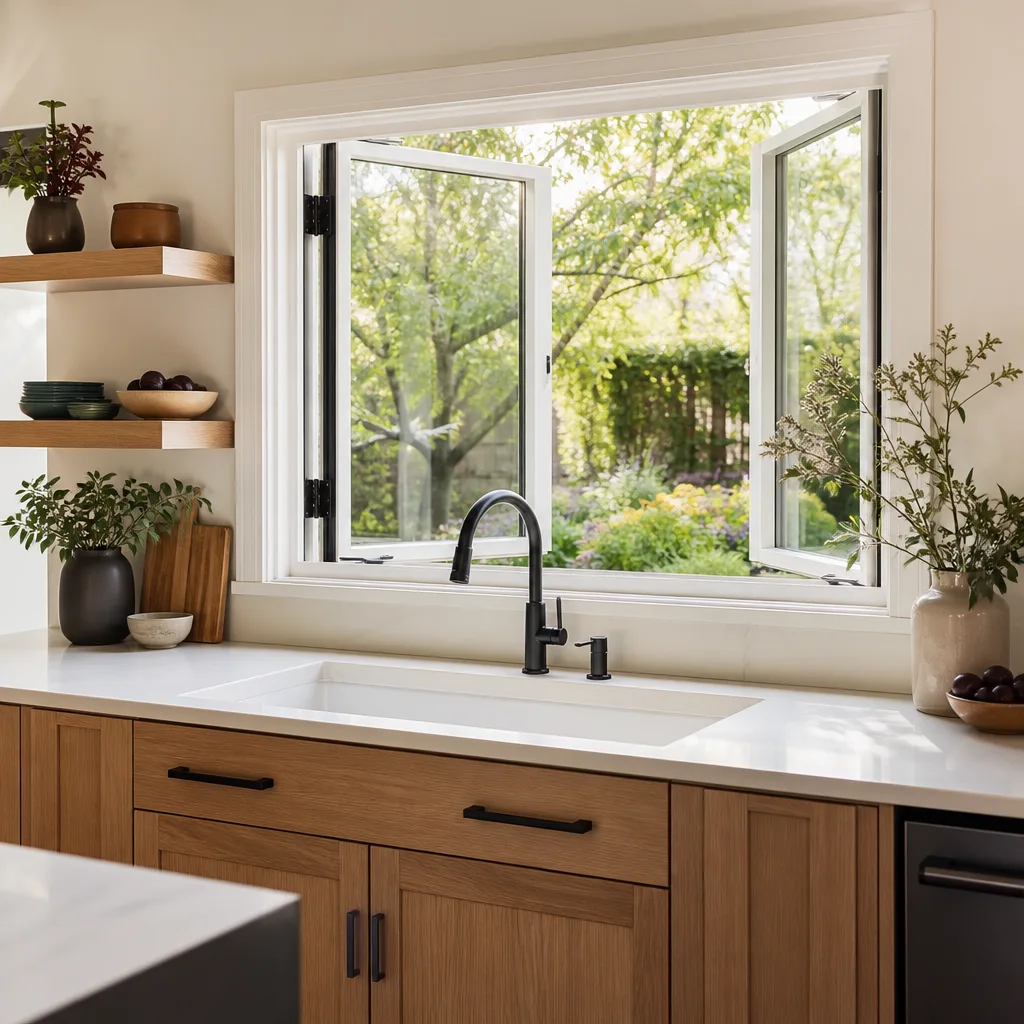
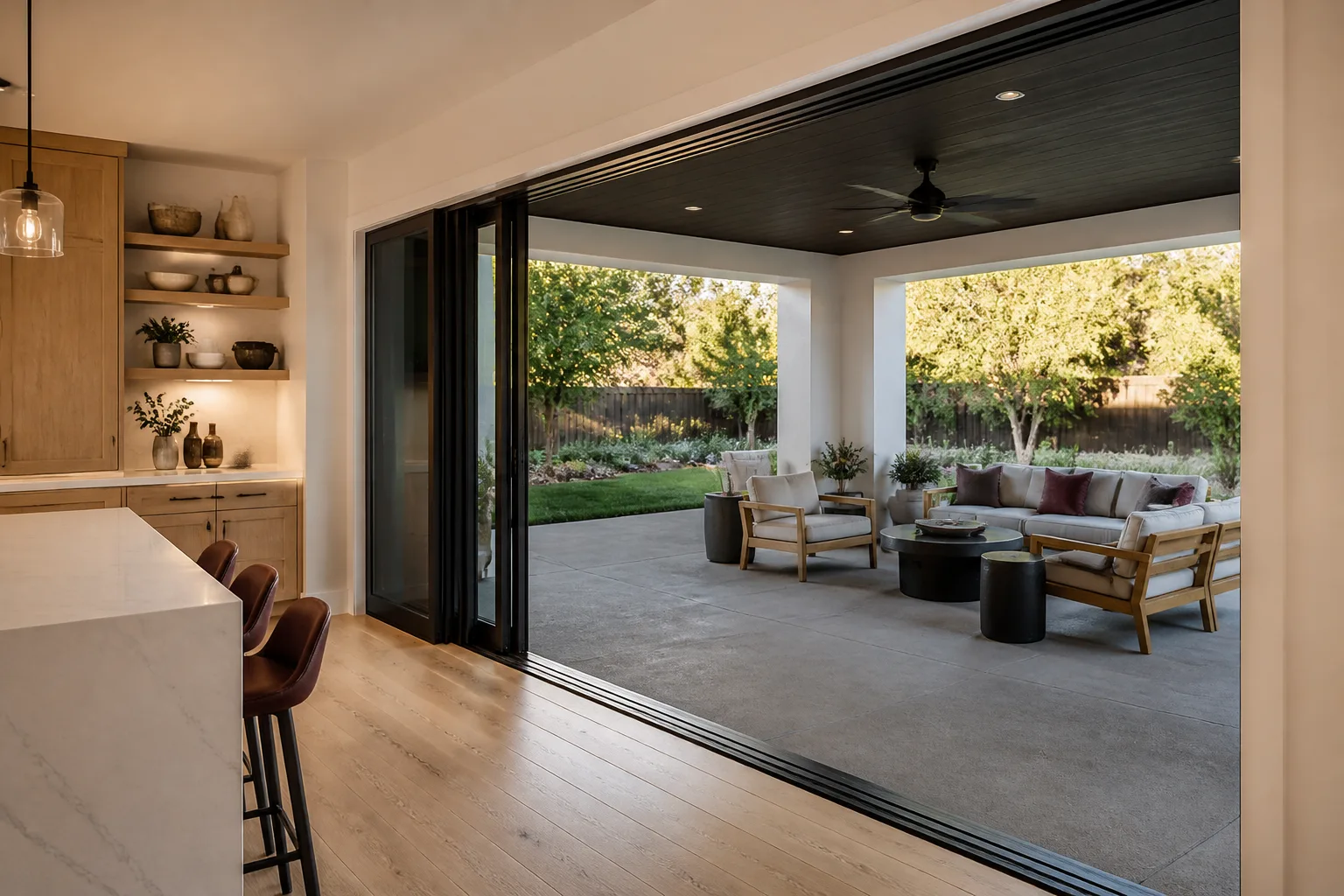
ES Windows is a fenestration manufacturer. Fenestration is the trade word for anything that fills an opening in a building envelope, and in practice that means windows, sliding glass doors, and related glazing assemblies. The company’s product lines are built around frames, glass, weatherstripping, and hardware, not concrete, clay, or stone. There is no ES Windows paver catalog, no unit paver, no driveway product. The category simply does not exist.
So when you see “ES Windows driveway pavers Enterprise NV” in a search bar or a bid document, one of three things is happening:
- A contractor’s naming error. A bid template gets reused across trades, and a window brand name is left in a hardscape scope. It happens more than you’d think, and it’s a documentation red flag.
- A search indexing artifact. Search engines stitch together queries from unrelated pages. A page about ES Windows and a page about pavers can merge in a result snippet even when neither page mentions the other.
- A substitution setup. Less common, but worth naming. A bid that specifies a brand that doesn’t make the product leaves room for whatever shows up. On a paver job, that means whatever the supplier had on the yard that week.
None of these is a reason to panic. All of them are a reason to read the scope line by line before you sign. In Enterprise, where summer surface temperatures on unshaded concrete routinely push past 140°F, the wrong paver and the wrong base prep fail fast. Getting the spec right at the contract stage is cheaper than getting it right later.
Which Paver Brands and Specifications Are Right for an Enterprise Driveway?
The correct brands for a residential driveway in Enterprise are concrete paver manufacturers with published product lines and load ratings, not window companies. The names you’ll see on a legitimate bid include Belgard and Techo-Bloc, both of which publish product data sheets with compressive strength, thickness, and freeze-thaw ratings on every unit. Those sheets are what your contractor should be able to hand you.
Here’s what a correctly specified Enterprise driveway paver looks like:
- Thickness: 60mm (about 2 3/8 inches) is the floor for a residential driveway carrying standard passenger vehicles. 80mm is the right call for anything heavier, including a truck, a trailer, or a full-size SUV parked on the same spot every day.
- Compressive strength: Look for a published rating of at least 8,000 psi. Belgard and Techo-Bloc both publish this per product line, and the number should appear on the sheet, not in a verbal promise.
- Finish: A tumbled or textured face handles Enterprise’s UV load better than a smooth finish, which shows tire scuffing and heat shimmer. Smooth pavers look great in a brochure and tired in a driveway by year three.
- Color: Mid-tone integrally colored pavers hold up better in Enterprise’s sun than light creams, which go chalky under UV, and dark charcoals, which get hot enough to be uncomfortable barefoot.
- Joints: Polymeric sand in a 1/8-inch joint, not a tight butt joint. Enterprise’s occasional monsoon bursts need somewhere to drain, and a tight joint sends water under the paver instead of through it.
One honest note from our own files: we pulled a paver spec out of a bid in the Silverado Ranch area last spring where the “Belgard” line item carried no product name, no thickness, and no load rating. The bid was $1,200 under the next one. The pavers that showed up were 50mm seconds from a supplier’s overstock. That’s a substitution, and it’s legal, because the contract allowed it. The fix cost more than the $1,200 saved.
What Does a Paver Driveway Cost in Enterprise per Square Foot?
A standard residential paver driveway in Enterprise runs $14 to $24 per square foot installed, all-in, for a correctly specified 60mm concrete paver over a properly built base. That range includes demolition of the old surface, haul-away, base material, compaction, bedding sand, the pavers, polymeric joint sand, and edge restraint. A typical two-car Enterprise driveway is 480 to 600 square feet, which puts most projects between about $6,700 and $14,400.
| Line item | Installed cost per sq ft |
|---|---|
| Demo and haul-away of existing concrete or asphalt | $2 to $4 |
| Base prep: 4 to 6 inches of crushed aggregate, graded and compacted in lifts | $3 to $5 |
| Bedding sand and screeding | $1 to $2 |
| 60mm concrete pavers, standard line (Belgard, Techo-Bloc) | $6 to $9 |
| 80mm pavers for heavy-vehicle parking | $8 to $11 |
| Polymeric joint sand and edge restraint | $1 to $2 |
| Permit and inspection coordination | $1 to $2 |
Enterprise’s base material does not behave the way a coastal or a heavy-clay market does. The valley’s caliche layer, a calcium-carbonate hardpan that shows up in patches across the east side, needs to be broken and removed where it’s thick, not simply graded over. A bid that skips a caliche line item is either assuming you don’t have it or hoping it doesn’t come up. Both are the kind of surprise that turns a $12,000 job into a $15,000 job halfway through.
Under Clause 1 of The Haven Standard, the price is written before anyone starts. So is the base depth, the caliche handling, and the paver line. Call (833) 630-4077 for a written quote on your Enterprise driveway; estimates are free.
What Documentation Prevents a Product Substitution Error?
The single document that prevents a paver substitution is a written scope with four items spelled out on it: the brand name, the product line, the thickness in millimeters, and the load rating in psi. If any one of those is missing, the contract has a door in it, and a supplier with a cheaper pallet will walk through.
Here’s the documentation standard we work to, and the one you should ask any contractor to meet on a paver job in Enterprise:
- Brand and product line named. “Belgard Dimensions” or “Techo-Bloc Blu 60,” not “premium concrete pavers.” A brand without a product line is a marketing category, not a spec.
- Thickness stated in millimeters. 60mm or 80mm, written on the line item. Not “standard thickness.”
- Load rating from the manufacturer’s data sheet. A printed compressive strength number, and the sheet stapled to the contract.
- Base specification. Aggregate type, depth in inches, and the number of compaction lifts. “Proper base” is not a specification.
- A signed change order for every change. If the paver line changes after signing, the change doesn’t happen until a change order is signed. That discipline is the reason our projects finish within a few percent of the agreed number.
- A documented photo record. Photos of the exposed base, the compaction, and the finished joint sand, delivered as a standard part of the job, not an extra request.
Ask for the second opinion before you sign, too. We’ll review a competitor’s written estimate line by line at no charge, and we’ll tell you where the spec is thin. Sometimes the bid is fine. Sometimes it’s not, and you find out before the pallet arrives instead of after.
What Sub-base Work Does an Enterprise Driveway Need Before Pavers Go Down?
Enterprise’s soil is a mix of desert alluvium, caliche hardpan, and pockets of expansive clay that swell after a monsoon and shrink in the dry months. That combination is the reason a paver driveway fails early here in a way it doesn’t in a stable-soil market. The base has to be built for movement, not just for weight.
Before a single paver goes down, these inspection points get documented:
- Excavation depth check. The trench is dug to 6 to 8 inches below finished grade, deeper than the base itself, to allow for the bedding sand and the paver. A shallow dig is the number one reason Enterprise driveways heave at the edges.
- Caliche evaluation. Where the hardpan is thick, it’s broken and removed. Where it’s thin, it’s scarified. Caliche doesn’t compact. It either moves or it becomes a shelf that holds water under the bed.
- Base material and compaction. 4 to 6 inches of crushed aggregate, placed in lifts no deeper than 3 inches, compacted with a plate compactor to 95% density. Each lift gets photographed before the next one goes down.
- Slope and drainage. A minimum 1.5% slope away from the garage and the house, checked with a level, not by eye. Enterprise’s rain comes in bursts, and a flat driveway pools at the garage door in about ten minutes.
- Edge restraint. A spiked or glued edge restraint on every exposed edge, including where the driveway meets the street apron and the lawn. Without it, the pavers migrate outward and open the joints within a season.
- Final grade and joint sand check. The finished surface gets a level check against the garage threshold and a polymeric sand fill before the job closes out.
Every one of those checks shows up in the photo record that comes with the job. You get the evidence, not just a finished surface. That’s the standard we hold across all seven trades, from windows and doors through to a full Home Additions & ADU in Enterprise build where hardscape ties into a new slab.
When Should You Call a Pro on a Paver Driveway?
You should call a pro when the failure is in the base, not the surface. Loose pavers that rock when you step on them, joints that empty themselves within a season, water pooling at the garage door after a monsoon, or a driveway edge that has crept two inches toward the street: those are base failures, and laying new sand over them doesn’t fix anything. Re-leveling individual pavers makes the problem look solved for a month and then it returns. The base is the problem, and the base is underground.
You should also call a pro when the job involves removing a concrete slab, handling caliche, pulling a permit, or coordinating an inspection. Those scopes are genuinely physical, and a base built without proper compaction and drainage fails faster than no base at all.
For the full picture on materials, pricing, and how the project runs from signed quote to final photo record, see our Driveway & Pavers in Enterprise page. If your driveway install sits next to a fence line that’s going in at the same time, we handle the sequencing on a Fence Installation in Enterprise project so the pavers don’t get torn up by trenching after the fact.
The Bottom Line
ES Windows makes windows and glazing systems. It does not make pavers, and any bid that points to that brand for a driveway is a documentation problem worth questioning before you sign. The right brands for an Enterprise paver driveway are Belgard and Techo-Bloc, specified at 60mm thickness (80mm for heavy vehicles), with a published compressive strength, a properly built caliche-aware base, and the four spec items – brand, product line, thickness, load rating – spelled out on the contract. Cost runs $14 to $24 per square foot installed, or roughly $6,700 to $14,400 for a typical two-car Enterprise driveway.
All of that is what should be on the page before you sign. It’s also what shows up in the photo record after the job closes. If you’re in Enterprise and need help with a paver driveway, Rowan Construction Group Enterprise offers free estimates. Call (833) 630-4077, and we’ll put the price in writing before anyone starts. If you want the full service overview across every trade we run, start at the Rowan Construction Group Enterprise home page.
Frequently Asked Questions
No. ES Windows is a fenestration manufacturer that makes windows and glazing systems, not pavers, concrete, or hardscape products. If an Enterprise driveway bid references ES Windows, ask the contractor to produce the product data sheet. If they can’t, the spec is wrong and the bid should be corrected before signing. Call (833) 630-4077 for a written estimate on a correctly specified paver driveway; the number is in writing before work starts.
Belgard and Techo-Bloc are the concrete paver brands most commonly specified on Enterprise residential driveways, both with published product data sheets and per-line load ratings. The brand name alone isn’t enough. The contract should also name the product line, the thickness (60mm for standard cars, 80mm for heavier vehicles), and the compressive strength rating. Call (833) 630-4077 for a free review of a written estimate from any contractor.
A correctly specified paver driveway in Enterprise runs $14 to $24 per square foot installed, all-in, including demo, base, pavers, joint sand, edge restraint, and permit coordination. A typical two-car driveway of 480 to 600 square feet lands between about $6,700 and $14,400. Caliche handling can add cost on the east side, and it should be a line item, not a surprise. Call (833) 630-4077 for an exact written quote; estimates are free.
Not without a signed change order. Under Clause 1 of The Haven Standard, the price is written before any work starts, and no change proceeds until a change order is signed. That discipline is the reason our projects finish within a few percent of the number the customer agreed to, across 4,000-plus jobs. Get a flat written price, not a “call for a quote” range. Call (833) 630-4077 to schedule your free estimate, and see what the written number looks like before you commit.
Written by the team at Rowan Construction Group Enterprise.
Need Construction Help?
Call Rowan Construction Group Enterprise - licensed & insured, here with fast after-hours help in Enterprise.
(833) 630-4077