Last updated November 18, 2026




Free written scope consultation - allowances, timeline, and change-order rules on paper before a single trade is scheduled
Fence Installation Troubleshooting: Common Problems and How to Fix Them
A fence post that leans 2 inches off plumb after one summer has either a footer that’s too shallow for the soil expansion cycle or a post that wasn’t plumbed in wet concrete. Resetting the pickets won’t fix either one. We’ve pulled enough failed posts in Enterprise to know the pattern: the post footer is where nearly every fence failure here begins, and the surface components homeowners reach for first are almost never the actual cause. This guide maps each visible failure to its mechanical cause, shows you what a real fix costs, and explains when a bracket repair is enough and when the footer has to come out.
Quick Answer
Most fence problems in Enterprise – leaning posts, sagging gates, warped rails, rot at the picket base – trace back to the post footer rather than the fence face, because the clay-and-caliche soil here expands and contracts with every wet-dry cycle and pushes lateral load onto posts that were set too shallow. Fixing the symptom (new pickets, a brace, a hinge swap) buys months; fixing the footer buys decades.
Styles & brands we work with
- Kitchen remodeling
- Bathroom remodeling
- Home additions & ADU
- Roofing
- Windows & doors
- Driveway & pavers
- Fence
Table of Contents
- Why Enterprise Soil Breaks Fences
- Post Lean: The Five Failure Modes and Their Causes
- Resetting a Leaning Post Without Full Replacement
- Gate Sag: Hinge, Post, or Frame Racking?
- Picket Rot and Rail Warp at the Base
- Panel Racking and What Stops It
- What Fence Repairs Cost in Enterprise
- What to Document Before You Call a Contractor
Why Enterprise Soil Breaks Fences
The dirt under most of Enterprise is clay with caliche – a cemented calcium carbonate layer that behaves like soft rock in dry months and turns slick when saturated. That combination does two things to a fence. First, the clay swells when it takes on water and shrinks as it dries, and that cycle repeats every season. A post footer set into swelling clay gets pushed and pulled laterally, not just up and down. Second, caliche can stop a digging auger cold at 18 to 24 inches, so a crew that doesn’t have the right equipment for it may set a footer shallower than the fence design calls for and hope the concrete holds. It often does, for a year or two.
The transfer of force is what matters. Wind load on a 6-foot privacy fence at 70 mph is real, and each post has to resist it. When the footer is shallow or the concrete wasn’t worked properly around the post, that lateral load gets transferred into the loosened soil collar around the post instead of the concrete mass. The post starts to pivot. You see it as a lean of a quarter inch, then an inch, then two by the end of the second summer. This is the same mechanism we watch for on fence installation in Enterprise – footer depth and soil prep are the difference between a fence that stands through monsoon season and one that doesn’t.
Homes in older Enterprise tracts – the ones built out in the 1990s and 2000s – often sit on fill dirt that was compacted to a builder’s schedule, not a soils engineer’s spec. Fences on those lots lean earlier than fences on undisturbed ground. If a neighbor’s fence two doors down is also leaning in the same direction, that’s usually a soil pattern, not bad luck.
Post Lean: The Five Failure Modes and Their Causes
Every lean you can see from the curb traces back to one of five causes. Naming the cause first saves you from replacing the wrong thing. In our experience across Enterprise repairs, these are the five in order of how often we find them.
- Shallow footer in swelling clay. The post was set 18 to 24 inches deep when the design called for 30 to 36 inches. Seasonal clay movement wins. The post pivots at the bottom, and the top travels inches.
- Post not plumbed in wet concrete. The setter didn’t check plumb after the concrete went in, or the brace shifted while it cured. The post was never straight; it just took a season for the lean to show.
- Inadequate drainage around the footer. Water pools at one side of the post, softens the soil, and the post migrates in that direction. This one shows up fast after a wet winter.
- Wood rot below grade. The post wasn’t rated for ground contact, or the cut end at the footer wasn’t sealed. Rot at the footer lets the post deflect under wind load. This is where we see pressure-treated rated for ground contact versus not make all the difference.
- Fence built on an existing concrete slab without a proper anchor. A post set on top of a slab with a surface-mount bracket only holds if the slab is sound and the anchor is right. Slab cracks and anchor pull-out cause the lean, not the post itself.
Diagnosis is simple and cheap. Push on the top of the post with firm hand pressure. If the whole post pivots at grade, the footer is the problem. If the post feels solid but the rail or picket line is out of plumb, the post is fine and the problem is in the face material. If the post is solid but the soil collar around the base is cracked in a ring, the footer is moving and will continue to move.
Resetting a Leaning Post Without Full Replacement
Not every lean requires cutting the fence apart. Here’s the decision order we work through, from the least invasive repair to the most.
- Bracket repair. If the post is sound, the footer is sound, and the lean is under about 1 inch, a steel post-repair bracket driven alongside the existing post and anchored into the footer can pull it back to plumb. Cost is usually $120 to $260 per post, and it holds as long as the footer does. This is the repair for post-lean that hasn’t reached the soil-movement threshold.
- Post replacement with a proper footer. If the post is rotted or the lean is over 1 inch, the post comes out. The right process: dig a 10 to 12 inch diameter hole to 30 to 36 inches, bell the bottom to widen the base against frost-heave-style movement, pour 6 inches of gravel for drainage, set the post plumb with temporary bracing, then fill with concrete and work it to eliminate voids. Above grade, slope the concrete cap away from the post. Let it cure 24 to 48 hours before loading it with rails.
- Full footer re-pour. If a whole run is leaning – three or more posts in the same direction – the footer wasn’t right to begin with and patching single posts just moves the failure down the line. Pull the run, re-dig, and re-pour with a footer that’s sized for the post and the soil. This is the durable fix and the one most Enterprise homeowners end up with once they see the pattern.
What separates a repair that lasts a season from one that lasts a decade is whether the footer was addressed. Bracket repair on a moving footer buys months. Re-pouring the footer in the right depth for Enterprise clay buys decades. Under Clause 1 of our standard, we write the price and the scope before the crew starts – which matters here because the difference between a $180 bracket and a $900 post reset is exactly the kind of number that should be in writing.
Gate Sag: Hinge, Post, or Frame Racking?
A sagging gate is usually diagnosed wrong. Before anyone reaches for hinges, run this three-part test. Open the gate 45 degrees and let it sit. If the latch side drops below the receiving latch, you have sag. Then:
- Hinges. Lift the gate at the outside edge. If you feel vertical play and the gate moves up without the post moving, the hinges are worn or undersized for the gate weight. A 42-inch cedar gate with three 4-inch hinges is a hinge problem waiting to happen.
- Hinge post lean. Watch the hinge post at grade while you lift the gate. If the post itself leans when you lift, you have a footer problem, and hinges won’t fix it.
- Frame racking. Look at the gate’s frame – the rectangle of rails. If the diagonal measurement from top-hinge-side to bottom-latch-side doesn’t match the opposite diagonal, the gate frame has racked out of square. That’s a brace failure or a built-without-brace problem, not a hinge problem.
For a racked gate, the fix is a diagonal tension rod – a turnbuckle spanning from the top-hinge-side corner to the bottom-latch-side corner. Tightening the turnbuckle pulls the gate back toward square. Cost is typically $75 to $150 for the hardware and installation. A full gate replacement runs $450 to $1,200 depending on width and material. Get the gate squared before you spend on new hinges or new wood. If the gate still binds at the latch corner after the turnbuckle is tight, the hinge post lean is the culprit and you’re back to the footer.
Picket Rot and Rail Warp at the Base
Picket rot always starts at the base, where the picket touches dirt or mulch, and it almost always shows as the picket bowing away from the rail on one side. The cause is moisture held against untreated wood, commonly because the original install set pickets 1 to 2 inches into the soil. That 2-inch contact is the failure point. Cut the picket to sit 2 inches above grade and rot stops where it began.
Rail warp is a different animal. A horizontal rail that’s cupped or bowed over 1/8 inch across a 16-foot span is usually the wrong material for the span. Untreated pine rails on a 6-foot privacy fence in the Enterprise sun are already at their limit; add the seasonal moisture swing and the rail cups. The fix is either to add a mid-span block – a short vertical support between the top and bottom rail – or to replace the warped rail with a species and grade rated for the span. We specify rated span and species on every fence installation in Enterprise for exactly this reason: a rail that fails at year four is a rail that should have been specified differently at year zero.
Pickets near a sprinkler head or a downspout rot twice as fast as the rest of the run. If you see a pocket of rot in a line of otherwise sound pickets, find the water source before you replace the pickets. Replacing rot without fixing the water just grows it again.
Panel Racking and What Stops It
Panel racking is when the whole rectangular section – pickets, rails, posts – leans outside the plane of the fence line. From the yard you see all the posts leaning in the same direction, but the pickets still look square to the rails. That’s the signature of a footer problem, not a face-material problem. The panel is doing what the posts do.
What stops racking comes down to three factors:
- Footer depth and mass. Every post in the run needs a footer sized for the wind load and soil. A 6-foot privacy fence needs deeper footers than a 4-foot picket fence.
- Bracing at end posts and gate posts. End posts and gate posts take more lateral load than line posts and need either a larger footer or a brace, sometimes both.
- Rail-to-post connections. Joist hangers or through-bolts at the rail-post joint resist racking more than toe-nailing or screws into end grain. Look for these specifically.
Once a whole panel has racked more than 2 inches, no brace, no shim, and no amount of tightening will pull it back. The footer has already moved and you’re looking at post reset or run replacement. If the rack is under 1 inch and the footers are sound, bracing can hold it in place. Anything over that and the repair is structural. If a fence repair uncovers rotten deck framing or damaged retaining structure underneath, the fix may pair with home additions and ADU work in Enterprise, though most fence repairs stay isolated.
What Fence Repairs Cost in Enterprise
Here’s the range we see for common fence repairs in Enterprise. Prices are per unit unless noted, before any custom materials.
- Post-repair bracket (one post, minimal lean): $120-$260
- Full post reset with new footer (one post): $450-$900
- Full footer re-pour, whole run (per linear foot): $28-$55
- Gate turnbuckle / tension rod install: $75-$150
- Gate hinge replacement (hardware + install): $90-$180
- Full gate replacement: $450-$1,200
- Picket replacement (per picket, small run): $12-$28
- Rail replacement (per rail, standard span): $35-$70
- Whole-run replacement (per linear foot): $35-$75 depending on material
These numbers are written into our quotes before any work starts, always – that’s the standing promise. If a competitor quotes a fence repair in Enterprise below the low end of the reset range, ask what depth the footer goes to. A shallow footer is why the fence failed the first time. If you already have a written quote from another contractor and want a second read on it, we’ll review it line by line at no charge. Call (833) 630-4077 to schedule the free estimate or the second opinion.
Quick Answer Callout: If a fence post leans more than an inch, resetting the pickets and rails won’t fix it. The footer is the cause. Get a written quote that names the footer depth before anyone picks up a shovel.
What to Document Before You Call a Contractor
The best defense against being upsold on an unnecessary repair is a record made before you make the call. Here’s the checklist we ask homeowners to have ready, and it’s the same checklist our crews work from when they arrive.
- Photos from three angles. Straight-on, 45 degrees, and a low-angle shot of the post base and footer. Get the soil collar around the base in frame.
- Measurements. Post out-of-plumb measured with a magnetic level at the top and bottom of the post; distance the gate latch misses by; diagonal measurements of any racked panel.
- The install date. On a fence under ten years old, the original contractor’s footer spec may be the failure. On an older fence, footer failure is expected.
- Material identification. Species of wood, rail span, post size (4×4 vs 6×6), and whether the fence uses steel posts. A 4×4 post fails under different loads than a 6×6.
- What the previous repair was. If a post was reset last year and is leaning again, the footer wasn’t fixed the right way. Say so before the crew arrives.
Bring that record to any quote and you’ll get an accurate price instead of a worst-case one. Our crews include a documented photo record on every visit as standard, so the record keeps building itself with each repair. If you’re thinking of redoing a hardscape at the same time, our driveway and pavers work in Enterprise pairs new steps and walkways with the fence line so the footer elevations agree.
Common Mistakes to Avoid
- Replacing pickets before diagnosing the footer. New pickets on a leaning post look good for one summer. The lean returns to where it was. Find the footer first.
- Assuming a leaning post is a rot problem. Rot below grade does exist in Enterprise, but the number of posts we’ve pulled where rot was the primary cause is much smaller than the number where footer depth was. Rot is usually a secondary failure.
- Replacing hinges on a racked gate. New hinges on a gate frame out of square will still bind. Get the frame square with a turnbuckle before you spend on hardware.
- Using surface-mount post brackets on a cracked slab. The bracket is only as good as the slab. A cracked slab will let the anchor pull, and the repair fails. Slab integrity has to be checked first.
- Setting pickets into the soil. The 1 to 2 inches of picket touching dirt is where rot starts. Set pickets 2 inches above grade on the next install, or trim them on a repair.
- Skipping the soil collar repair. When you reset a post, the soil collar around the footer needs to be re-compacted and graded away from the post. Skip that and water re-gathers at the base.
- Taking a verbal quote on a structural repair. Fence repairs are exactly where scope creep happens – “while we’re in there, we found…” – so get the price and scope in writing. Under the Haven Standard, no change proceeds until the change order is signed. That’s the protection, and it’s standard on every repair.
See the difference
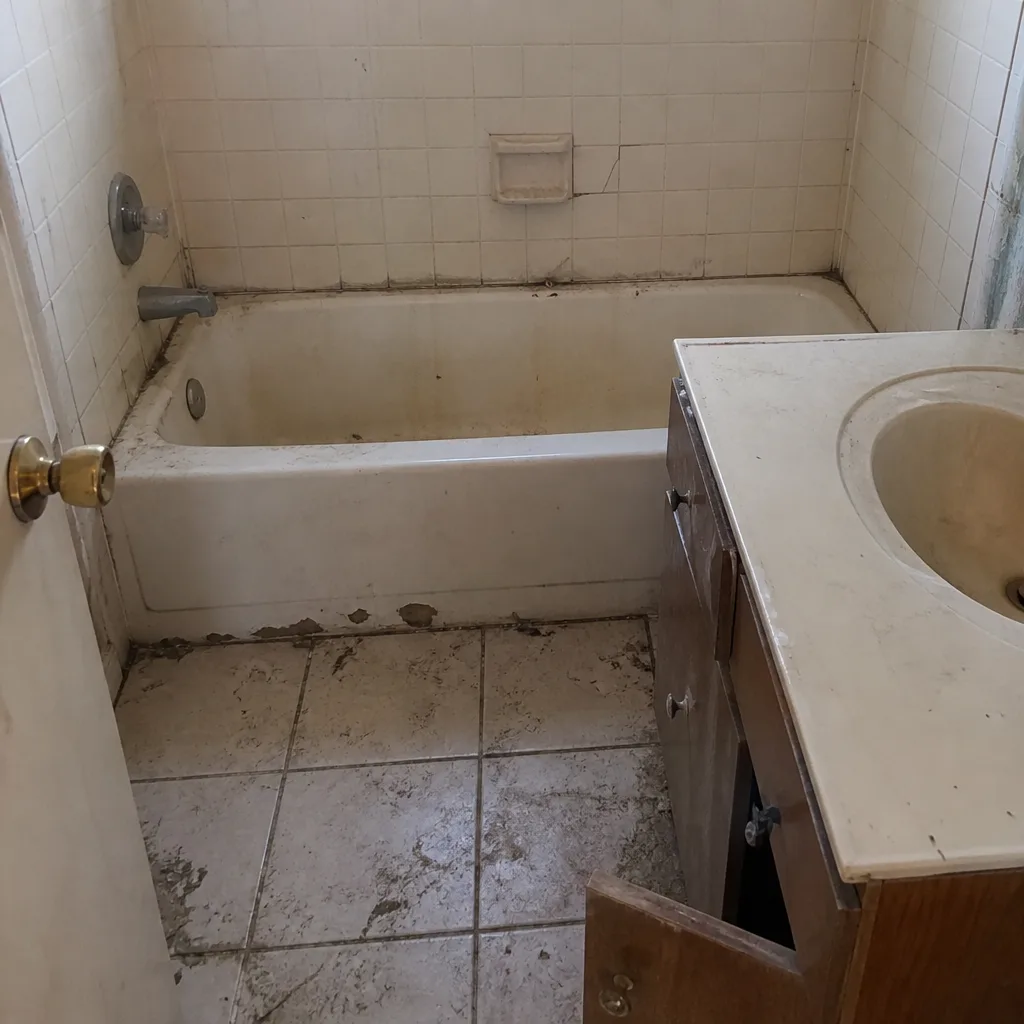 Before
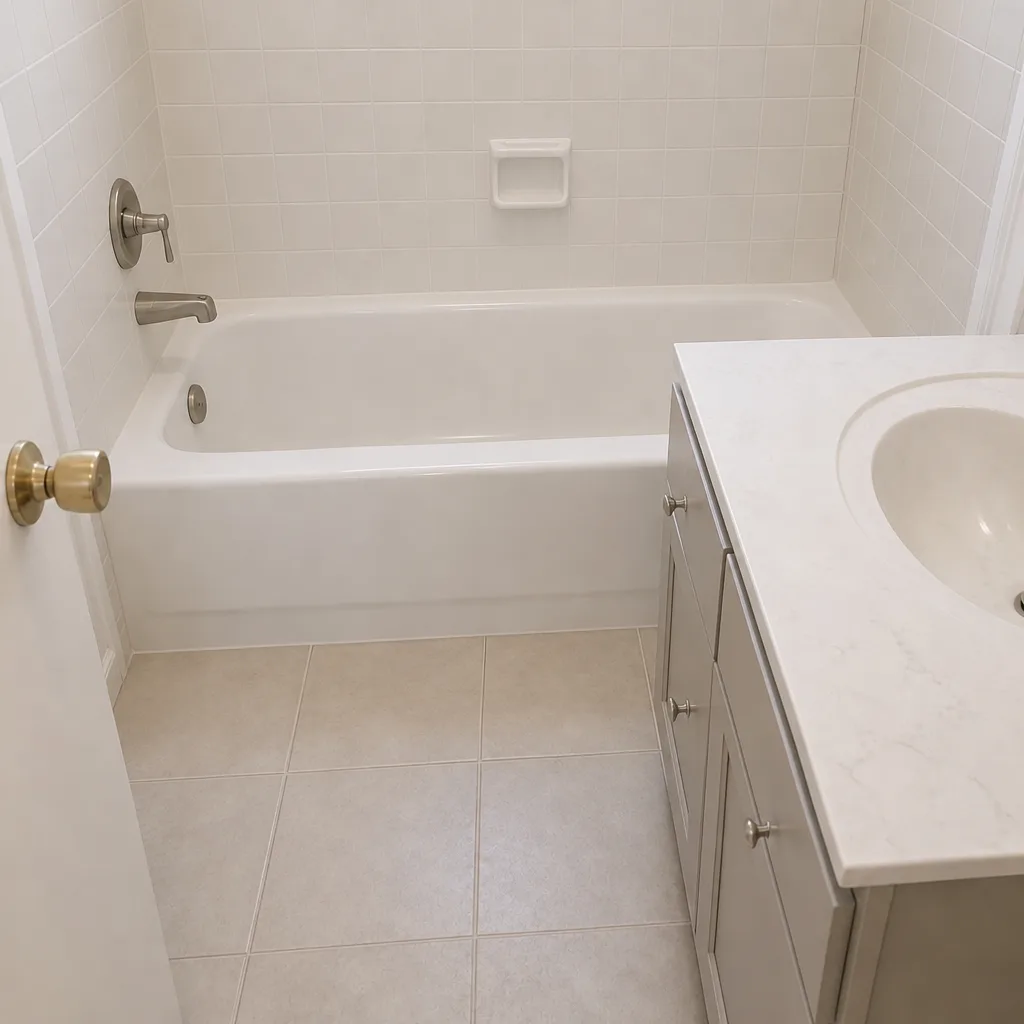 After
 Before
 After
 Before
 After
When to Call a Professional
Call a professional when the post lean is over an inch, when a whole run of posts leans in the same direction, when the gate frame has racked out of square and the turnbuckle won’t hold, or when the fence sits over a slab whose integrity you can’t verify from the surface. Any of these involves a footer – and a footer repair in Enterprise clay involves the digging tools and the soil prep a homeowner usually doesn’t have. If your fence is over 6 feet tall, or a gate is over 36 inches wide, the lateral load math gets harder and a professional footer design saves you a second repair.
The 365-Day Done Right Promise covers any installation or repair we do: if it’s not done right, we make it right. Under Clause 1 of the standard, the price is written before anyone starts. Rowan Construction Group Enterprise offers free estimates in Enterprise – call (833) 630-4077.
Frequently Asked Questions
Most single-post repairs in Enterprise run $120 to $260 for a bracket repair or $450 to $900 for a full post reset with a new footer. The bracket repair holds when the footer is sound and the lean is small; the full reset is the only durable fix when the footer has moved. Call (833) 630-4077 for an exact quote – estimates are free.
Yes, if the post is sound and the lean is under about 1 inch – a steel post-repair bracket driven alongside the post and anchored into the footer will pull it back to plumb. If the lean is over 1 inch, the post is rotted below grade, or the soil collar is cracked in a ring, bracket repair only delays the failure. Call (833) 630-4077 for an exact quote on a reset.
Because the clay-and-caliche soil under most of Enterprise expands when saturated and shrinks as it dries, and that seasonal movement pushes lateral load onto post footers that are often shallower than the soil needed. The post pivots slightly at the footer each season, and the lean compounds. It’s not the fence face that’s failing – it’s the footer. Call (833) 630-4077 to schedule a free estimate.
For a repair of an existing fence that stays within the original footprint and height, a permit is usually not required. For full fence replacement, a height increase, or any change to a property-line fence, Clark County permitting applies and we handle it. We confirm the permit need in writing before any work starts. Call (833) 630-4077 for a free estimate.
No. Under Clause 1 of the Haven Standard, the price and scope are written before any work begins, and no change proceeds until a change order is signed. That’s what has kept our projects within a few percent of the agreed cost across 4,000-plus jobs. Call (833) 630-4077 for a free estimate.
A bracket repair or a gate turnbuckle is a same-visit job, usually two to four hours. A single post reset with a new footer is typically a half-day plus a 24-to-48-hour concrete cure before the fence is reloaded. A full run replacement runs 2 to 5 days depending on length and material. Call (833) 630-4077 for a timeline on your specific repair – estimates are free.
We specify pressure-rated wood, steel post systems, and hardware from the same vetted manufacturer list we use across our trades – the same list that includes Tuff Shed, James Hardie, KraftMaid and Wellborn on other projects. Fence material brand is named in the written quote so you can compare spec-for-spec. Call (833) 630-4077 for a free estimate.
The Bottom Line
Nearly every fence failure homeowners in Enterprise call us about starts at the post footer, not at the surface. A leaning post under 1 inch with a sound footer can be bracket-repaired for $120 to $260. A post that’s moved more than an inch, a whole run leaning in the same direction, or a racked gate frame needs footer work, and the durable fix is a reset or repour, not new pickets. Diagnose before you replace. Document before you call. Get the price in writing before the crew arrives. Then check out our Rowan Construction Group Enterprise home to see the full range of trades and how we write our prices.
Call (833) 630-4077 to schedule a free estimate in Enterprise.
Written by the team at Rowan Construction Group Enterprise.