Last updated November 18, 2026

Free written scope consultation - allowances, timeline, and change-order rules on paper before a single trade is scheduled
Windows & Doors Warning Signs Every Homeowner Should Know
A failed insulated glass unit has already cut that window’s center-of-glass R-value roughly in half, and it will never clear. The fog between the panes is permanent, and the energy penalty adds up every month it stays in the wall. Most homeowners catch it years after it started. This guide is the checklist we wish every Enterprise homeowner had before the damage spreads: deflection thresholds, door gaps measured in fractions of an inch, climate-specific signs you can feel in an afternoon, and the age markers by product type that tell you what year the clock runs out. You’ll learn how to tell a fix from a replacement, and when waiting costs more than acting.
Quick Answer
The clearest signs a window or door needs replacement are: permanent fog or mineral staining between glass panes (a failed insulated glass seal), visible frame deflection beyond about 1/8 inch out of square, interior paint peeling at the bottom corners of a window casing, soft drywall below a sill, exterior stucco staining in a horizontal line, west-facing windows that are hot to the touch during afternoon hours, and any second-floor window with a failed tilt-wash latch. Several of these mean water has already reached the wall assembly, which is when replacement stops being cosmetic and starts protecting the structure.
Styles & brands we work with
- Kitchen remodeling
- Bathroom remodeling
- Home additions & ADU
- Roofing
- Windows & doors
- Driveway & pavers
- Fence
Table of Contents
- Failed Insulated Glass: The Sign That Never Clears
- A Visual Inspection Checklist With Specific Thresholds
- Operational Signs That Predict Hardware Failure
- Energy Signs Specific to the Enterprise Climate
- Water Infiltration Signs That Mean the Wall Is Already Wet
- Age-Based Warning Signs by Product Type
- Common Mistakes to Avoid
- When to Call a Professional
- Frequently Asked Questions
Failed Insulated Glass: The Sign That Never Clears
An insulated glass unit, or IG unit, is two panes sealed around a hollow spacer with air or argon between them. The spacer carries a desiccant that absorbs any moisture in that cavity. When the perimeter seal fails, the desiccant saturates, moisture enters, and the window fogs from the inside. It doesn’t clear after a cold night. It doesn’t wipe away from the interior. That permanence is the tell.
The reason this matters more than most homeowners realize is the math behind the glass. A dual-pane unit typically carries an R-value of about 3 at the center of the glass. Once the seal fails and the cavity fills with humid air rather than dry gas, that center-of-glass number drops by roughly half. The window keeps looking like a window. It stops performing like one.
Here’s how to tell a failed seal from ordinary condensation on the room-side surface:
- Surface condensation wipes off. Run a finger or a paper towel across it and the glass clears. It comes back when indoor humidity is high, usually in the morning during heating season, and disappears as the house dries out.
- A failed seal doesn’t wipe off. The fog, haze, or white mineral ring lives between the panes, on the inside face of the outer glass or the outside face of the inner one. You cannot reach it, and it’s usually worse in one part of the unit than another.
- Mineral staining looks like a cloudy residue, sometimes with a faint white line tracing the spacer. That residue is the desiccant that has given up.
If you want the tool that finds these fast, buy a cheap infrared thermometer and point it at any window that looks hazy. A failed unit will often read noticeably colder or hotter at the edge than the center of the glass. That temperature gradient is the exposed spacer, working harder than it should. We’ve seen this pattern repeatedly in Enterprise homes built between 1998 and 2008, where production-grade IG units are now past their typical seal life.
A Visual Inspection Checklist With Specific Thresholds
Walk the house with a level, a tape measure, and a flashlight in the morning. Then read each window against the thresholds below. “Significant” is not a feeling; it’s a measurement.
- Check frame square with a level. Set a 4-foot level against the jamb and check for plumb and level in both directions. Up to 1/8 inch out of square across the frame is within tolerance for most residential windows. Beyond 3/16 inch, and especially if the top rail is noticeably twisted or the reveal around the sash is uneven, that’s a sign of settlement or a failing anchor. It’s not a weather strip issue.
- Pan the glass interior with a flashlight. At night or in a dark room, aim a strong light across each window at a low angle. Fog between the panes shows as a bright, milky scatter. Clean surface condensation doesn’t.
- Measure door threshold gaps. With the door closed, look down at the threshold. A gap under 1/4 inch that closes when you press the door gently is a weatherstrip adjustment. A gap that persists over 1/4 inch across the full width, especially with daylight showing through, usually means the rough opening has shifted and the door has settled beyond adjustment. On older doors we measure with a tap of the door bottom and a flashlight from below.
- Look at the bottom corners of the interior sill. Paint peeling or bubbling on the interior casing, particularly at the lower corner where the sill meets the jamb, is the first place water pools inside the wall. It usually appears a season or two before any exterior staining shows.
- Scan the exterior wall below each sill. A horizontal line of stucco staining, discoloration, or a faint chalky trail below the sill means water has been running down and soaking the wall, not just the glass.
- Press the drywall just below each sill inside. Soft or spongy drywall, or a faint musty smell when you press the paper, indicates the wall assembly behind the trim is wet. That’s a replacement trigger, not a repaint trigger.
Operational Signs That Predict Hardware Failure
A window that takes effort to operate is telling you it’s on a countdown. The problem is that the countdown is invisible until it’s a two-part repair.
A casement window operator is the crank mechanism at the bottom of a hinged window. Inside the operator, a cam drives a worm gear that pushes the sash arm. When the cam wears, the crank starts to feel stiff and requires force to move the last quarter inch closed. That worn cam costs roughly $80 to $150 to replace as its own part. If you wait until the cam strips the sash-side gear, you’re replacing the full operator and often the sash gear together, closer to $400. Same window, different invoice.
The door equivalent is the shoulder. If you have to lean into a door to make it latch, or you have to lift the knob to get the bolt into the strike plate, the hinges have shifted or the strike plate has moved in the jamb. Left alone, that’s a hinge replacement at 20 minutes of labor now, versus a locksmith call later plus possible jamb repair. In our experience, roughly a third of the “sticking door” service calls we see in newer Enterprise subdivisions turn out to be the same root cause: the door was hung when the framing was green, and it’s now settled a quarter inch lower than the strike.
Two other operational signs to watch:
- Tilt-wash latches on second-floor windows. If the tilt latch no longer catches the sash when you try to open the window for cleaning, the window can tip inward unexpectedly. On a second-floor unit that is a safety issue, not a convenience issue.
- Window that won’t lock fully. If the lock cam misses the keeper, the sash is out of alignment, and continuing to force the lock will crack the lock housing.
Energy Signs Specific to the Enterprise Climate
The signs below are the ones that only show up in a hot, dry, high-solar-exposure climate like Enterprise’s. You won’t find them on a generic checklist, and they’re some of the earliest indicators.
- West-facing windows that are hot to the touch mid-afternoon. A window whose inner glass is uncomfortable to hold your hand against at 3 p.m. in July or August is likely carrying a solar heat gain coefficient higher than what the exposure calls for. That’s a glazing specification issue, not a broken window. But if the window is more than about 15 years old and the room runs hot every summer despite added air conditioning, replacement with a low-SHC glass is the only fix that changes the geometry of the problem.
- Comfort complaints in rooms with large glazed areas that persist after HVAC adjustment. If an adjustment or a new air handler didn’t move the needle, the load isn’t the equipment, it’s the glass area. This shows up most often in east-facing breakfast rooms and family rooms with full-width windows.
- Draft at the edge of west- or south-facing units, even in August. If you can feel warm air rushing past the perimeter of the sash when the afternoon wind comes up, the perimeter seal or weatherstripping has failed. That’s a replacement decision if the frame has also warped.
- Interior condensation that appears only on the hottest, most humid days of monsoon season. That’s usually a sign the glass surface temperature is low enough to drop below dew point on the interior face – often a symptom of old, low-insulating glazing, not a broken seal.
If you’re comparing the cost of replacement against the cost of running a bigger air conditioner, put both on paper. Rowan Construction Group Enterprise quotes a flat written price on windows and doors before any work starts, and you can bring a competitor’s written estimate to us for a line-by-line second opinion at no charge.
Water Infiltration Signs That Mean the Wall Is Already Wet
Water infiltration is the sign that turns a window replacement into a wall repair. Our job as contractors is to catch it early. Here’s what to look at, in order of how long the water has probably been there:
Stage 1: Paint peeling at the interior casing’s bottom corner. Water wicks down the back of the drywall behind the window, and the first place it pools inside the wall is the lower corner of the casing. You’ll see paint lifting, bubbling, or crinkling. This usually shows one to two seasons after the leak begins. At this stage, the wall may still be dry behind the trim; you catch it and fix the flashing before the studs are soft.
Stage 2: Soft or stained drywall beneath the sill. Press the drywall with a knuckle. If it gives before it should, water has been sitting behind it. Look for a line of discoloration along the top of the drywall below the sill. This is where we start opening the wall to check for rot in the rough framing.
Stage 3: Horizontal stucco staining on the exterior below the sill. A chalky white trail or a dark horizontal band below the sill on the exterior is water running over the stucco and evaporating. It usually means the head flashing above the window has failed, the window has settled enough to break the seal, or the stucco joint around the frame has cracked and opened. In Enterprise, we see a lot of this on south- and west-facing windows where UV has degraded the perimeter sealant.
The financial case for acting at this stage is not sentimental. Replacing a window and refinishing the interior is a much smaller invoice than replacing a window plus the water-damaged rough framing, sheathing, and stucco patch behind it. When you’re ready to price it, our Rowan Construction Group Enterprise home page describes how we scope and quote a window replacement and how we handle the exterior repair after.
Age-Based Warning Signs by Product Type
Age isn’t a trigger by itself. It’s a heads-up. Here’s how the clocks run by product type.
- Aluminum single-pane windows over 25 years old. These no longer meet current energy code for replacement in most cases, and a repair to a single-pane unit rarely pencils out against replacement. If they’re 25-plus and you have comfort complaints, the payback on replacement is measurable.
- Vinyl windows at 15 to 20 years. Vinyl frames take UV damage over time. Yellowing, warping along the sash rail, and a stickiness to the surface are the signs. In Enterprise’s sun, we see the yellowing start earlier on south- and west-facing windows than others on the same house.
- Wood windows over 20 years. Look for rot at the sill and lower corner. Wood windows can outlast vinyl if they’re maintained, but a soft sill is already a structural issue.
- Any second-floor window with a failed tilt-wash latch. Replace it or repair the sash mechanism; don’t leave it on a safety issue.
- Doors with hinges that require a shoulder to latch. A hinge-and-strike adjustment now, or a locksmith later.
Common Mistakes to Avoid
- Repainting over a peeling interior casing bottom corner. If you paint the peeling corner without opening it first, you’ll trap the moisture behind a fresh coat and give yourself a bigger wall repair next season.
- Replacing a single failed IG unit inside a window that has already warped its frame. The glass can be replaced, but if the frame has deflected past 3/16 inch out of square, a new IG unit is going into a twisted opening. The seal fails again faster than it should.
- Adding a bigger air conditioner to a room with west-facing glass that’s already hot to the touch. This treats the symptom. It’s cheaper to fix the glass.
- Ignoring a door threshold gap because “it’s just a draft.” On a load-bearing exterior wall, a persistent over-1/4-inch gap often means the rough opening has shifted, not that the weatherstrip is worn.
- Assuming condensation on a window means the window is broken. Interior surface condensation is usually a humidity problem. Fog between the panes is a seal problem. Know which one you have before you replace anything.
- Letting a second-floor tilt-wash latch fail without addressing it. This is a fall hazard, not a minor annoyance, and it’s often fixable at modest cost.
- Accepting a verbal window replacement price. We’ve seen homeowners get caught by a number that grew 30% mid-job because the scope crept. Our honest read: it’s fine to price on a phone call, but the price you agree to should be a written flat price with a written scope before anyone picks up a tool.
When to Call a Professional
Some of this you can check yourself over a weekend. A few things you should turn over to a licensed contractor:
- Any drywall that feels soft below a sill, or any interior casing bottom corner that has already begun to peel or bubble. That’s water entering the wall, and diagnosing where means opening the trim.
- A frame that measures more than 3/16 inch out of square, especially if the top rail is visibly twisted.
- Any window or door where the glass is a second-story unit and the latch or sash mechanism has failed.
- Aluminum single-pane windows that are 25-plus years old and about to be replaced – the replacement has to meet current energy code, which is a permit-and-inspection question, not just a purchase decision.
Rowan Construction Group Enterprise offers free estimates in Enterprise. We’ll walk the house with you, hand you a written flat price and scope before any work starts, and give you a documented photo record of what we found, not just what we fixed. That’s The Haven Standard, and it’s on every job. Call (833) 630-4077 to schedule your free estimate.
Frequently Asked Questions
In Enterprise, a single-pane aluminum to dual-pane vinyl replacement typically runs from around $550 to $900 per unit installed, depending on size and whether the opening needs to be re-flashed or the surrounding stucco repaired. A large picture window or a sliding glass door can run higher. We put the exact number in a written quote before work starts, so there’s no change order later. Call (833) 630-4077 for an exact quote – estimates are free.
Not always. Fog between the panes, on the inner face of the outer pane or the outer face of the inner pane, is a failed insulated glass seal. Surface condensation on the room-facing inside of the glass is usually a humidity problem, not a window problem. Wipe it and see if it clears; if it doesn’t, it’s the seal.
You can replace the IG unit inside an existing frame, but only if the frame is still square and the sash hardware is sound. If the frame has warped, is more than 3/16 inch out of square, or the tilt-wash hardware has failed, replacing the glass alone usually puts you back here in a handful of years. A replacement of the whole assembly is often the cheaper decision across the next decade.
Close the door and look at the gap under it. If the gap is under 1/4 inch and closes when you press gently, the weatherstrip needs adjustment. If the gap persists over 1/4 inch across the whole width, or daylight shows through, the rough opening has shifted and the door has settled; replacement or a re-hang is often the fix. Either way, do not leave it longer than a season; a persistent gap invites water and insects in.
If the inner glass feels hot to your hand at 3 p.m. in August and the room stays uncomfortable even after HVAC adjustments, they’re a candidate. Old low-performance glazing can’t be fixed with more air conditioning. Replacement with the right solar heat gain coefficient for the exposure is the fix.
Yes. Replacement of windows and doors is permitted, and the new units need to meet the current energy code. We pull the permit, arrange the inspection, and include the permit and inspection in the written price so it doesn’t show up as a surprise line mid-job. Call (833) 630-4077 to schedule a free estimate in Enterprise and we’ll walk you through it.
The Bottom Line

The signs that a window or door needs replacement show up long before the homeowner notices. Permanent fog between the panes, casing paint peeling at the bottom corner, drywall soft below the sill, and west-facing glass that’s hot to the touch are the early warnings. Age and product type tell you which clock is running out. Catching those signs in the first year or two is usually the difference between replacing a window and replacing a window plus the water-damaged framing behind it. If your house is over 15 years old, spend an hour with a level, a tape measure, and a flashlight before the next heating season. Then call (833) 630-4077 for a free estimate.
Written by the team at Rowan Construction Group Enterprise.
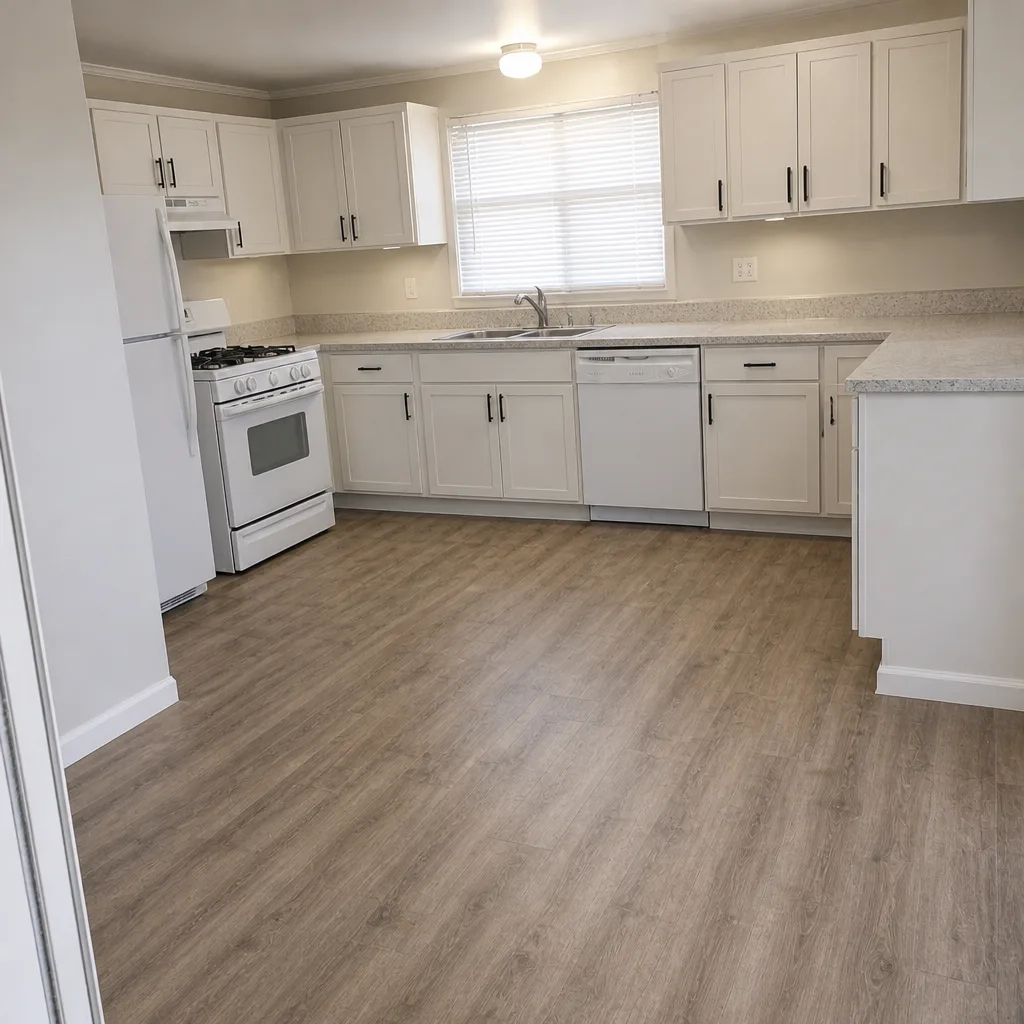
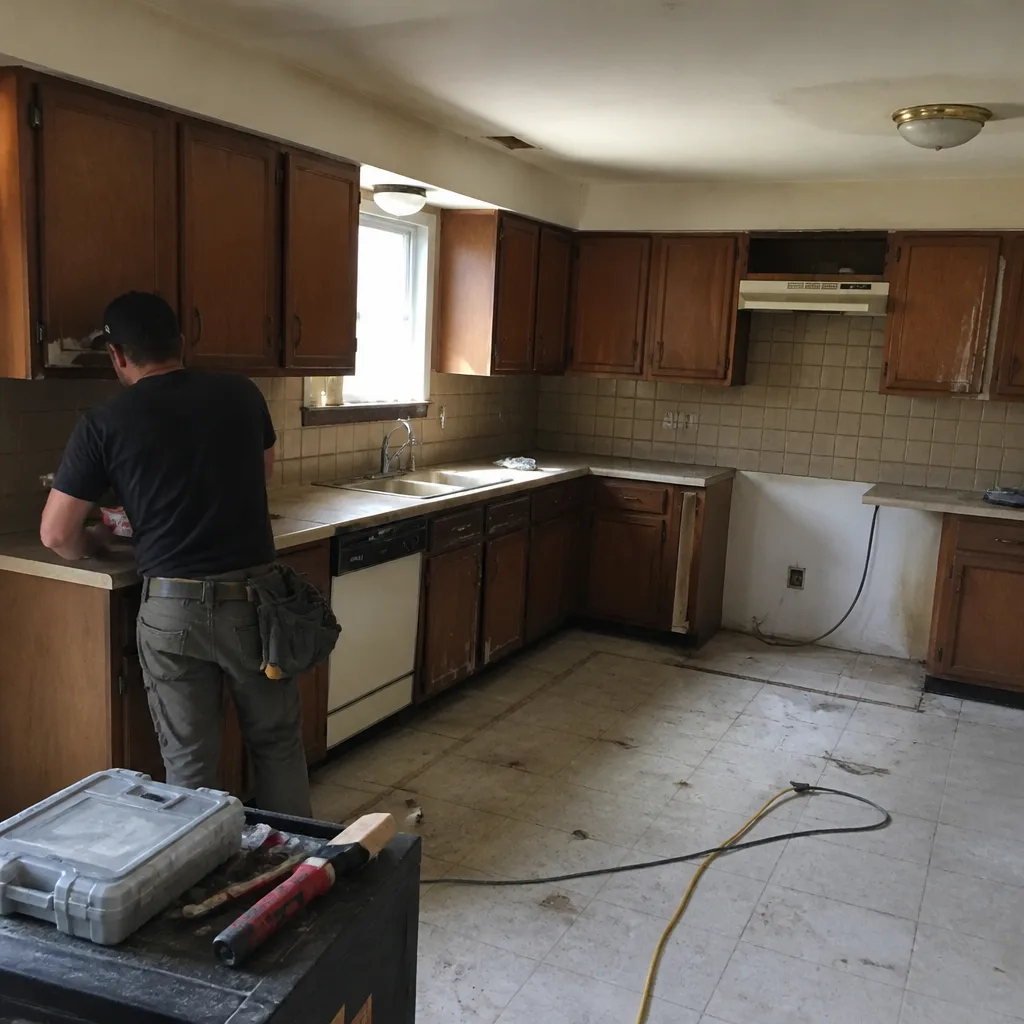
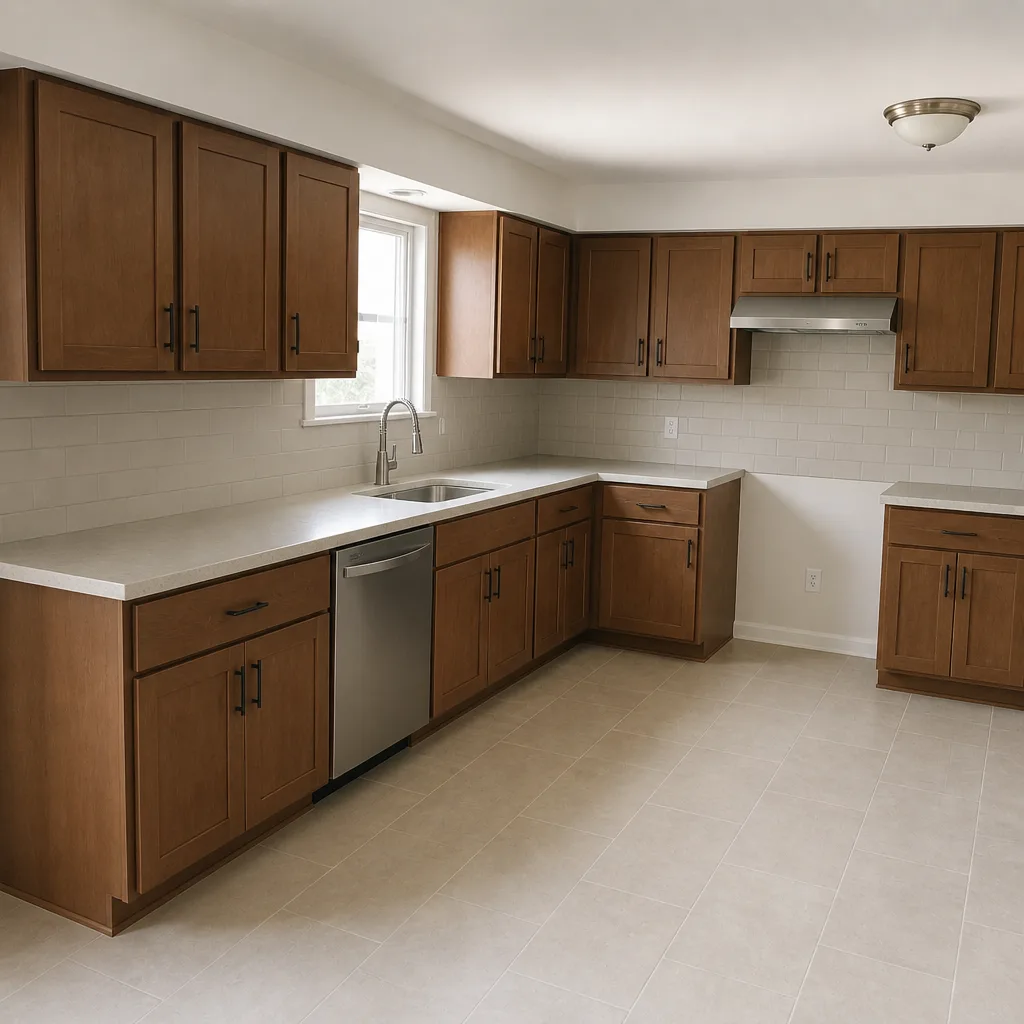
See the difference
 Before
 After
 Before
 After
 Before
 After