Last updated November 18, 2026

Free written scope consultation - allowances, timeline, and change-order rules on paper before a single trade is scheduled
Driveway & Pavers Warning Signs Every Homeowner Should Know
A single rocking paver, one that shifts underfoot, is not a cosmetic annoyance. It is a signal that joint sand has washed out or the base has voided beneath a 4 to 6 square foot area. Left through one summer monsoon season in Enterprise, that same void typically expands to 20 to 40 square feet as water infiltrates, migrates under the bedding layer, and pumps the fines out with every vehicle pass. What begins as a $150 spot repair becomes a $2,500 partial rebuild. This guide ranks the eight warning signs we see most often on Enterprise pavers by urgency, gives you repair cost ranges at each stage, and shows you how to document what you’re looking at before it gets worse.
Quick Answer
Driveway paver problems are graded on a simple scale: surface symptoms like efflorescence are cosmetic and cheap to treat, while movement, subsidence, and apron heave signal base or drainage failure that gets dramatically more expensive every month you wait. The tell is movement. If a paver rocks underfoot, water is already finding a path beneath the surface, and the repair cost trajectory climbs fast from that point. Address anything that moves within 30 days.
Styles & brands we work with
- Kitchen remodeling
- Bathroom remodeling
- Home additions & ADU
- Roofing
- Windows & doors
- Driveway & pavers
- Fence
Table of Contents
- The Eight Warning Signs, Ranked by Urgency
- Efflorescence vs. Spalling: The Water-Drop Test
- Edge Rollout and Why Enterprise Heat Accelerates It
- The Drainage Sign Homeowners Misread as Rain
- Photo Documentation Protocol for Warranty and Insurance
- Repair Cost Trajectory: 30 Days vs. 12 Months
- Common Mistakes to Avoid
- Frequently Asked Questions
The Eight Warning Signs, Ranked by Urgency
Not every symptom deserves a weekend of worry. Some are marks on the surface, and some are the surface telling you the structure beneath it is failing. Here is how we rank them on every Driveway & Pavers in Enterprise inspection, from lowest to highest urgency. The severity rating matters because it sets what you should do next and how long you can reasonably wait.
- Efflorescence (severity 1 of 8). White, powdery bloom on the paver face. Cosmetic calcium migration, not structural. A cleaning treatment runs $150 to $400 for a typical driveway. It is a sign of moisture moving through the paver, so watch for it recurring in the same spot.
- Widening joints (severity 2). Joint sand washing out between pavers, leaving gaps wider than a quarter inch. Re-sanding runs $200 to $500. Left alone, open joints become the entry point for the water that causes everything below.
- Surface cracking (severity 3). Hairline cracks across individual pavers or along a course. Some are thermal, some mean the bedding layer has lost support. Expect $300 to $900 to replace the affected course if the base is sound.
- Faded color or staining (severity 4). Usually cosmetic, occasionally a sign that water is standing in low spots. Sealing runs $500 to $1,200. Skip sealing if water is pooling, because sealant traps the moisture in.
- Rocking pavers (severity 5). One or more pavers that move underfoot. Base void confirmed. Spot repair runs $150 to $350 per area if caught early. This is the line between cosmetic and structural.
- Standing water (severity 6). Pools that persist more than 24 hours after rain. Slope failure or a clogged drain line. Regrading and re-laying the low section runs $800 to $2,000. Water that sits within 18 inches of the foundation needs a same-week call.
- Section subsidence (severity 7). A visibly sunken area, often at a driveway center or over a utility trench. Base compaction failure. Section rebuild runs $1,800 to $4,500 depending on square footage.
- Apron heave (severity 8). The paver apron at the street pushing up or separating from the garage slab. Often a drainage or root cause, sometimes expansion. Full apron rebuild with new base runs $2,500 to $6,000. This is the most expensive sign on the list, and the one that compounds fastest.
Efflorescence vs. Spalling: The Water-Drop Test
Homeowners in Enterprise regularly confuse these two, and the mistake is costly because one is a cleaning job and the other is a replacement job. Efflorescence is calcium carbonate that migrates to the surface as moisture moves through the paver and evaporates, leaving a white powder behind. It sits on top of the surface. Spalling is delamination, where the top layer of the paver actually flakes away because water froze or salt-crystallized within the paver body. It takes material off the paver itself.
Here is the water-drop test we use on site. It takes one minute and tells you which you’re looking at.
- Drip a few drops of water onto the affected paver face in an inconspicuous spot.
- Watch the drops for 30 seconds. If they bead on the surface and roll off, the paver face is intact, and the white bloom is efflorescence. Clean and seal, and you’re done for $150 to $400.
- If the drops absorb immediately and the surface feels chalky or sandy under your fingertip, the paver face is compromised. That is spalling, and those pavers need replacing. Expect $300 to $900 for a course or partial section.
- If the surface is intact but the bloom keeps returning in the same spot after cleaning, moisture is moving through from beneath the paver. That points at the bedding layer and warrants a base inspection.
The Enterprise climate makes efflorescence more common than in coastal markets because the dry air pulls moisture up and out of the pavers fast, depositing calcium on the face. That’s easily managed. Spalling on a Belgard or Techo-Bloc paver in our climate is less common, and when it happens it’s usually a bad batch or freeze-thaw damage from a hard winter. Both brands are on our material shortlist for that reason.
Edge Rollout and Why Enterprise Heat Accelerates It
Edge rollout is the outward creep of the border course of paver at the edge of your driveway. It starts small, a quarter inch of spread at the sidewalk corner, and by the second summer it’s a half inch or more. What causes it is edge restraint failure: the hidden aluminum or plastic lip that locks the outer course in place has pulled up, lost its stakes, or wasn’t set deep enough in the first place. Without that restraint, every vehicle turning into the driveway pushes the border outward one paver at a time.
Enterprise heat makes it worse. Driveway pavers here hit surface temperatures over 140 degrees on a summer afternoon, and the sand bedding softens and loses some of its grip on the paver edges. When the edge restraint is compromised, the combination of heat-softened bedding and vehicle load moves border pavers in a way you rarely see in cooler markets. We see the problem most on older driveways where the original restraint was plastic rather than aluminum, and on driveways that get heavy turn-in traffic from the street.
Edge rollout repair runs $400 to $1,200 depending on linear feet. If you catch it in the first month, re-staking and re-setting the restraint is a short job. If you wait a year, the border course is loose enough that it needs to be pulled, the base at the edge re-compacted, and the course re-laid, which pushes the cost toward the top of that range. This is one of the few repairs where waiting genuinely doubles the price.
The Drainage Sign Homeowners Misread as Rain
When water pools on a driveway, the instinct is to blame a heavy rainstorm. In Enterprise, we get the same monsoon pattern every July and August, and homeowners on their second or third season tend to accept the pooling as normal. It usually isn’t. Standing water on a properly laid driveway should be gone within a couple of hours after rain ends. Water that lingers into the next day, or that sits in the same low spot for more than one storm, means the slope has failed or a drain line is blocked.
The most important version of this sign is water pooling within 18 inches of the house foundation. That is not a drainage nuisance, it is a structural warning. Water pooling against the foundation is a leading cause of foundation movement, and in Enterprise’s expansive clay soil it’s the kind of problem that runs into tens of thousands of dollars if allowed to continue. The driveway slope should drain water away from the house, not toward it, and if it doesn’t, the fix is regrading the affected section and, in some cases, adding a channel drain at the apron.
Regrading and re-laying a low section runs $800 to $2,000. A channel drain addition runs $1,200 to $2,800. Both are affordable repairs compared to foundation work. If you see this sign, treat it with same-week urgency, not next-month urgency.
Photo Documentation Protocol for Warranty and Insurance
This is the step most homeowners skip and most wish they hadn’t. A photographic baseline, taken when the driveway is first installed and repeated seasonally, is the difference between a warranty claim that moves smoothly and one that stalls on “we can’t tell if that was there before.” Our crews take a documented photo record on every visit and include it in the job file, and we recommend you do the same on your side. Here’s the protocol.
- Establish the baseline. Within a week of installation, photograph the full driveway from four angles: standing at the garage door looking out, standing at the street looking in, and standing at each side looking across. Include one close-up of each border edge and the apron where it meets the street.
- Add a reference object. Place a tape measure or a coin across a joint in every close-up. That gives the photo a scale reference that a warranty reviewer can trust.
- Photograph on a dry day. Water hides the joint gaps and can look like fresh efflorescence. Take the seasonal set after three dry days.
- Repeat quarterly. Same four angles, same reference object, same time of year ideally. Set a phone reminder.
- Date-stamp every photo. Most phones do this automatically. Don’t disable it.
- File the set with your warranty documents. If the pavers are Belgard or Techo-Bloc, save the product name and the installation date alongside the photos. If a claim ever needs to be made, having the date of installation and a visual record of the driveway at installation is the strongest possible evidence.
This protocol takes about 10 minutes a quarter and costs nothing. It’s also useful if you ever sell the home, because a documented driveway history is a useful piece of evidence for a buyer.
Repair Cost Trajectory: 30 Days vs. 12 Months
The reason we rank warning signs by urgency is that repair costs don’t scale linearly with time. They scale in jumps. Here is how the same problem prices out if you catch it within 30 days versus letting it run a full year, based on what we see in Enterprise repair scopes.
- Rocking pavers: $150 to $350 within 30 days (spot reset). $1,800 to $4,500 at 12 months (section rebuild once the void has spread and the surrounding base has lost compaction).
- Widening joints: $200 to $500 within 30 days (re-sand and seal). $800 to $2,000 at 12 months (re-sand plus base inspection and spot re-lay where water has reached the bedding layer).
- Edge rollout: $400 to $1,200 within 30 days (re-stake, re-set restraint, replace border). $1,200 to $2,800 at 12 months (pull and re-lay the border course plus compact the outer base).
- Standing water: $800 to $2,000 within 30 days (regrade and re-lay the low section). $2,500 to $5,500 at 12 months (regrade plus channel drain addition, plus repair of any bedding that has failed under the pool).
- Section subsidence: $1,800 to $4,500 within 30 days (lift, re-base, re-lay). $4,000 to $8,000 at 12 months (larger section rebuild, base amendment, re-integration with adjacent stable pavers).
The takeaway is simple: catching a sign inside the first month is almost always cheaper than catching it a year later, usually by a factor of two or three. Every repair on this list fits inside a written price before anyone picks up a tool, which is the discipline we work to on every job. Our technicians have up to 19 years of experience, and in that time the pattern is consistent: the homeowner who calls within 30 days of noticing a problem spends far less than the one who calls a year later.
Common Mistakes to Avoid
- Treating a rocking paver as cosmetic. One rocking paver means water is already under the surface, and the void will grow. Call within 30 days, not next spring.
- Sealing over a problem. Sealant traps moisture and makes any base failure under the surface invisible. Never seal if water is pooling or a paver is rocking.
- Ignoring water near the foundation. Pooling within 18 inches of the house is not a rain issue. In Enterprise’s clay soil, it’s a foundation issue in the making.
- Doing spot repairs without addressing the cause. Re-sanding without checking the edge restraint or the slope means the sand washes out again the next monsoon. Address the cause first.
- Assuming efflorescence means the pavers are failing. Use the water-drop test. A chalky, powdery face is usually cleanable; a delaminating face needs replacement.
- Skipping a perm check without a written quote. A written scope before the work starts is standard practice. A verbal estimate that changes once the crew arrives is an expensive warning sign of its own.
- Waiting through a second monsoon season. The homeowner’s instinct is to see if the problem gets worse before spending money. At the driveway scale, waiting to “see” is the most expensive decision you can make.
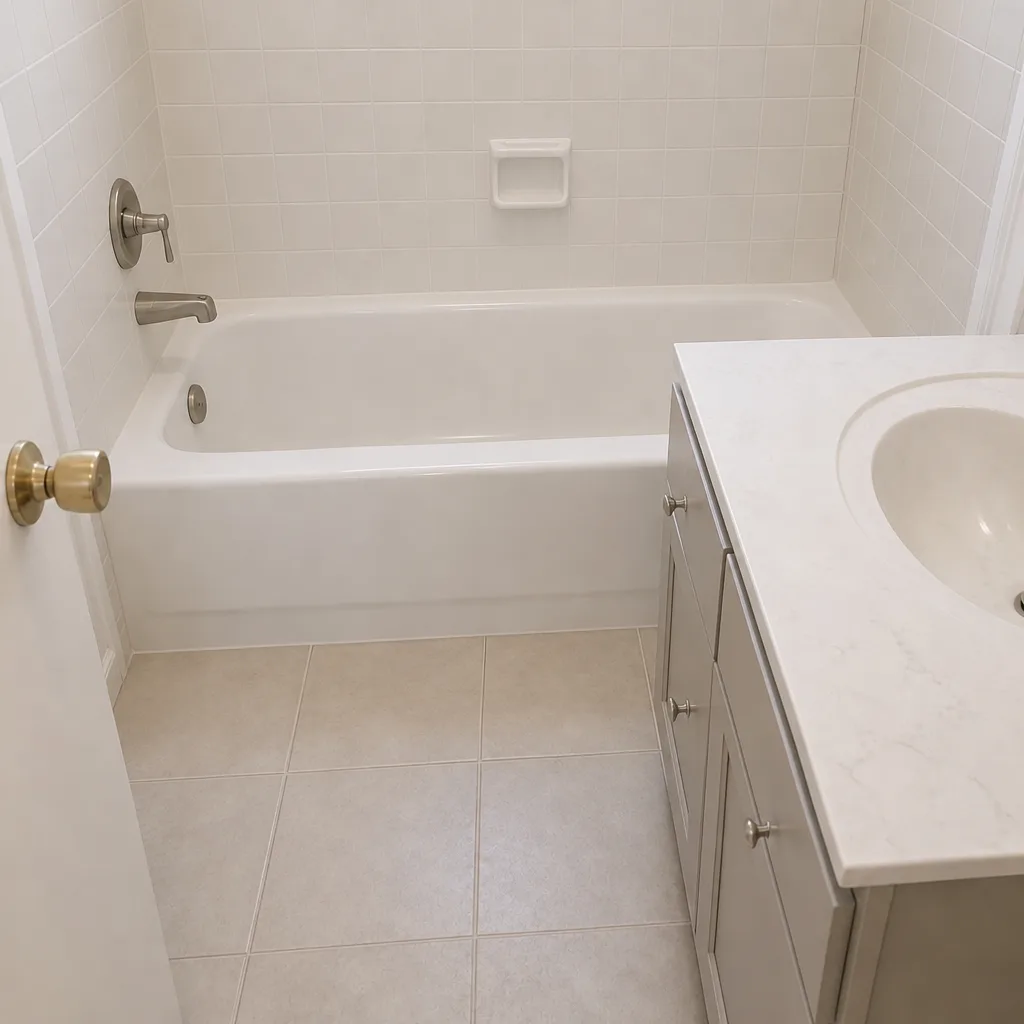
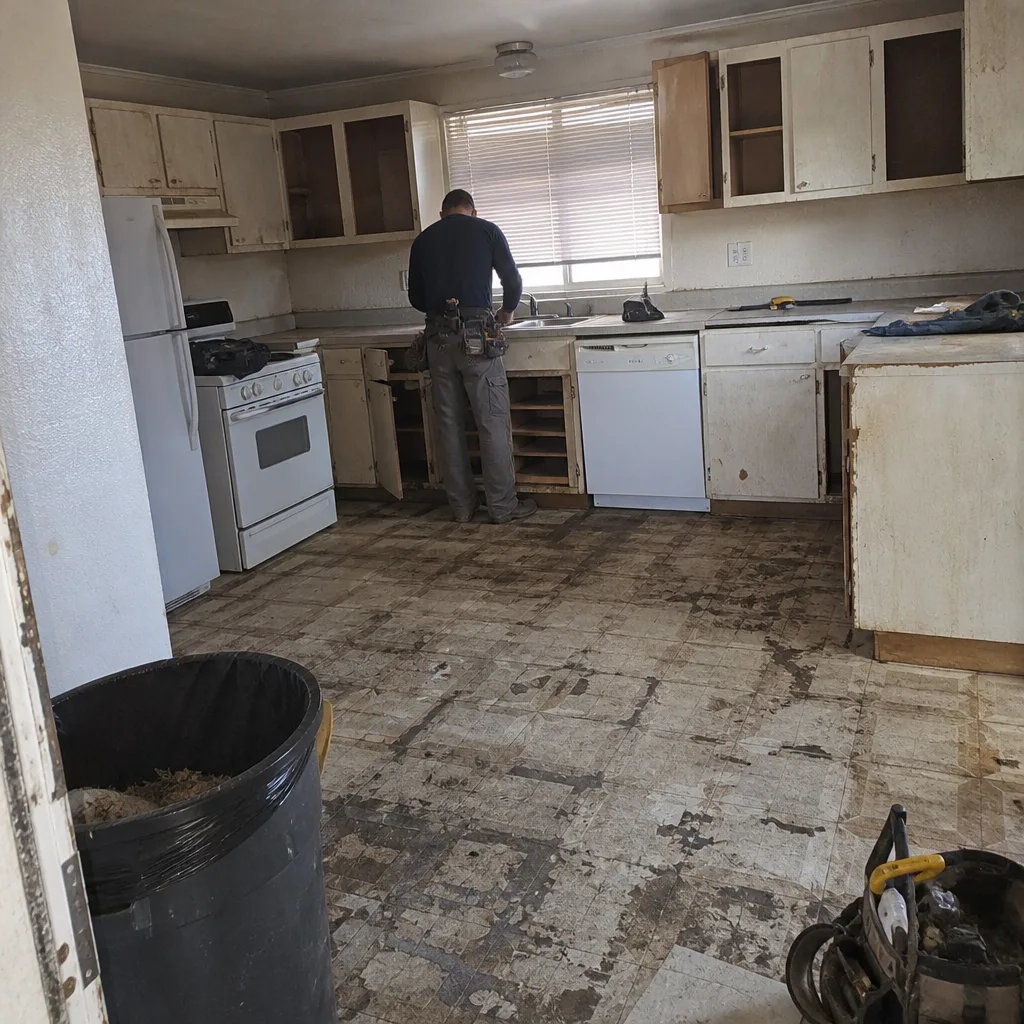
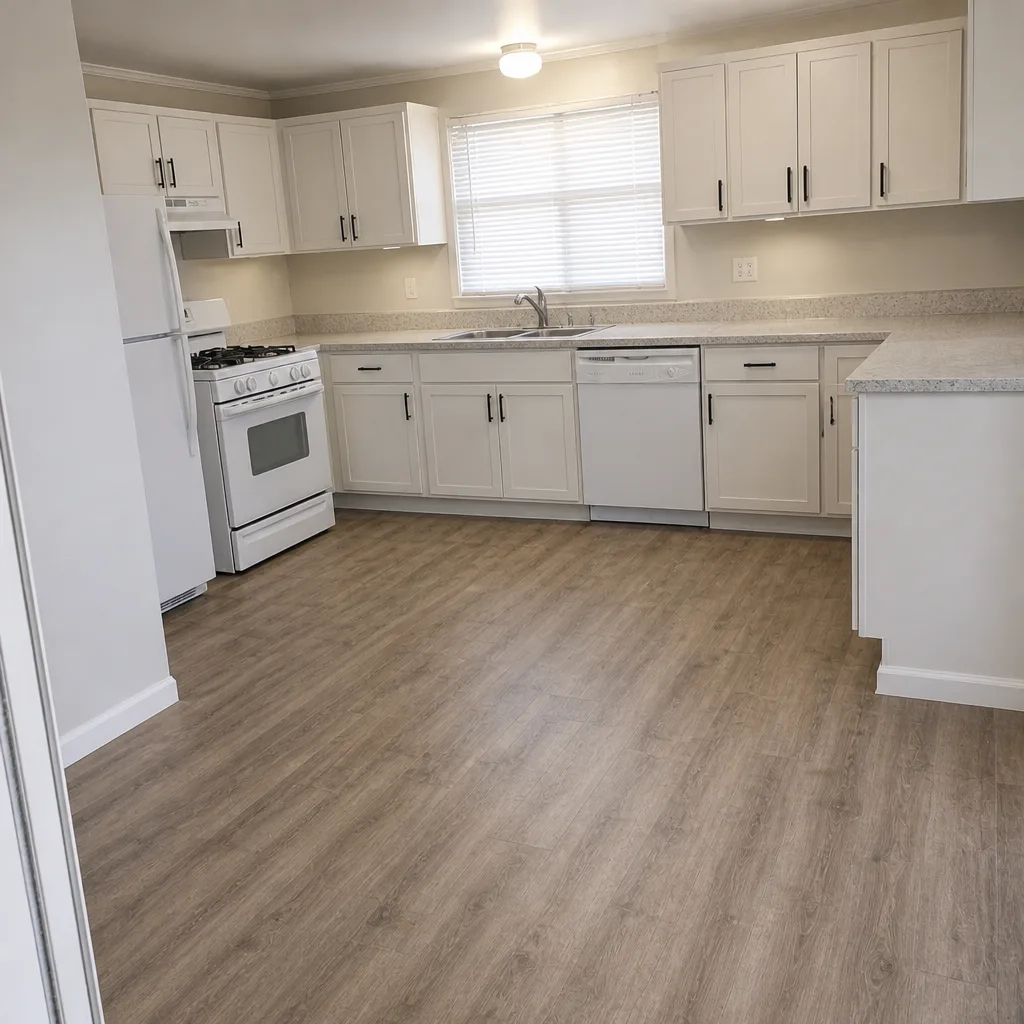
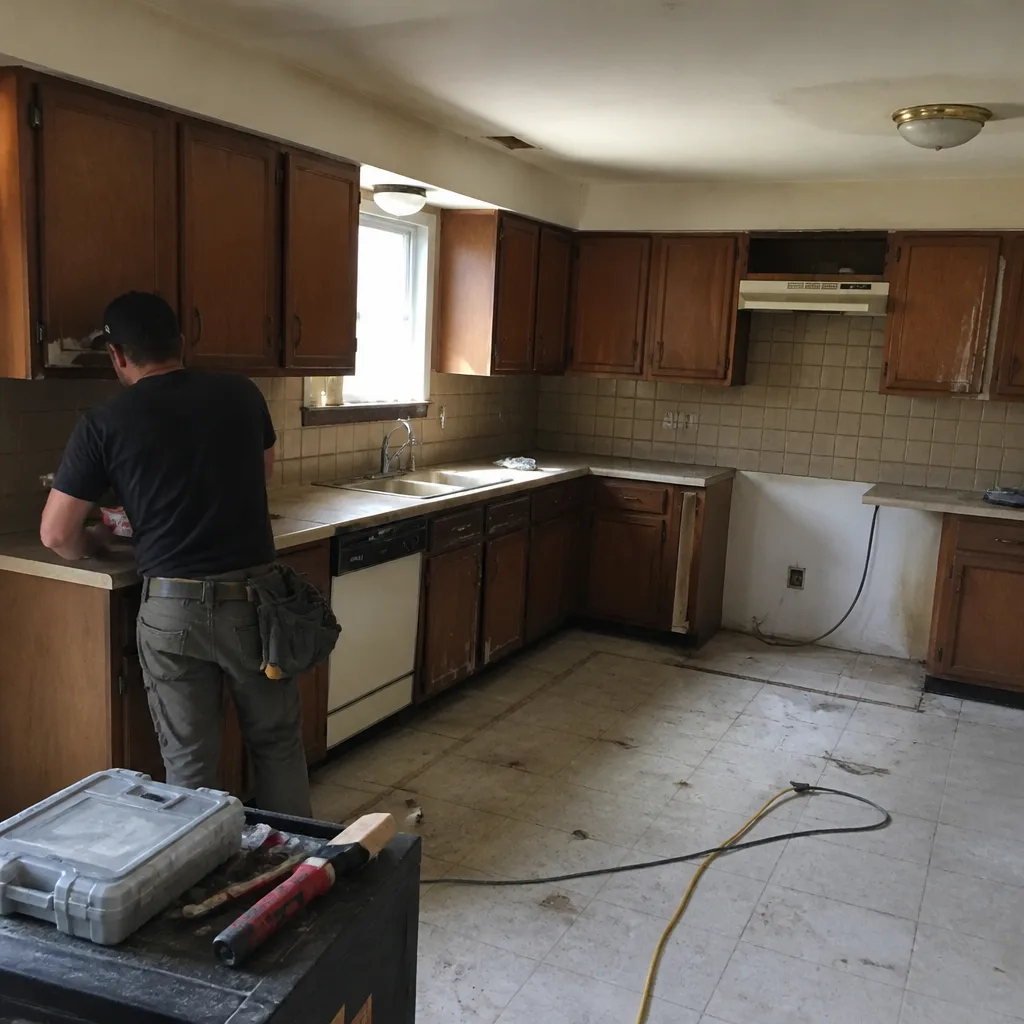
See the difference
 Before
 After
 Before
 After
 Before
 After
When to Call a Professional
Call a professional when a paver moves underfoot, when water pools within 18 inches of the foundation, when the apron at the street has heaved, or when a section has visibly subsided. These are structural signs and they get more expensive the longer you wait. Call when the efflorescence keeps returning after an initial cleaning, when edge rollout is more than a quarter inch, or when you cannot tell the difference between spalling and efflorescence. For anything cosmetic, a cleaning or sealing job is a reasonable place to start on your own. Rowan Construction Group Enterprise offers free estimates in Enterprise, with a written price before any work starts. Call (833) 630-4077 to schedule. If you’re weighing a larger driveway rebuild against other work, our Rowan Construction Group Enterprise home page lays out the seven trades we cover, and Home Additions & ADU in Enterprise covers how driveway and site work integrate with major additions.
Frequently Asked Questions
Driveway paver repair in Enterprise runs from $150 to $350 for a spot reset of one rocking paver up to $6,000 for a full apron rebuild, depending on how far the problem has progressed. The most common repair we see, re-sanding and re-laying a low section, runs $800 to $2,000. Call (833) 630-4077 for a written estimate, which is free.
About 30 days. One rocking paver means base void confirmed, and a single Enterprise monsoon season typically expands that void from 4 to 6 square feet to 20 to 40 square feet. Once the surrounding base loses compaction, the spot repair turns into a section rebuild. Call (833) 630-4077 to schedule a free inspection now.
No, not on its own. Efflorescence is calcium carbonate migrating to the surface, and it’s cosmetic. It becomes worth a call when it returns repeatedly in the same spot after cleaning, because that points to moisture moving through from beneath the paver, which can indicate a bedding layer issue. Call (833) 630-4077 if this matches what you’re seeing.
Because the driveway slope is directing water toward the house rather than away, or a drainage line is blocked. In Enterprise’s expansive clay soil, water pooling within 18 inches of the foundation is a leading cause of foundation movement. This is a same-week call, not a next-month call. Call (833) 630-4077 for a free inspection.
Spot repairs and re-sanding typically don’t require a permit. Full driveway replacement or regrading that changes the drainage pattern may require one, and the specific requirement depends on your jurisdiction. A professional contractor will check and pull the permit as part of the written scope. Call (833) 630-4077 if you’re not sure what your project needs.
We’ll review it line by line through our Free Second Opinion offer at no charge, and we’ll tell you in writing where we agree, where the scope differs, and what the price difference comes from. We don’t match on headline price alone. Call (833) 630-4077 to arrange the review.
The Bottom Line
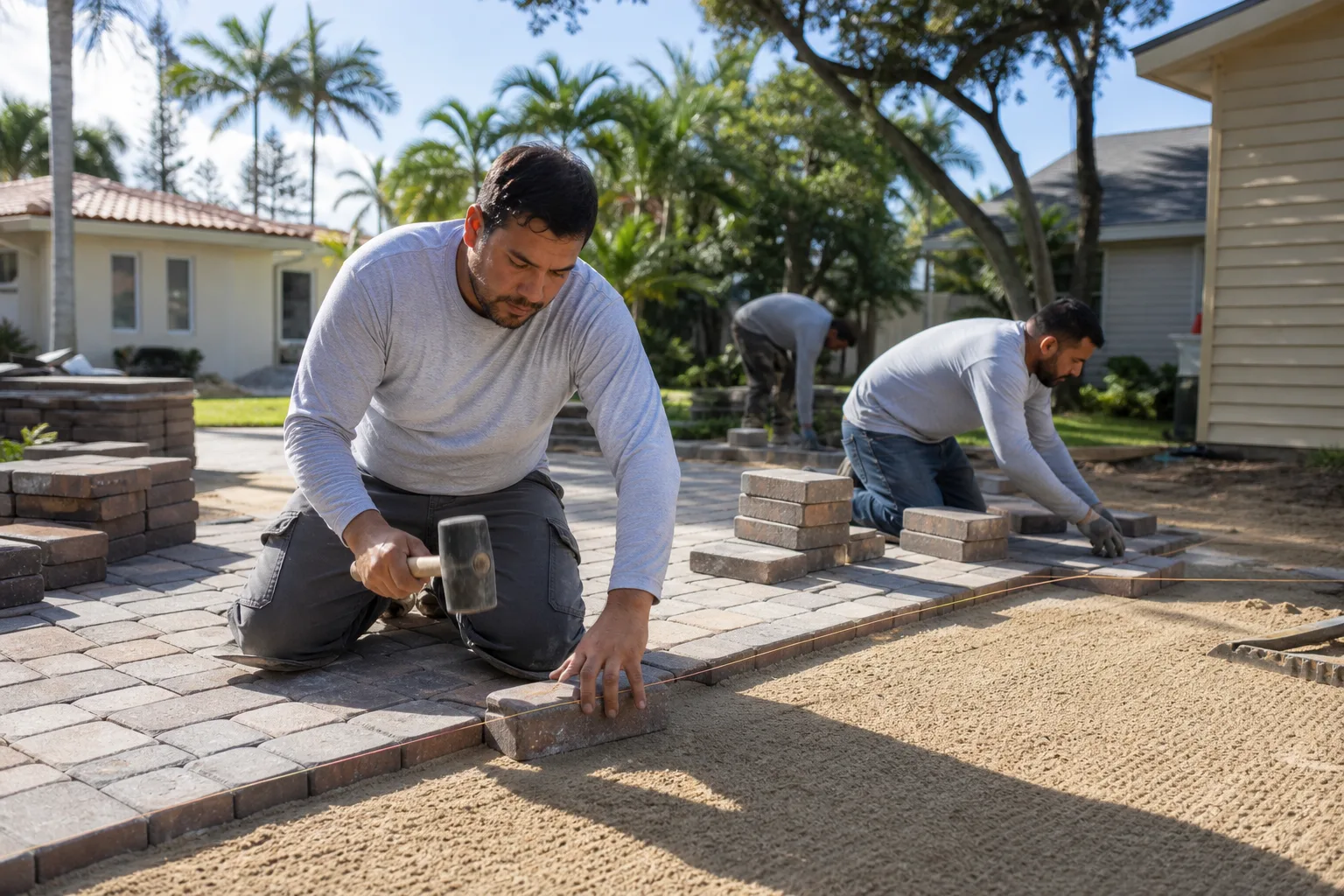
The eight warning signs on this list don’t deserve equal urgency. Efflorescence, fading, and a single widened joint are cheap to treat, typically $150 to $500. Rocking pavers, standing water near the foundation, subsidence, and apron heave are structural, and the same problem costs roughly two to three times as much at 12 months as it does at 30 days. If you take one thing from this guide, let it be the water-drop test and the photo-documentation protocol. Both cost nothing and both make every future decision easier. When a paver moves underfoot or water pools against the foundation, call (833) 630-4077 for a free estimate. We’ll bring the written price before anyone picks up a tool. For related work, see our Fence Installation in Enterprise guide, which covers site grading and drainage coordination between driveway and fence line.
Written by the team at Rowan Construction Group Enterprise.