Last updated November 18, 2026




Free written scope consultation - allowances, timeline, and change-order rules on paper before a single trade is scheduled
Fence Installation Maintenance Schedule: What to Do and When
Here’s the counterintuitive part about fence care in the desert: the advice you’ll find on most national home-maintenance sites was written for wet climates, and it’s mostly wrong for Enterprise. Wood and vinyl here degrade by UV exposure and wind-load cycling, not by moisture rot. A cedar fence in Enterprise loses surface fiber integrity from sun exposure at roughly twice the rate of the same fence in a humid Pacific Northwest climate, which means the standard 3 – 5 year stain interval should be 2 – 3 years here. This guide lays out the desert maintenance calendar task by task, names the products that hold up, and gives you a log template to prove the work was done.
Quick Answer
In Enterprise, a wood fence needs a penetrating oil stain every 2 – 3 years and a spring inspection for UV damage, plumb, and fasteners, while a vinyl fence needs an annual wash and a yearly check for chalking and loose hardware. The desert maintenance calendar runs on four checkpoints: January for post plumb after temperature cycling, April for sealer or stain before peak UV, July for gate hardware after heat expansion, and November for fasteners and caps before wind season.
Styles & brands we work with
- Kitchen remodeling
- Bathroom remodeling
- Home additions & ADU
- Roofing
- Windows & doors
- Driveway & pavers
- Fence
Table of Contents
- Why Desert Fences Age Differently
- The Enterprise Maintenance Calendar: Four Checkpoints a Year
- Wood Fence Maintenance Products: Oil Stains vs. Film-Forming Sealers
- Vinyl Fence Maintenance: UV Inhibitors and What a Rejuvenator Can’t Fix
- Fastener Inspection: Galvanic Corrosion and the Right Spec
- Your Inspection Log Template
- Common Mistakes to Avoid
- When to Call a Professional
Why Desert Fences Age Differently
Most fence maintenance guides assume water is the enemy. In Enterprise, water is not the problem. The combination that does damage here is high-altitude UV intensity, single-digit humidity, and a wind season that loads every post and rail with cyclical pressure. That changes what you check and when.
UV exposure breaks down lignin in wood, the natural glue that binds the fibers. Once lignin is gone, the surface turns silver-gray and begins to check and split, and no amount of sanding brings the fiber back. A film-forming sealer that looks fine in a humid climate can trap nothing but dust here, because there’s no moisture to lock in. Penetrating oils, by contrast, feed the wood and protect it without creating a film that peels. In Enterprise we regularly see fences that were stained once on installation and never touched again; by year four the top rails are gray and splintering while the bottom rails look new, because UV hits the top surfaces hardest.
Wind is the second force. Every gust flexes the fence slightly, and over thousands of cycles, fasteners back out and posts shift in the soil. Desert soil also expands and contracts with temperature swings, so a post that was plumb in October can lean by spring. That’s why the calendar below checks plumb in winter and fasteners in fall. If you’re planning a replacement rather than a repair, our Fence Installation in Enterprise page covers materials and installation approach.
The Enterprise Maintenance Calendar: Four Checkpoints a Year
Four checkpoints cover a full year in Enterprise. Each one takes an hour or two and prevents a repair that costs far more.
- January – Post Plumb Check. After months of temperature cycling, walk the fence line and sight down each run. Note any post that leans. Check the base for soil movement or erosion. If a post is loose, address it before the spring wind season arrives. This is also the month to clear debris from the base of the fence so you can actually see the soil line.
- April – Sealer or Stain Window. Apply a penetrating oil stain or UV sealer before peak UV in June and July. Wood should be clean, dry, and above 50°F at application. April in Enterprise gives you stable temperatures and low wind, which matter for even coverage.
- July – Gate Hardware Check. Heat expansion loosens hinges, latches, and sagging gates. Test every gate for swing, check the hinges for play, and tighten or replace hardware. A gate that drags in July will bind worse by August.
- November – Fastener and Cap Inspection. Before wind season, inspect every visible screw head, nail, and post cap for corrosion, backing out, or movement. Replace anything that has started to corrode, and torque fasteners. This is the single most overlooked step in Enterprise fence care.
Between checkpoints, an annual wash in March or early October keeps dust and pollen from trapping heat and moisture on the surface. On a wood fence in Enterprise, a light wash with a garden hose and a soft brush is usually enough; avoid pressure washing at high settings, which scars soft wood fibers.
Wood Fence Maintenance Products: Oil Stains vs. Film-Forming Sealers
There are two broad categories of wood fence finish, and they behave very differently in the desert. Choosing the right one and sticking to a reapplication interval is most of the battle.
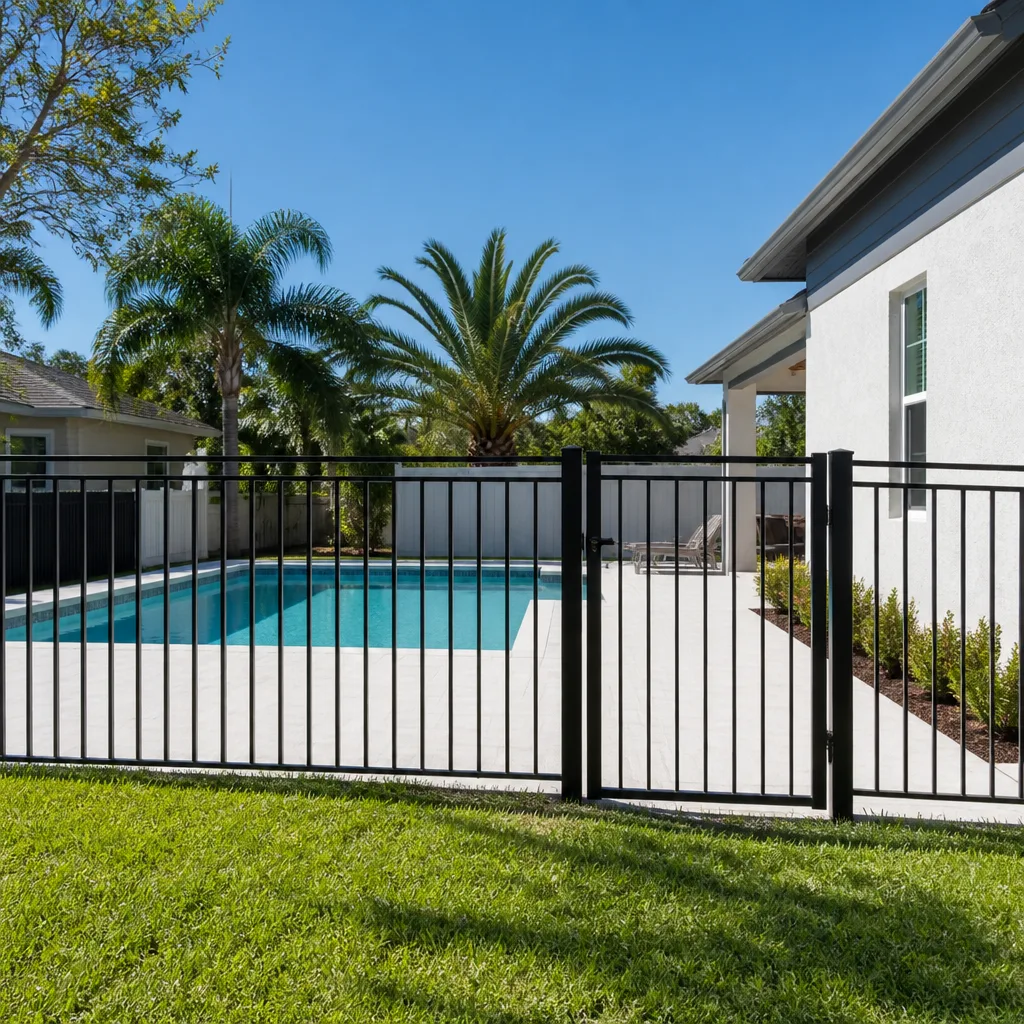
Penetrating oil stains soak into the wood fibers and protect from the inside. They don’t peel because there’s no film to peel. Two that hold up in Enterprise conditions are Cabot Australian Timber Oil and TWP 1500 Series. Both are designed for exterior horizontal and vertical surfaces and work well in high-UV, low-humidity environments. Reapplication interval here is 2 – 3 years, faster on horizontal rails and top caps that take the most sun. Cost is roughly $0.80 to $1.60 per square foot of fence face in materials, or about $1.50 to $3.00 per linear foot of six-foot fence if you’re paying a contractor.
Film-forming sealers create a surface layer that sits on top of the wood. In a humid climate this layer can hold up for years. In Enterprise, UV degrades the film and wind-blown dust gets trapped under it, causing it to flake and peel. When that happens, the surface looks patchy and needs to be stripped before restaining, which is a bigger job. Film-forming products are generally best limited to shaded sections or to fences you plan to restain on a shorter interval.
Quick comparison
- Penetrating oil stain: no peeling, penetrates fibers, best for high-UV exposure, reapply every 2 – 3 years, $1.50 – $3.00 per linear foot installed.
- Film-forming sealer: surface layer, can flake in high UV, reapply every 1 – 2 years if exposed, $2.00 – $3.50 per linear foot installed.
- No finish at all: wood grays and checks, shortens fence life significantly, cheapest up front and most expensive long term.
Whatever you choose, test a small section first. Wood species and age change how a stain takes, and a color that looks right on a sample board can look different on a sun-bleached fence. If you’re weighing a full replacement, the Rowan Construction Group Enterprise home page is the place to start planning the scope.
Vinyl Fence Maintenance: UV Inhibitors and What a Rejuvenator Can’t Fix
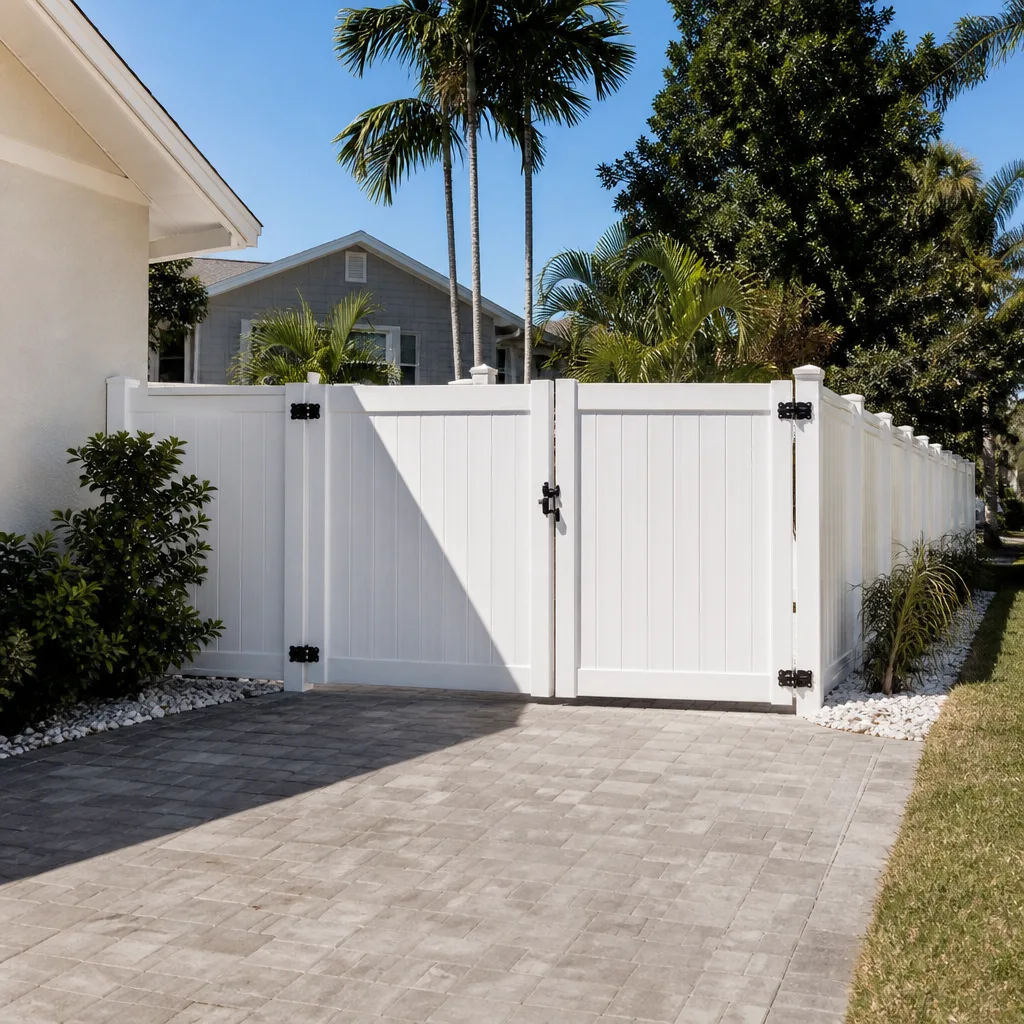
Vinyl fences are often sold as maintenance-free. In Enterprise, that’s overstating it. Vinyl does resist rot and insects, but UV still takes a toll, and the quality of the vinyl makes a real difference.
Higher-grade vinyl includes UV inhibitor additives that keep the plastic from breaking down. Lower-grade vinyl has less of those additives, and over time the surface begins to chalk – a white, powdery film that looks like dust but doesn’t wash off. Chalking is the plastic itself breaking down. A vinyl rejuvenator product such as 303 Aerospace Protectant can slow chalking and restore some sheen on a fence that’s still in good shape, but it cannot reverse chalking that has already happened. Once the surface is chalked, the damage is cosmetic and permanent.
How to identify lower-grade vinyl
- Thin wall thickness on rails and posts. Feel the edges; low-grade vinyl flexes noticeably under thumb pressure.
- No UV inhibitor claim on the manufacturer’s spec sheet. Ask for it in writing before you buy.
- Chalking within the first two years. Well-made vinyl should not chalk significantly in that window.
Annual maintenance for vinyl in Enterprise is simple: an annual wash with mild soap and water in spring, a check for loose panels and caps each fall, and a light application of a protectant on sun-facing panels every one to two years. Avoid abrasive cleaners and stiff brushes, which scratch the surface and create places for chalk to start.
Fastener Inspection: Galvanic Corrosion and the Right Spec
Fastener failure is the quiet problem in Enterprise fence care, and it’s usually a material mismatch. When steel screws meet aluminum post caps, or when galvanized screws meet aluminum rails, two dissimilar metals in contact with any moisture create a small electrical current. The less noble metal – usually the aluminum – corrodes. The result is a fastener that looks intact but has lost its grip.
In our experience, the failure shows up first at post caps and gate hardware, where rain and morning dew collect. A screw that was driven tight on installation is loose two years later, and the cap slides off in the first strong wind.
What spec prevents it
- Match the fastener to the metal. Stainless steel fasteners with aluminum components, or aluminum fasteners with aluminum, prevent the galvanic pair.
- Use a coating or isolating washer between dissimilar metals where you can’t match them.
- Choose hot-dipped galvanized or stainless for any fastener that will be exposed to weather.
- Inspect and replace every visible fastener showing white or rust-colored corrosion at the November checkpoint.
This is one more reason a documented inspection log matters. If a cap fails under warranty or an HOA questions fence condition, a record of when fasteners were checked and replaced resolves the dispute quickly. The same documentation discipline applies across our trades – see Driveway & Pavers in Enterprise for how the photo record works on a hardscape project.
Your Inspection Log Template
Documentation supports warranty claims, HOA disputes, and resale disclosures, and it takes five minutes per visit. Keep a log in a folder or a shared note with the following fields:
- Date of inspection or work.
- Checkpoint – January, April, July, or November.
- What was found – plumb, fasteners, chalking, gate hardware, etc.
- Product applied – brand, product name, and coverage.
- Repairs made – fasteners replaced, hardware tightened, sections replaced.
- Photos – one overview shot plus close-ups of anything you found or fixed.
- Next due date – the following checkpoint and any reapplication interval.
If a professional does the work, ask for the photo record and a written summary of what was found. That record is the evidence that carries the maintenance history forward. Our Home Additions & ADU in Enterprise page shows how the same documentation standard applies to larger builds.
Common Mistakes to Avoid
- Following humid-climate advice. Checking for moisture rot in spring misses the actual problem here. UV damage and fastener corrosion are what fail in Enterprise, and the calendar above targets them.
- Staining on the 3 – 5 year national interval. A cedar fence in Enterprise loses surface fiber as much as twice as fast as in a humid climate. Waiting five years means the wood has already started to check.
- Pressure washing at high settings. It scars soft wood fibers and opens checks that UV then widens. Use low pressure and a soft brush.
- Mixing steel and aluminum fasteners. Galvanic corrosion is a slow failure that lets caps and hardware loosen over two or three winters.
- Ignoring film-former flaking. Once a film-forming sealer starts to flake in the sun, restaining over it produces a patchy result. Strip it first.
- Skipping the July gate check. Heat expansion loosens hinges and binds gates. A gate that drags in July warps worse by fall.
- Keeping no log. Without a written record and photos, a warranty claim or HOA dispute becomes a he-said-she-said.
When to Call a Professional
Most of this calendar is doable on your own. But some situations need a professional hand: a post that has pulled free of its footing and is leaning more than a few degrees, a gate that no longer hangs square, a fence section that has started to fail along the bottom rail, or a full restain on a fence over about 150 linear feet. Those are the jobs where a mistake costs more than the work. If you’re unsure whether a section needs repair or replacement, a professional can look at the substrate, the fastener condition, and the wood fiber in person and give you a straight answer.
Rowan Construction Group Enterprise offers free estimates in Enterprise – call (833) 630-4077 and we’ll walk the fence line with you. Every estimate is a flat written price with a written scope and warranty before any work starts, and every visit includes a documented photo record as standard. Crews are background-checked and uniformed, and a live person answers the phone 24/7.
See the difference
 Before
 After
 Before
 After
 Before
 After
Frequently Asked Questions
Every 2 – 3 years for a penetrating oil stain on a fence in Enterprise. The UV load here breaks down wood fibers faster than in a humid climate, so the national 3 – 5 year interval is too long. Horizontal top rails and caps may need attention sooner than vertical pickets because they take the most sun. Call (833) 630-4077 for a free estimate on a professional restain – the quote is written before any work starts.
Yes, but it’s simple: an annual wash with mild soap and water, a fall check for loose panels and caps, and a protectant like 303 Aerospace Protectant on sun-facing panels every one to two years. Vinyl doesn’t rot or host insects, but UV still causes chalking on lower-grade products, and no rejuvenator can reverse chalking once it starts. Examine the manufacturer’s UV inhibitor claim before you buy.
A penetrating oil stain soaks into the wood and protects it from the inside, so it can’t peel; a film-forming sealer creates a surface layer that can flake in high UV. In Enterprise, penetrating oils like Cabot Australian Timber Oil or TWP 1500 Series generally hold up better on exposed surfaces. Film-formers are better suited to shaded sections or shorter reapplication cycles.
Look for white, powdery deposits at the joint between the cap and the post, or a screw head that has turned white or rust-colored. That’s a sign of galvanic corrosion between dissimilar metals, usually steel fasteners against aluminum. Replace the fastener with stainless steel or aluminum and inspect at the November checkpoint. Call (833) 630-4077 for an inspection estimate.
Yes. A dated log with product names, repairs, and photos shows the fence was maintained on schedule, which is often the deciding evidence when an HOA questions condition or a warranty claim is filed. Keep an overview photo and close-ups of anything you found or fixed at each checkpoint.
Often yes, but it depends on how deep the damage goes. Gray, checked top rails can usually be restained and fed; splintered or cracked wood may need section replacement, and a leaning post needs resetting. A professional can assess whether repair or replacement is the better spend – Rowan Construction Group Enterprise offers a free second opinion on any written estimate you’ve received.
The Bottom Line
Fence maintenance in Enterprise runs on a different calendar than the rest of the country. UV exposure and wind-load cycling do the damage here, not moisture, so the four checkpoints that matter are January plumb, April stain, July gate hardware, and November fasteners. Use a penetrating oil stain every 2 – 3 years, not every 3 – 5. Know your vinyl’s UV inhibitor claim before you buy. Inspect fasteners for galvanic corrosion each fall. And keep a written log with photos – it’s the documentation that protects a warranty or settles an HOA question. When a repair is beyond the list, a written estimate is free.
Under Clause 1 of The Haven Standard, the price is written before anyone starts. Call (833) 630-4077 for your free estimate in Enterprise. The 365-Day Done Right Promise and a Free Second Opinion on any written estimate are standing offers, and the quote is a flat price with a written scope and warranty.
Written by the team at Rowan Construction Group Enterprise.