
Last updated November 18, 2026







Free written scope consultation - allowances, timeline, and change-order rules on paper before a single trade is scheduled
Bathroom Remodeling Warning Signs Every Homeowner Should Know
A contractor who cannot produce a current Nevada State Contractors Board license number on request is working illegally on any job over $1,000 in Nevada. The number takes 10 seconds to verify at nscb.nv.gov. Most homeowners never ask. That single omission is the most expensive silence in a bathroom remodel, and it’s the reason this guide starts with paperwork instead of tile. Below, we walk through the five documents every legitimate contractor hands over without being asked, the bid language that predicts a cost overrun nine months before it happens, and the physical signs during and after construction that tell you whether a crew cut corners. If you’re remodeling in Enterprise, this is the screening checklist we’d want you to run before you sign anything.
Quick Answer
Most bathroom remodeling warning signs show up in the contractor’s paperwork long before they show up in the finished tile. A current NSCB license, a general liability certificate, a workers’ comp certificate, a written lien waiver policy, and a documented change order procedure are the five documents that separate a legal, insured Enterprise contractor from one who will leave you holding the bill. Ask for all five in the first conversation. What you get back, and how fast, tells you more than any review.
Styles & brands we work with
- Kitchen remodeling
- Bathroom remodeling
- Home additions & ADU
- Roofing
- Windows & doors
- Driveway & pavers
- Fence
Table of Contents
- The Five Documents Every Nevada Contractors Should Produce Without Being Asked
- Bid Red Flags That Predict Cost Overruns
- Physical Warning Signs During Active Work That Justify Stopping the Project
- Warning Signs in a Completed Remodel
- How to Read a Contractor’s Answer When You Ask for References With Permit Numbers
- A Five-Step Verification Process Before You Sign
- How to Read a Written Price Before Anyone Picks Up a Tool
The Five Documents Every Nevada Contractors Should Produce Without Being Asked
Nevada regulates residential construction more tightly than most states, and the document trail is where that regulation lives. A contractor operating legally in Enterprise should be able to produce all five of these before you sign, and the response you get when you ask is the first test of how the project will go.
- Nevada State Contractors Board (NSCB) license. Verify at nscb.nv.gov. The license should be current and should list a classification that covers bathroom remodeling. If the number doesn’t return a live record, or the record shows a suspended status, the contractor cannot legally work on a job over $1,000. Full stop.
- General liability certificate. Ask for a certificate of insurance with your address listed as the certificate holder. A real certificate comes from the insurer, not a photocopy in a binder. If the contractor can’t add your address, the policy may not exist in the form you’re being promised.
- Workers’ compensation certificate. If the crew is on your property and one of them is injured, the workers’ comp carrier is who pays. If there’s no policy, the claim can land on your homeowner’s insurance. The certificate should show the carrier, the policy period, and the class code for construction.
- A written lien waiver policy. Nevada’s mechanics’ lien law is unforgiving, and a subcontractor or material supplier who isn’t paid can place a lien on your house even after you’ve paid the general contractor in full. Ask the contractor to describe, in writing, how they collect conditional and unconditional lien waivers from every sub and supplier at each draw. If they don’t have a policy, they don’t have a process.
- A written change order procedure. This is the single document most homeowners never ask about. The procedure should say: no work proceeds on any change until a change order with a dollar figure and a scope description is signed by both parties. Under Clause 1 of the Haven Standard, the price is written before anyone starts. Change orders extend that same rule to anything discovered mid-project.
If a contractor produces four out of five and says the fifth is coming, ask when. If they produce two and change the subject, that’s not a communication problem. It’s a business model.
Bid Red Flags That Predict Cost Overruns
We’ve reviewed a lot of competing bids for Enterprise homeowners under our Free Second Opinion on any written estimate, and the same three patterns show up in the quotes that end up 30 to 50 percent over budget. None of them look dishonest on the page. That’s what makes them dangerous.
Allowance-heavy quotes. When a bid lists “allowance for tile: $1,200” instead of naming a product (Sakrete setting materials, a specific porcelain line, a specific grout) and a unit price per square foot, that allowance is a placeholder. Real tile and setting materials frequently land above the allowance, and every dollar over is a change order. A reputable bid names the product and the unit price together so the number is honest. Compare that to the way our kitchen remodeling side of the business quotes KraftMaid and Wellborn cabinets by SKU, not by allowance – the principle is the same.
Bids that exclude permit fees. Pulling a permit in Enterprise and the surrounding Clark County jurisdictions involves a fee, a plan review, and an inspection schedule. When a bid says “permits not included,” the fee isn’t a small extra. The scope may not have been designed to pass an inspection in the first place. Ask which permits will be pulled and who pays the fee. A written bid should list permit costs as a line item.
Scopes described only in square feet, with no waterproofing system named. “Install 42 square feet of tile in shower” is not a scope. A proper scope names the substrate, the waterproofing system, the thinset, the grout, and the cure time. If the bid says square feet and nothing else, the waterproofing is probably whatever is cheapest. That’s where a remodel fails first.
- Allowance line items without a named product and unit price
- “Permits not included” language
- Scopes in square footage with no waterproofing system specified
- Bids that don’t list a labor and materials breakdown by phase
- Quotes delivered in a single phone call with no written scope attached
Physical Warning Signs During Active Work That Justify Stopping the Project
Once the crew is on site, you’re watching for three specific conditions. All three are demonstrable in the first week, and any one of them is a reason to stop work and get the situation in writing before the next step.
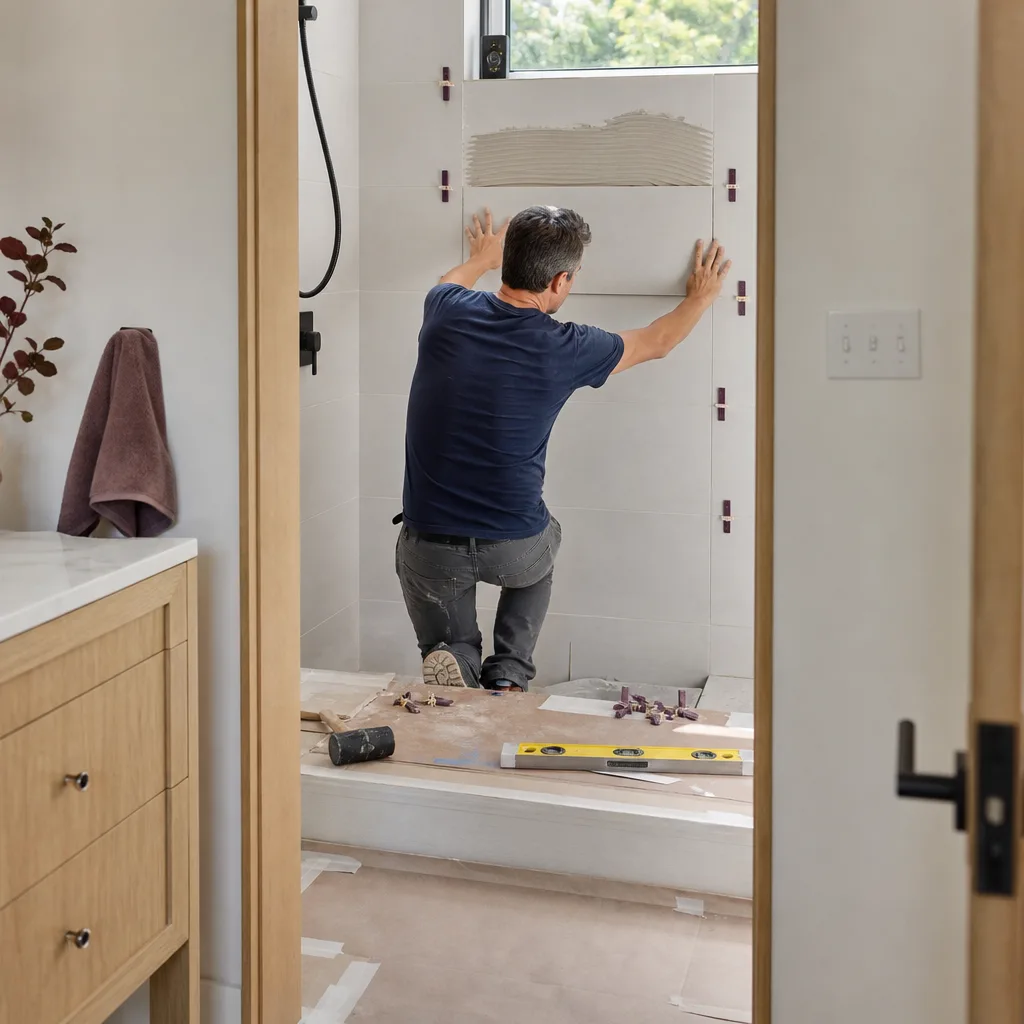
Waterproofing membrane applied directly over green board. Green board (moisture-resistant drywall) is a backer, not a tile-ready substrate. A proper wet-area system requires a cementitious backer or a foam board rated for wet areas, with a bonded waterproofing membrane or a liquid-applied system at the correct thickness per the manufacturer’s spec. If you see green board with a roll-on membrane and tile going straight on top, that shower is a leak waiting for a season of use. In Enterprise, our dry heat makes the failure show up slower than a humid climate would, which is why homeowners often don’t notice until the framing is compromised.
Grout applied before the manufacturer’s minimum cure time on the setting mortar. Thinset needs its full cure window before grout goes in, usually 24 hours for standard modified thinset and longer for some large-format tile installations. Grouting too early traps moisture in the mortar bed. The tile looks fine for six months, then grout lines start to crack and pop. If the crew grouts the same morning they set the tile, that’s a schedule problem, and it’s happening on your floor.
Fixtures installed before the rough-in inspection is signed off. The plumbing rough-in has to be inspected before the walls close and fixtures go on. A signed-off inspection card should exist somewhere on site. If the crew is hanging the showerhead and setting the toilet before the inspector has signed the card, someone is skipping a step that will be expensive later. We don’t proceed to fixture install until the inspection is documented, which is part of why our photo record on every visit matters – there’s evidence of the sequence.
Warning Signs in a Completed Remodel
The finished surface is where the least obvious signs live. They’re visible to a careful eye, and they tell you what the process was like even when the tile looks clean from the door.
Grout lines that vary by more than 1/16 inch. Grout joints should be consistent to within 1/16 inch across a wall or floor. When they wander, the substrate wasn’t level or the tile wasn’t bedded evenly. It’s a small number, but it’s the difference between a professional install and one that will show its age faster than it should.
Caulk applied in field tiles instead of at corners. Caulk at the inside corners of a shower is correct – corners move, and caulk accommodates movement. Caulk replacing grout in a field tile (anywhere other than a corner, change of plane, or expansion joint) is a crack-masking patch. It’s hiding a small problem today and becoming a bigger one within a year or two.
A missing exhaust fan, or one that doesn’t meet the 50-CFM minimum. The bathroom exhaust fan should be rated at minimum 50 CFM for a bathroom under 100 square feet, and higher for larger rooms, per the standard code reference. If the fan is missing, undersized, or vented into the attic instead of outside, moisture accumulates in the wall cavity and condenses on the framing. In Enterprise’s climate, this is a slow problem rather than a fast one, but it’s a real one.
A missing photo record. Every reputable contractor should deliver a documented photo record on closing. We include it as a standard deliverable, not an upgrade. If the contractor can’t show you photos of what’s behind the wall before tile went on, you have no evidence of the substrate or waterproofing.
How to Read a Contractor’s Answer When You Ask for References With Permit Numbers
This is the question that separates contractors who do documented work from contractors who do presentable work. Ask for three recent bathroom references in Enterprise, each with the permit number for their project. The answer matters more than the references themselves.
A clean answer: Three names, three addresses, three permit numbers, and a note that “the permit is searchable through Clark County’s online portal.” That’s a contractor with documentation because they make documentation. It’s the same reason every job at Rowan comes with a photo record and a signed change order trail – the paper trail is the business model, not a side product.
A warning-sign answer: References provided, but no permit numbers available. Or the permit number is “in the file at the office.” Or the references are five years old. Or all three references are the same project. Evasion on permit numbers is itself a warning sign, because it usually means one of three things: the permits weren’t pulled, the permits were pulled under a different entity, or the work wasn’t permitted in the first place.
If you want an independent check, our Free Second Opinion on any written estimate will review a competitor’s quote line by line, at no charge. Bring the bid and the permit numbers together. That review is where we catch most of the bid problems in the previous section before they turn into change orders.
A Five-Step Verification Process Before You Sign
Here’s the sequence we recommend to every homeowner considering a bathroom remodel in Enterprise. Four of the five steps can be completed in under an hour.
- Verify the license at nscb.nv.gov. Confirm the number is current, active, and matches the classification your project requires. Note the status date. A license that’s active today is the only kind that helps you.
- Request the two insurance certificates with your address listed. Not photocopies – certificates from the carrier. A call to the carrier’s number on the certificate confirms the policy is in force.
- Ask for the written change order procedure in writing. Not “we handle changes as they come up.” A description of the process, including the signature requirement. Under our Haven Standard, no change proceeds until the change order is signed – and that should be the standard anywhere.
- Request three references with permit numbers. Then look up the permits yourself. If a reference project doesn’t have a permit, ask why that specific job wasn’t permitted.
- Confirm the scope names the waterproofing system. Read the bid line by line. If it says square feet and no waterproofing system, don’t sign. Ask for a written scope with a named system, named setting material, and named cures times.
Any contractor who can’t clear steps one through five is not ready for a high-value Enterprise bathroom. Verify with the State, verify with the insurer, verify with the county, and verify the scope. If any of those checks turns up something, get a second opinion before you write a check.
How to Read a Written Price Before Anyone Picks Up a Tool
The last warning sign on this list is the most important one: a price that only exists as a number in a conversation. A written price should arrive as a document with a scope and a warranty attached. Every quote from Rowan Construction Group comes that way, whether the trade is bathroom remodeling or a full home addition, and the reason is simple – the number in the document is what you can hold the contractor to.
What to look for in a written quote:
- A flat price with a written scope attached
- Line items by phase (demo, rough-in, waterproof, tile, fixtures, finish)
- Named materials and unit prices, not “allowances”
- Permit fees listed separately
- A stated workmanship warranty
- A photo record deliverable confirmed in writing
If your Enterprise bathroom quote is a text message with a total and a thumbs-up, that isn’t a price yet. It’s a starting point for a change order. You can explore related scope work on our Rowan Construction Group Enterprise home page, and if the bathroom connects to a larger project, see our pages on Home Additions & ADU in Enterprise and Driveway & Pavers in Enterprise – the same documentation discipline applies across all of them.
Common Mistakes to Avoid
- Skipping the NSCB lookup because a contractor feels trustworthy. In our experience, the license check takes seconds and catches the single most expensive form of contractor risk. It’s never skipped on the job, and it shouldn’t be skipped before the job.
- Accepting an allowance instead of a named product. Allowances hide the largest cost overruns, especially on tile and setting materials where a few hundred dollars in materials swings a few thousand in labor when the substrate needs rework.
- Letting the crew set fixtures before the rough-in inspection is signed off. The card has to exist before the next phase starts. Small omission, large consequence.
- Assuming a working exhaust fan means a compliant one. A 4-inch fan rated 30 CFM in an 80-square-foot bathroom is venting air, but it’s under the code minimum. Confirm the CFM rating on the label under the grill before the project closes.
- Ignoring inconsistent grout lines because “it looks fine from the door.” A 1/16-inch variance is visible at arm’s length and it’s a signal that the substrate wasn’t right. Look closely, up close, before you sign off.
- Paying the final draw without a photo record and signed warranty. Both should be delivered at close. If the contractor asks for the final check before the photos, that’s a warning sign.
- Not asking how change orders are handled. Most overruns happen on changes. A written change order procedure is the whole reason projects finish close to the agreed number.
If your project also touches the exterior, see our Fence Installation in Enterprise page for how the same documentation discipline works on outdoor scope.
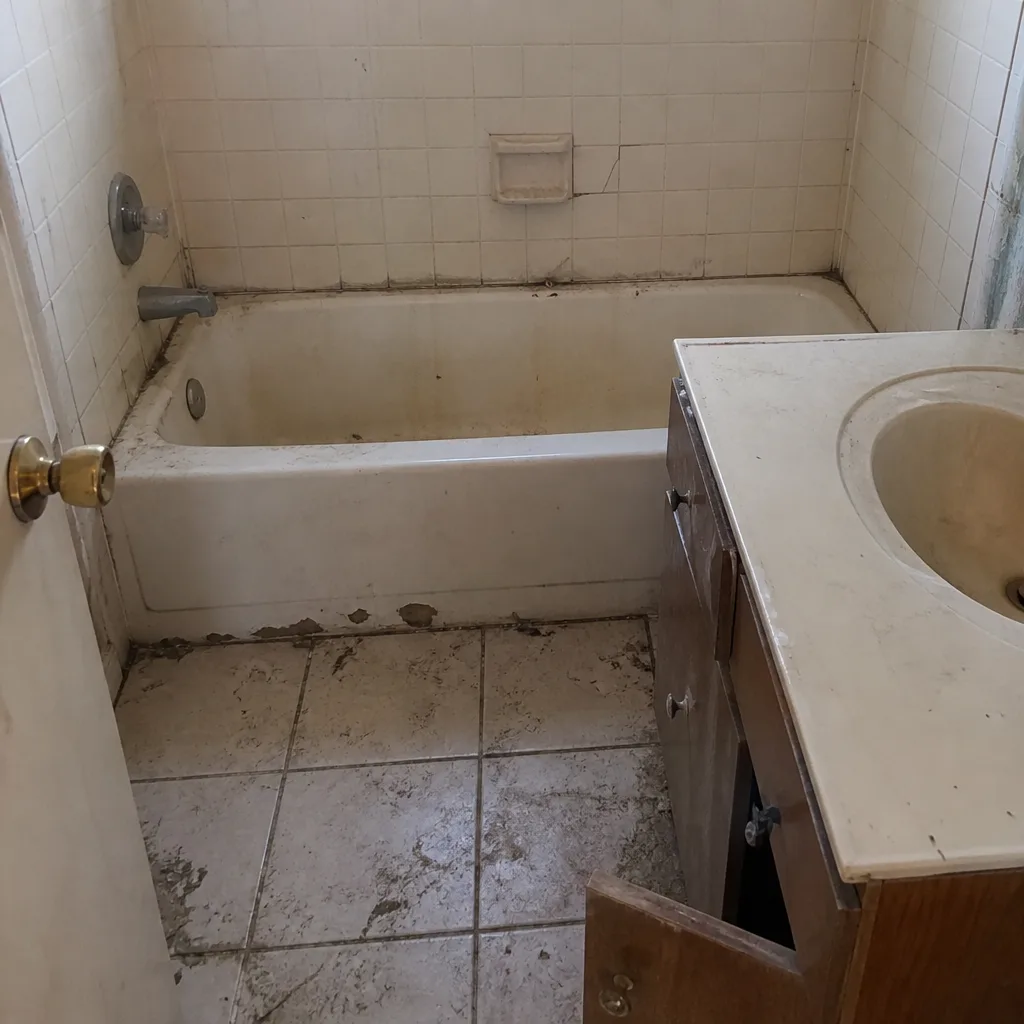
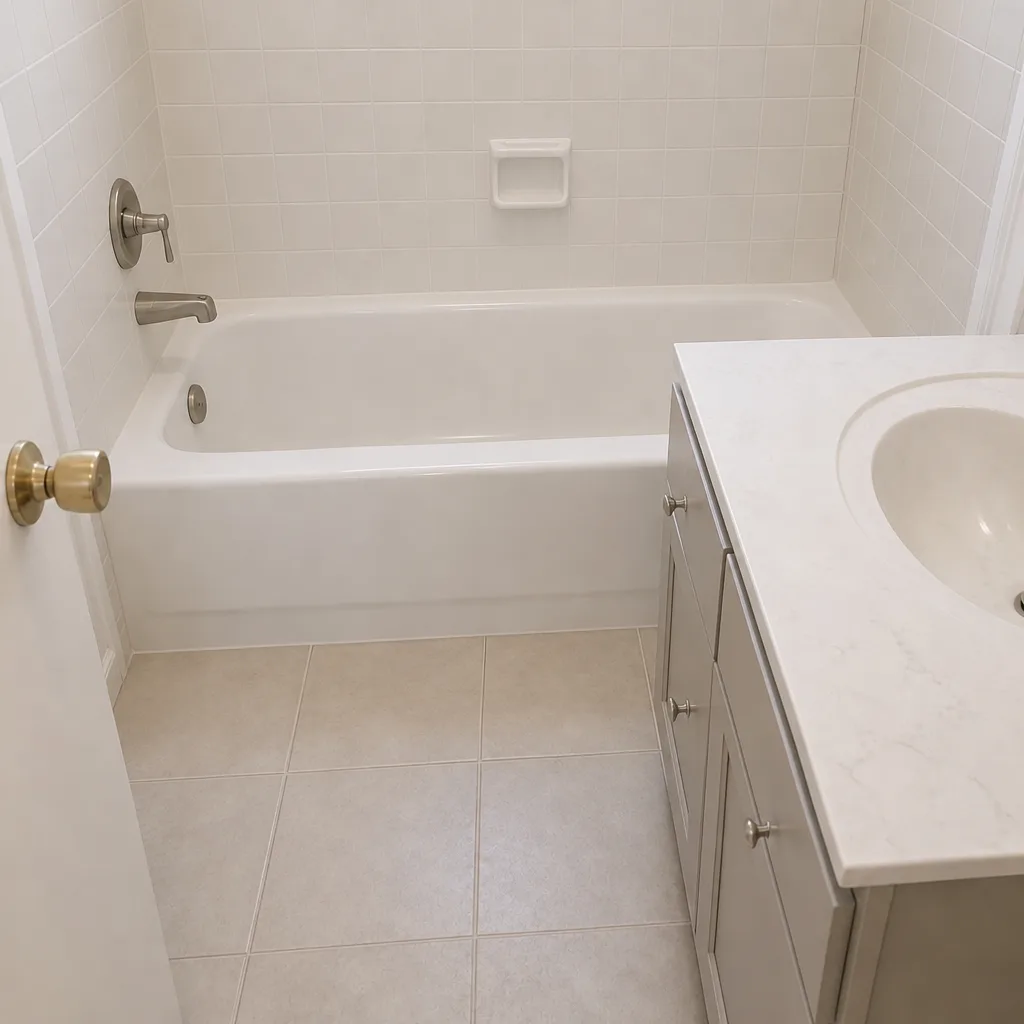
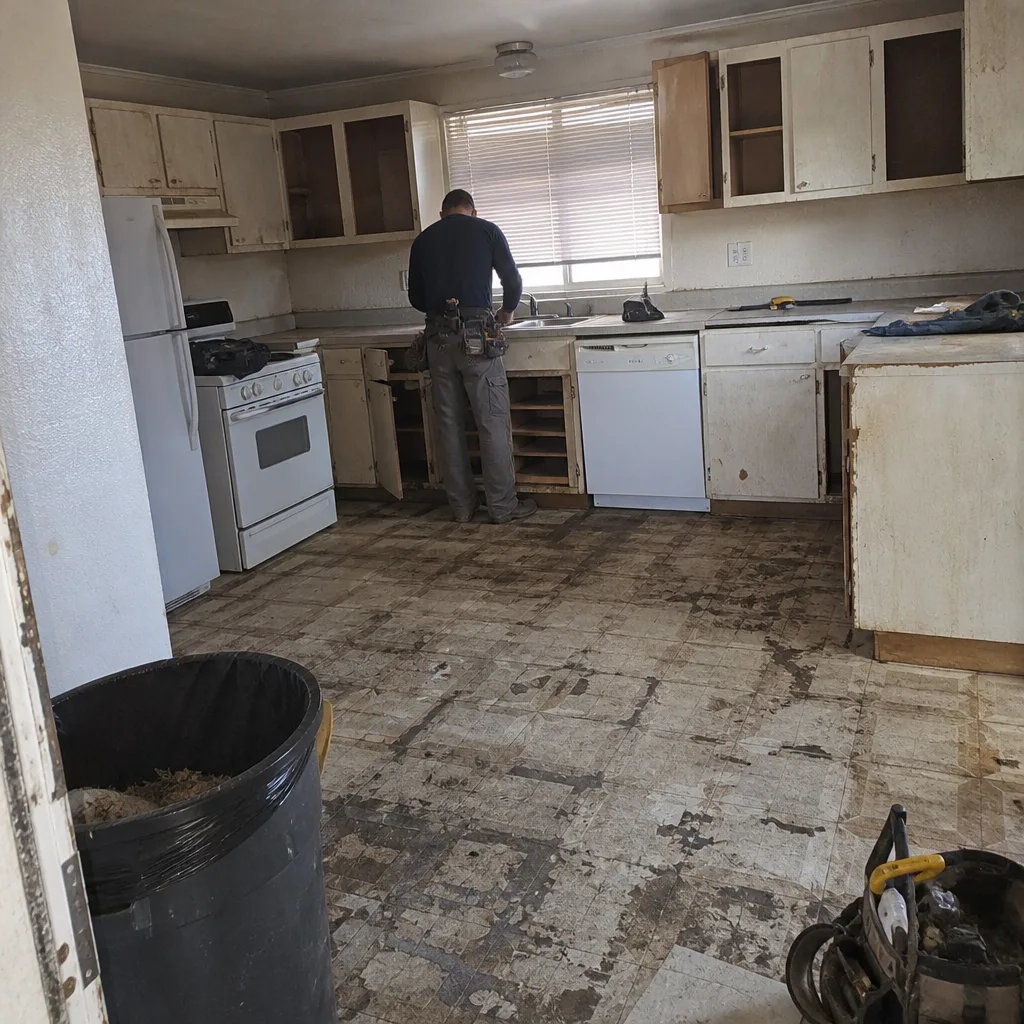
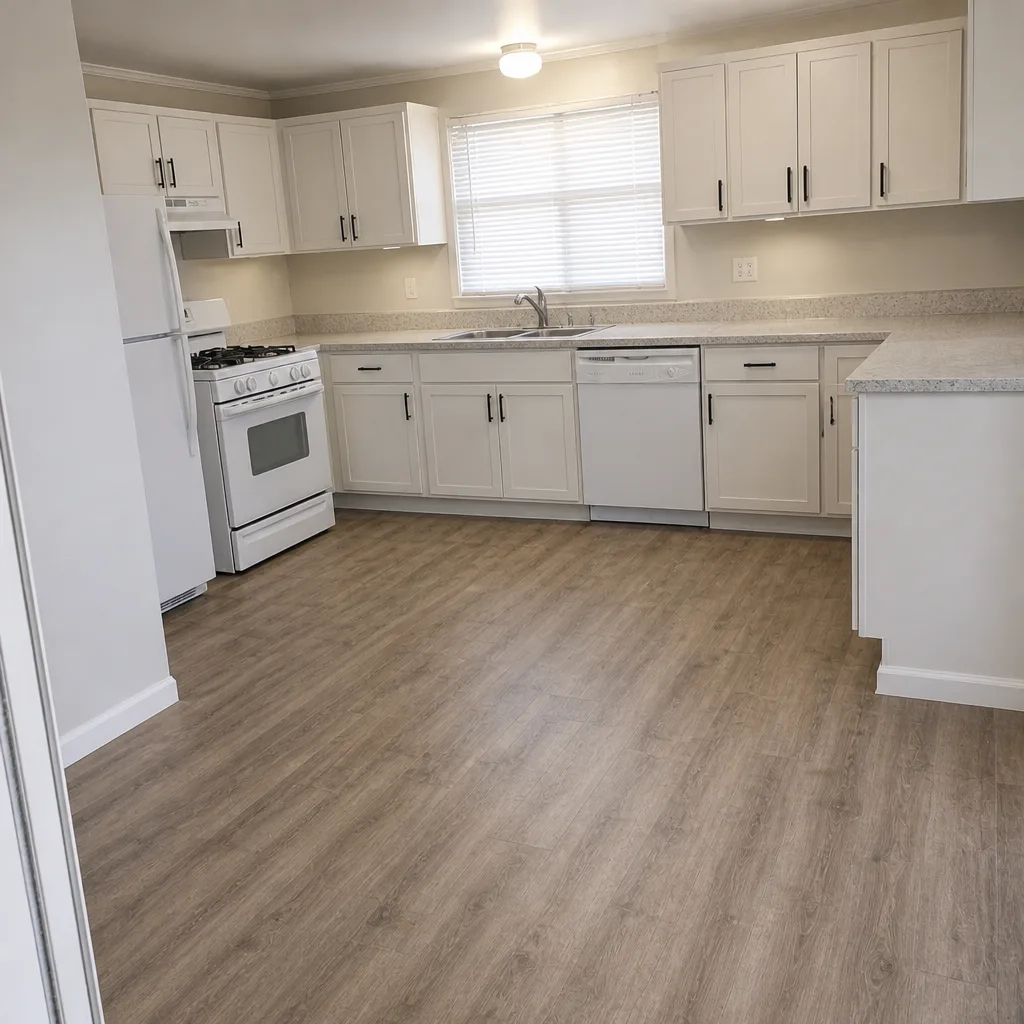
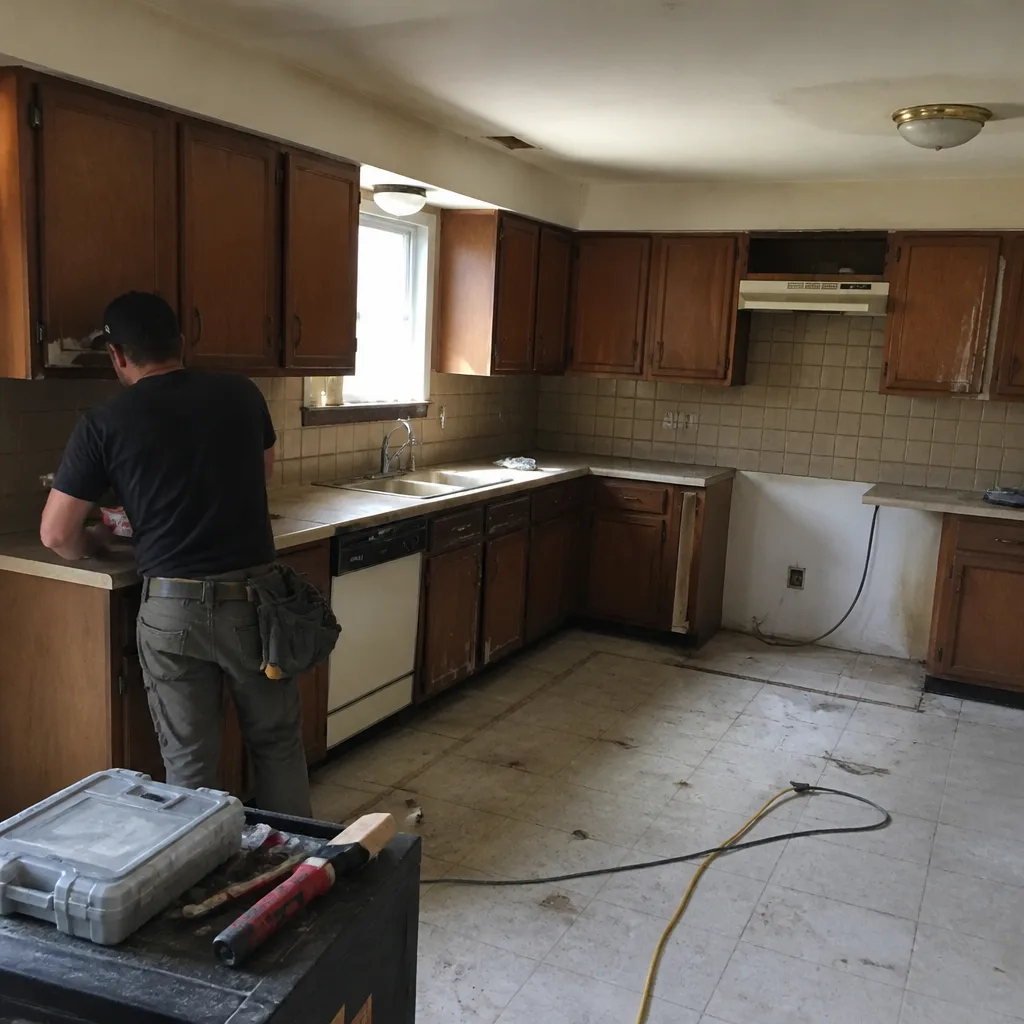
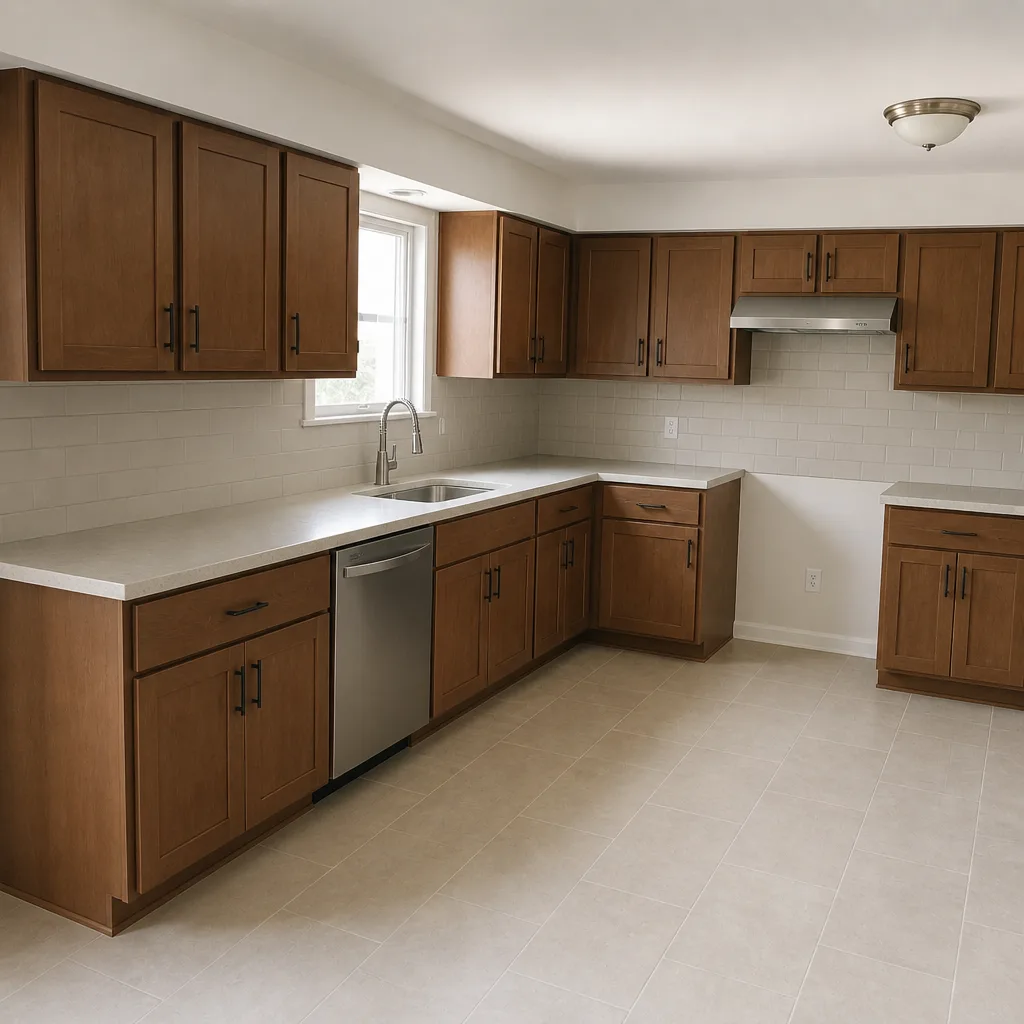
See the difference
 Before
 After
 Before
 After
 Before
 After
When to Call a Professional
Call a professional before demo starts, not after. That means before you sign a bid, before you hand over a deposit, and before anyone touches the wall behind the shower. We recommend a professional call in these specific situations: your bid lists allowances instead of named products; the contractor can’t produce an NSCB number on request; your scope describes the work in square feet without naming a waterproofing system; the crew has begun installing fixtures without a signed rough-in inspection; or you’ve found inconsistent grout lines or field-tile caulk in a recently completed bathroom. If you’re in Enterprise and any of those signs are in front of you, our 365-Day Done Right Promise is designed for the after-the-fact fix, but it’s far cheaper to screen first. Rowan Construction Group Enterprise offers free estimates in Enterprise, and our technicians have up to 19 years of experience. Call (833) 630-4077 to schedule your free estimate.
Frequently Asked Questions
The first warning sign is a contractor who can’t produce a current NSCB license number when asked. The lookup at nscb.nv.gov takes seconds and confirms a contractor is legal to work in Nevada. If a contractor won’t share the number, or the lookup shows an inactive or suspended status, that’s the entire evaluation – everything else becomes secondary.
Cost varies widely by scope, but a mid-range full bathroom remodel in the Enterprise market typically runs in the mid five figures, with a written scope, named materials, and phase-by-phase line items. The only number that matters is the one in your written quote, with the scope attached. Call (833) 630-4077 for a written price on your specific bathroom – the estimate is free, and it comes in writing before any work starts.
Yes, and you should – with documentation. Photograph the condition (green board with membrane, grout on uncured thinset, fixtures installed before inspection), send it to the contractor in writing, and halt work until the remedy is agreed to in writing. A signed change order with the corrective scope should come before the crew resumes. Our photo record on every visit exists for exactly this reason: so the evidence of what was found and what was done is available in writing, on both sides.
Most bathroom remodels that involve moving plumbing, electrical, or wall layout require a permit through the local jurisdiction covering Enterprise. A written bid should list the permit fee as a line item, and a signed inspection card should exist on site before fixtures go on. If a contractor says “we don’t need a permit for this,” ask which specific work they believe is exempt, and get that in writing.
A lien waiver is the document that confirms a subcontractor or material supplier has been paid for their portion of the work and gives up the legal right to place a mechanics’ lien on your home. Nevada lien law allows unpaid subs and suppliers to place a lien against the property even after the homeowner has paid the general contractor. Every draw should collect conditional and unconditional waivers from every party on the job. If the contractor doesn’t have a written lien waiver policy, the draws aren’t documented.
The right contractor produces five documents without being asked: NSCB license, general liability certificate, workers’ comp certificate, lien waiver policy, and a written change order procedure. Then they show three references with permit numbers you can look up. A contractor who clears all of that has passed the paperwork test, and the paperwork is where most issues start. Call (833) 630-4077 to schedule a free estimate with Rowan Construction Group Enterprise – and if you have a competing written quote, we’ll review it line by line at no charge through our Free Second Opinion offer.
The Bottom Line
Bathroom remodeling warning signs are almost always visible before the first day of demo. They live in the license number, the insurance certificate, the lien waiver policy, the change order procedure, and the scope language of the bid. A homeowner who asks for all five in a single conversation screens out the large majority of problem contractors before signing anything. If you’re remodeling in Enterprise and want that conversation to end in a written price instead of a verbal estimate, we’re ready for it. Every Rowan project comes with a written price before work starts, a documented photo record on every visit, and the 365-Day Done Right Promise. Call (833) 630-4077 to schedule your free estimate, and bring any competing quote if you have one. We’ll review it line by line. Under Clause 1 of the Haven Standard, the price is written before anyone starts – and that’s the standard every homeowner should be holding their contractor to.
Written by the team at Rowan Construction Group Enterprise.