Last updated November 18, 2026
Free written scope consultation - allowances, timeline, and change-order rules on paper before a single trade is scheduled
The Complete Driveway & Pavers Guide for Enterprise Homeowners
Here’s a number that rarely appears in paver brochures: a driveway in Enterprise that skips a proper aggregate base over caliche can cost $8,000 – $14,000 to tear out and relay within five years. That’s roughly what doing it right the first time would have cost. Most paving guides spend their words on color and pattern; this one starts underground. You’ll learn how Enterprise’s caliche hardpan changes base depth and drainage specs, what concrete, travertine, and porcelain actually run per square foot in this market, which Clark County permits apply, and how to read a written scope so two bids are compared apples to apples.
Quick Answer
A paver driveway in Enterprise typically costs $14 – $28 per square foot installed, and whether it lasts 20 years or heaves in three comes down to base engineering: 6 – 8 inches of compacted Class II base rock over caliche, with proper edge restraint. Material and pattern choices matter, but they’re the second decision. Get the base spec in writing before you compare a single paver color.
Styles & brands we work with
- Kitchen remodeling
- Bathroom remodeling
- Home additions & ADU
- Roofing
- Windows & doors
- Driveway & pavers
- Fence
Table of Contents
- Why Caliche Decides Your Driveway’s Lifespan
- Base Prep: The Spec That Separates a 20-Year Driveway from a 3-Year One
- Concrete Pavers vs. Travertine vs. Porcelain: Enterprise Cost Ranges
- Paver Brands and Product Lines Built for High-UV Desert Conditions
- Clark County Grading Permits: What a Compliant Driveway Requires
- What a Written Scope of Work Must Include
- The Installation Process, Step by Step
- Common Mistakes to Avoid
Why Caliche Decides Your Driveway’s Lifespan
Caliche is a calcium carbonate hardpan, a cement-like layer of mineral deposit that forms naturally in arid soils. In Enterprise it sits anywhere from 6 to 18 inches below the surface on most residential lots. You can’t see it from the street, and it doesn’t show up in a visual bid walk. But it changes everything about how a driveway performs.
The problem is twofold. First, caliche doesn’t drain. Water that percolates through paver joints and hits an unbroken hardpan layer has nowhere to go, so it sits under the base and softens it. Second, caliche expands and contracts differently than the surrounding soil, and in a desert climate that movement concentrates right under the pavement. Build a driveway directly on it, or with too thin a base over it, and the first good monsoon season starts working on your edges.
In our experience across Enterprise, the driveways that fail early almost always fail at the base. We’ve seen three-year-old installations in the older sections near Boulder Highway with joints migrating and pavers rocking on a base that was 3 inches of decomposed granite tamped by hand. The same paver line, installed over 6 – 8 inches of compacted Class II base with proper edge restraint, performs for decades.
Two things follow from this. First, any contractor bidding your driveway needs to probe the soil, not guess at it, before quoting base depth. Ask how they’ll determine where the caliche layer sits on your lot. Second, expect a higher base cost in Enterprise than a flat-drainage market would carry. That’s not upselling; it’s the physics of the ground you’re building on.
Base Prep: The Spec That Separates a 20-Year Driveway from a 3-Year One
Class II base rock – a graded aggregate of crushed stone and fines – is the standard for driveway base in Southern Nevada. Over caliche, the working spec is typically 6 – 8 inches, compacted in lifts, not dumped and tamped once. Ask for two 3 – 4 inch lifts, each compacted to 95% or better relative density, with a plate compactor or vibratory roller.
Compaction is the step where corners get cut because nobody sees it afterward. Here’s what to confirm before the pavers come off the pallet:
- Excavation depth is measured, not eyeballed. The finished grade should leave the pavers flush or a slight positive slope away from the garage, and the excavation should account for paver thickness plus 1 inch of bedding sand plus the base.
- Lifts are compacted in layers. A single 8-inch lift won’t reach density at the bottom. Two or three lifts will.
- Drainage has a plan. Over caliche, water needs a path – surface slope, a drainage channel, or a dry well if the lot is flat. Water pooling at the garage apron is the failure mode we see most in Enterprise.
- Edge restraint is geogrid or a poured concrete curb. Plastic edge restraint spiked into caliche is fine; spiked into loose fill is not.
Ask the contractor whether they’ll do a compaction test or document density. A written scope that says “properly compacted” is a wish; a scope that says “6-inch Class II base, compacted in two lifts to 95% relative density” is a spec you can hold someone to.
Concrete Pavers vs. Travertine vs. Porcelain: Enterprise Cost Ranges
Once the base is right, the material question is easier, because you’re comparing surfaces that will all perform. Enterprise’s high-UV desert climate narrows things: the surface will see 250-plus days of sun a year and summer surface temperatures that make bare feet a bad idea. Here are the ranges we see in this market, material and labor included.
- Concrete pavers: $14 – $22 per square foot installed. The workhorse. Best durability per dollar, with the widest range of colors and patterns. Individual pavers can be lifted and replaced; sand joints allow minor movement.
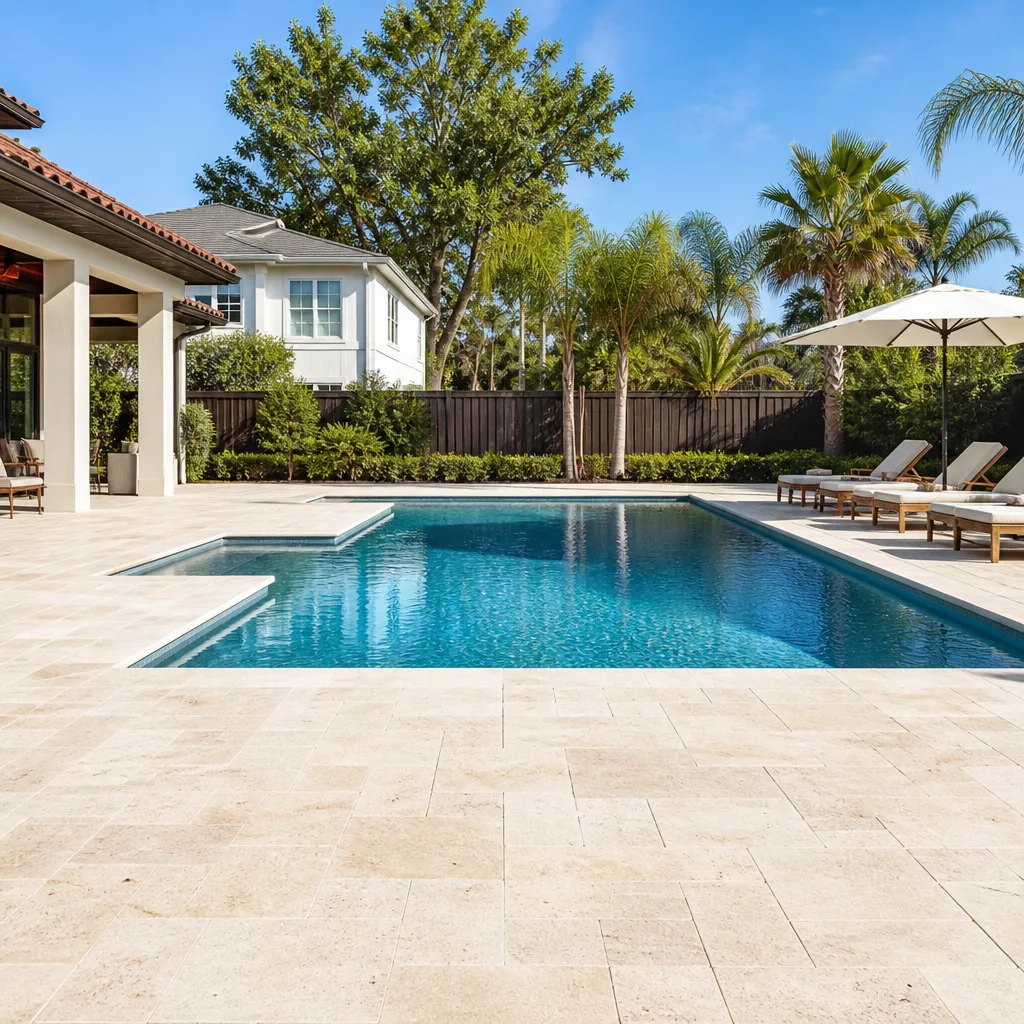
- Travertine: $18 – $28 per square foot installed. Cooler underfoot than concrete, which matters in August. Natural stone, so each paver varies, and some grades are porous and need sealing. Lighter tones hold up better to UV here than darker ones, which can get uncomfortably hot.
- Porcelain pavers: $22 – $30 per square foot installed. Highest on material cost, hard to stain, and won’t fade in sun. A 20mm or thicker exterior-rated porcelain is the spec for driveways; thinner tile rated only for patios will crack under a vehicle. Set on a concrete base or a specified aggregate system, not on bedding sand.
Concrete pavers are the most common choice in Enterprise because the cost gap is wide and the performance difference over a properly built base is small. Travertine jumps ahead if you’re paving a front entry or a courtyard where the surface is visible and foot comfort matters. Porcelain earns its price where staining from oil or irrigation minerals is a real concern and the budget allows.
Paver Brands and Product Lines Built for High-UV Desert Conditions
Enterprise sits in one of the most UV-intensive climates in the country. Color stability and surface hardness are not marketing points here; they’re the difference between a driveway that matches itself in five years and one that doesn’t. Three manufacturers dominate the local market, and each has lines worth knowing.
- Belgard – the Mega-Lafitt and Urbana lines are widely specified in Southern Nevada for their density and color-through manufacturing. Belgard pavers are engineered to hold color under UV rather than relying on a surface coating. Ask for the paver’s freeze-thaw and absorption specs; the local distributor can produce them.
- Pavestone – Cambridge and Bristol Bay are the common residential picks, and the local availability makes replacement easy if a paver is damaged. Color-through pigment, so a chipped corner isn’t a white spot.
- Techo-Bloc – the Blu 60 line and the Vestal and Villagio options are worth pricing against Belgard. Techo-Bloc pavers tend to run denser, which translates to less edge spalling under tire traffic.
We source across these brands and others, which matters when the written quote needs honest numbers: the paver line is one line item on the bid, not the headline. Ask any contractor which manufacturing facility your pavers come from. A paver trucked in from a plant running a different aggregate blend than the sample you saw can arrive with a slight color shift; the local distributor can tell you the plant. In our experience, this one question has saved Enterprise homeowners from more color-mismatch complaints than any other.
Clark County Grading Permits: What a Compliant Driveway Requires
Clark County requires a grading permit for driveway work over 500 square feet, or any project that changes drainage patterns on a lot. That’s most full driveway replacements in Enterprise. Here’s the sequence, in the order it actually happens:
- Site plan and drainage plan. A drawing showing existing and proposed grades, with the direction of water flow and any drainage features.
- Permit application to Clark County. The county reviews for compliance with its grading and drainage standards, including the slope away from structures.
- Inspection of the base before paving. The county or its designated inspector verifies compaction and drainage before the surface goes down. Skipping this step is the most common violation we see on unpermitted jobs.
- Final inspection after completion. The inspector verifies finished grade and that the surface matches the approved plan.
Permits take time, and the timeline is not something a contractor can shortcut. Budget a couple of weeks for review on a residential driveway, longer in a busy season. Ask any contractor for the permit number before work starts; if they say permits aren’t needed for your job, get it in writing, and call the county to confirm. Rowan pulls permits and passes inspections on the jobs we run, and we’ll walk you through what your Enterprise property needs.
What a Written Scope of Work Must Include
Two bids for the “same” paver driveway can differ by 40 percent because one scope is vague and one is not. A written scope that lets you compare apples to apples should include all of the following. If a bid omits any of them, treat that as the number you’re actually comparing.
- Excavation depth in inches, stated as a number.
- Base material and depth (e.g., “6 inches of Class II base rock”), plus lift count and compaction target (“95% relative density”).
- Bedding sand thickness – typically 1 inch.
- Paver brand, product line, and color by name, with quantity.
- Edge restraint type (plastic edge with spikes vs. poured concrete curb), and how it’s anchored given caliche.
- Joint sand specification – polymeric sand vs. standard sand, brand named, with a stated re-application interval.
- Drainage provisions – slope percentages, channel drains, anything carrying water away from the garage.
- Permit responsibility – who pulls it, what it costs, what happens if the inspection fails.
- Warranty in writing – duration, what it covers (surface defects vs. base settlement), and who honors it.
- Estimate exclusions – what isn’t in the price. If the bid doesn’t name an exclusion, assume it’s an add-on waiting to happen.
Rowan’s written quote is a flat price with a written scope and a written warranty, delivered before any work starts. If you’ve collected a competitor’s written estimate and want a second set of eyes, we’ll review it line by line at no charge. That’s the Free Second Opinion offer, and it’s the fastest way to find the line a vague bid leaves out.
The Installation Process, Step by Step
A paver driveway is a two-week job, more or less, not a weekend. Here’s the sequence, so you know what each phase looks like and where to check the crew’s work.
- Layout and utility locate. Call 811 before any digging. No excavation starts until locates are marked.
- Excavation. Remove existing surface and soil to the specified depth, accounting for base, bedding sand, and paver thickness.
- Base installation and compaction. Place Class II base in two or three lifts, water and compact each. Probe depth at multiple points and check grade.
- Edge restraint. Set concrete curb or plastic edge along the perimeter before pavers go down.
- Bedding sand and screeding. One inch of bedding sand, screeded to a consistent plane. No walking on it except from a screed board.
- Paver installation and cuts. Lay from a set line, cut perimeter pavers with a wet saw, and keep joint widths consistent.
- Compaction of the paver surface. A plate compactor over the pavers, with a protective pad.
- Joint sand and cleanup. Polymeric sand swept into joints, wetted, and the surface cleaned off. The final inspection covers grade and drainage.
We document each phase with photos, which is standard on every visit, not an add-on. When the crew leaves, you have a record of the base depth, the compaction, and the finished surface.
Common Mistakes to Avoid
- Paving over caliche without probing it. A contractor who doesn’t check where the hardpan sits on your lot is guessing at base depth, and the guess usually costs six inches. Probe first, spec second.
- Accepting “properly compacted” as a base spec. That phrase means nothing without a density target and a lift count. Get the numbers in writing and ask for the test result.
- Choosing dark pavers for a sun-exposed driveway. In Enterprise’s summer, dark pavers hit surface temperatures that are hard on tires and brutal underfoot. Lighter tones are the practical choice for a desert driveway.
- Skipping the Clark County grading permit on a job over 500 square feet. Unpermitted work can be flagged at resale, and the county can require removal. The permit is on the contractor to pull; ask for the number.
- Letting the bid omit edge restraint type. Plastic edge spiked into loose soil is the first thing to fail at the driveway’s edges. Concrete curb or properly anchored edge, named in the scope.
- Assuming a porous travertine tile doesn’t need sealing. Some travertine grades absorb water and stain easily. Ask which grade you’re getting and whether sealing is in the scope.
- Comparing bids by total price only. A $12,000 bid and an $18,000 bid are only comparable if both scopes list the same base depth, edge restraint, and joint sand. Compare the scopes, then the numbers.
See the difference
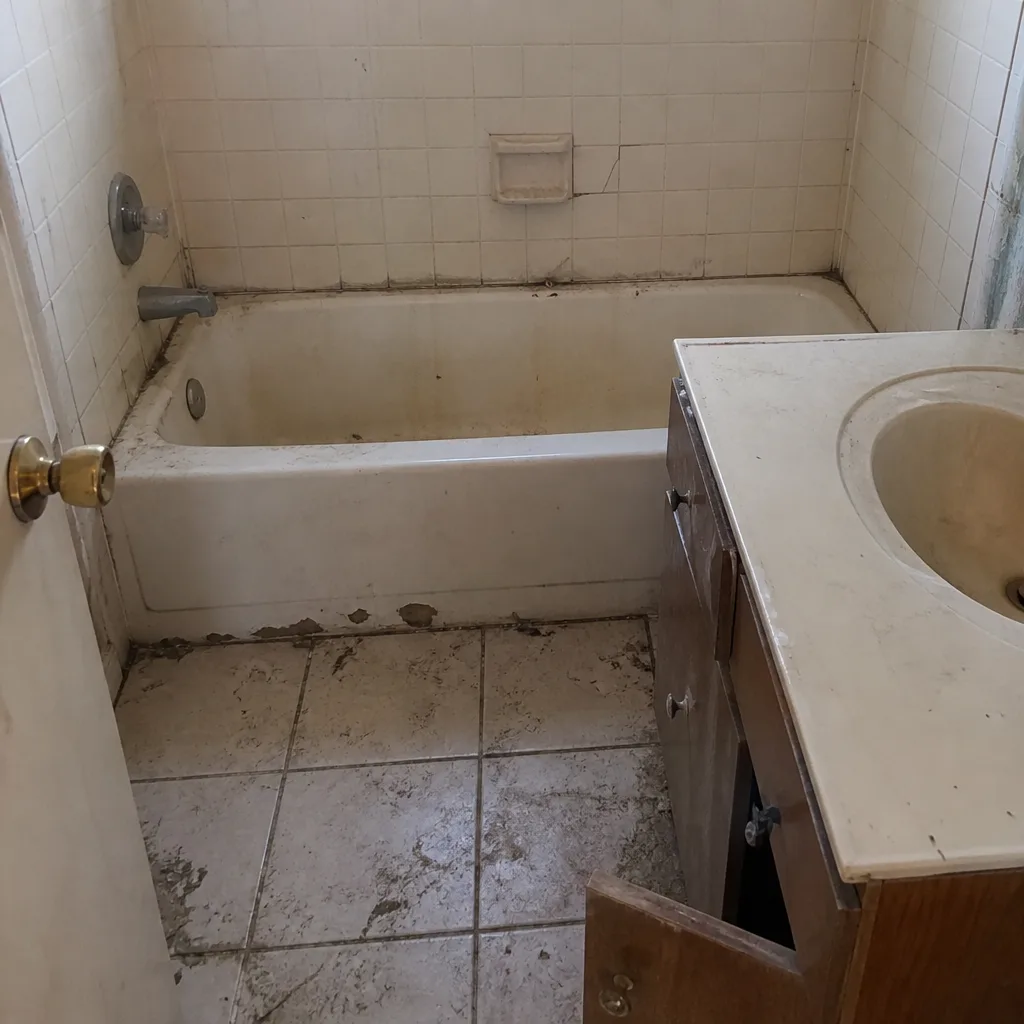 Before
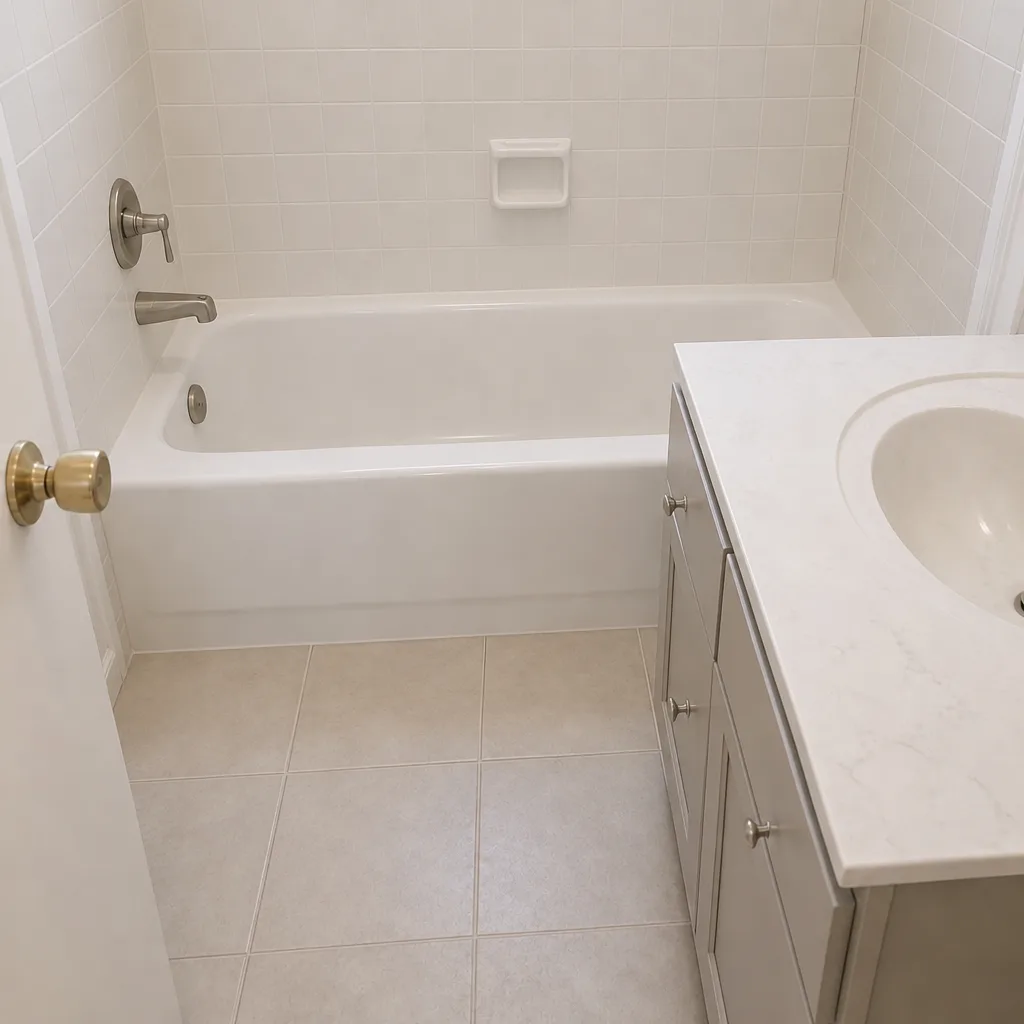 After
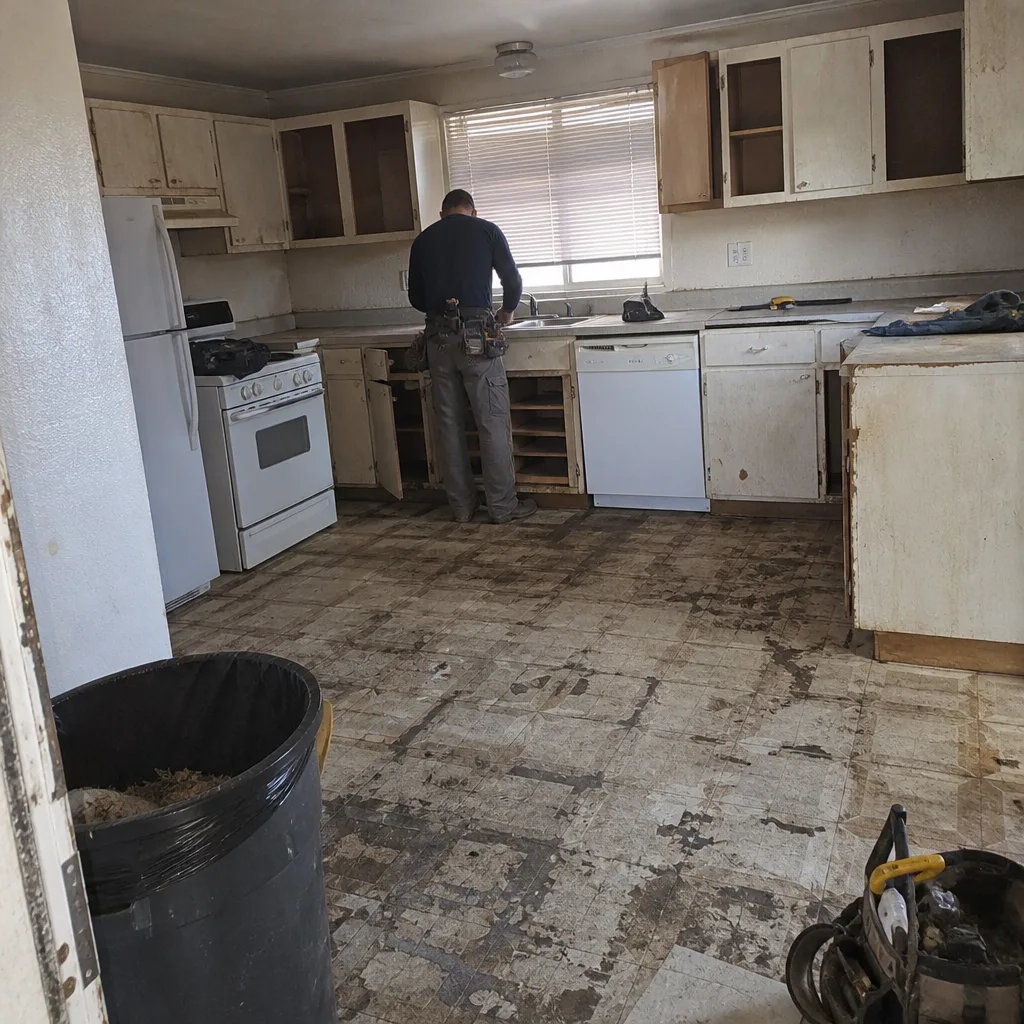 Before
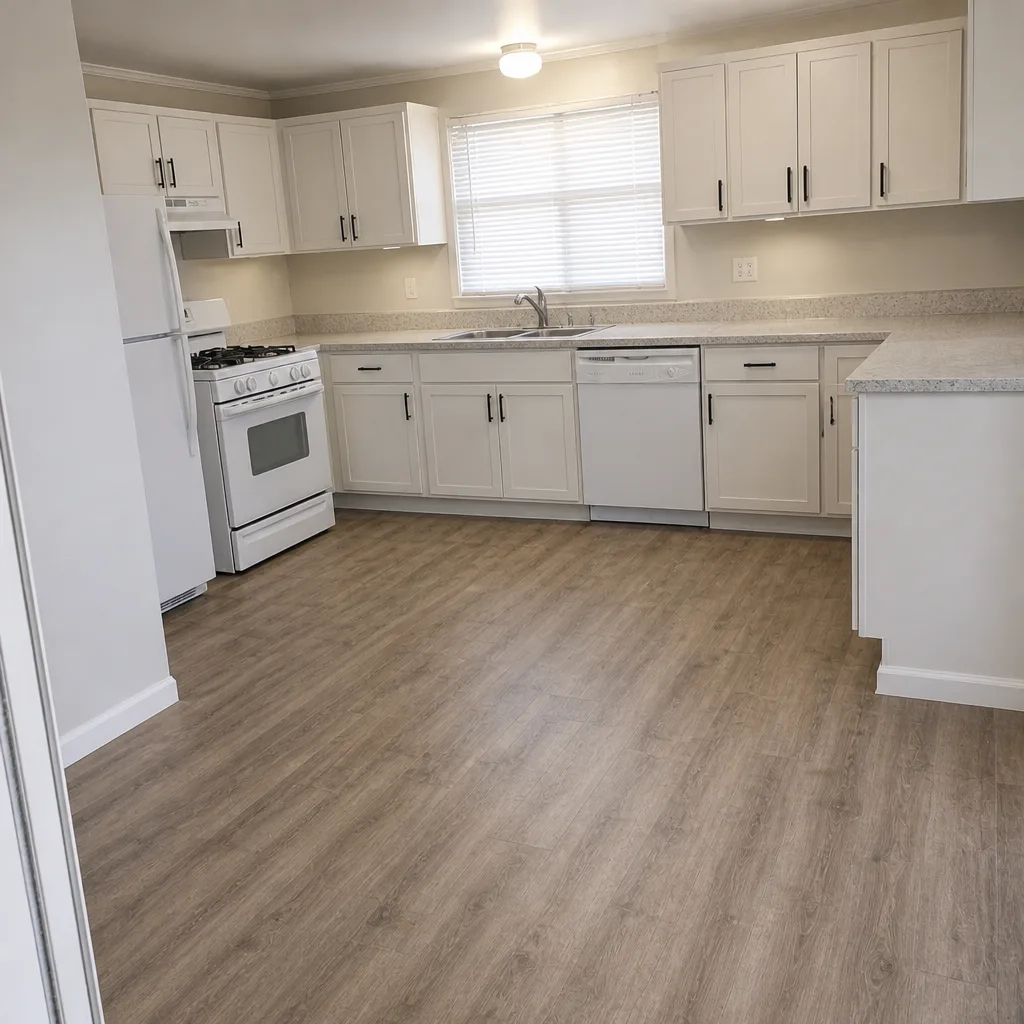 After
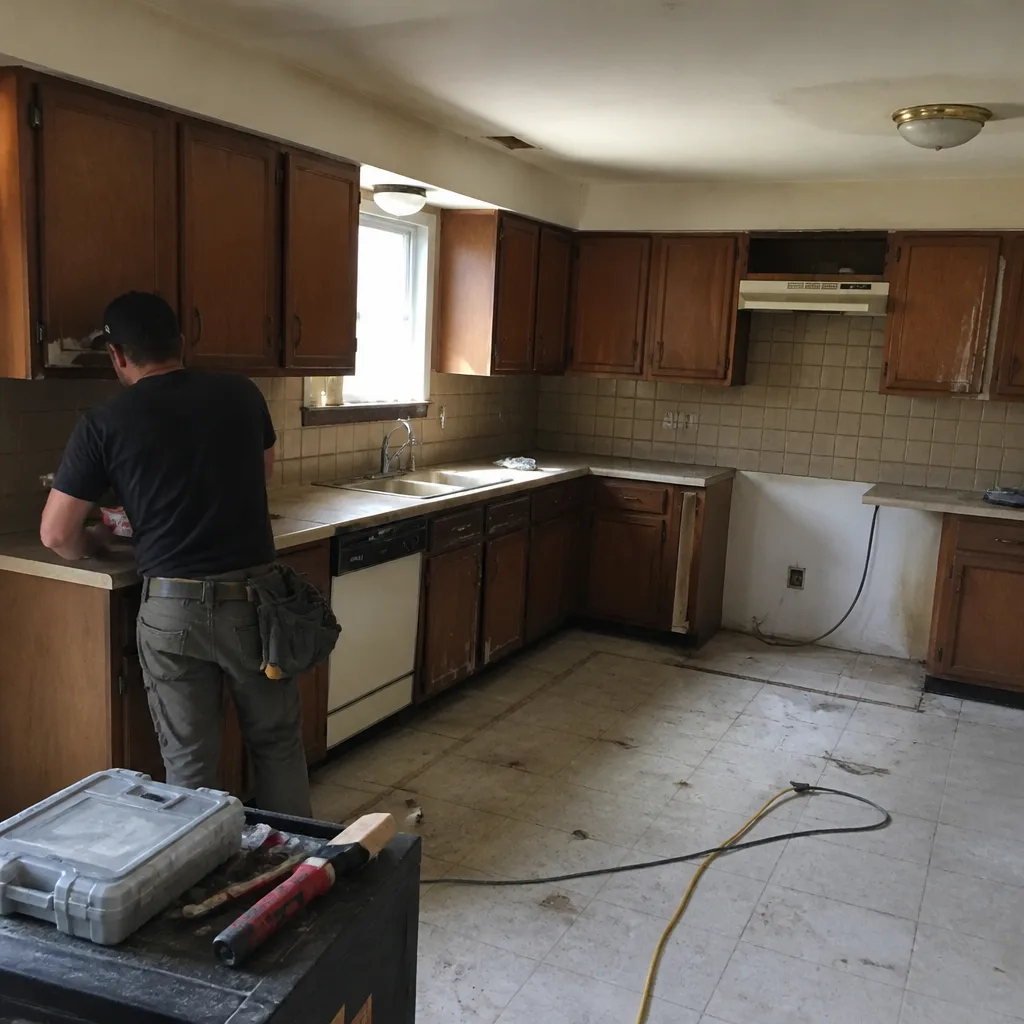 Before
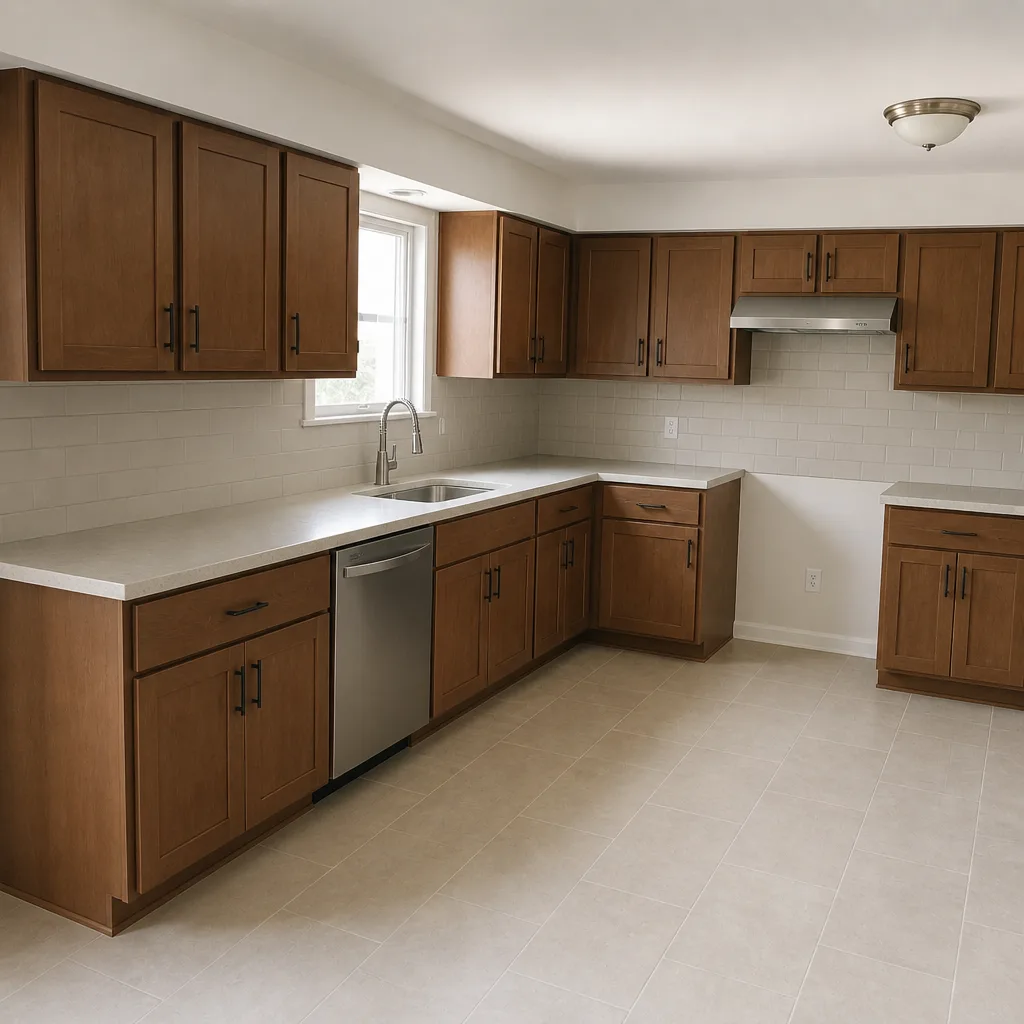 After
When to Call a Professional
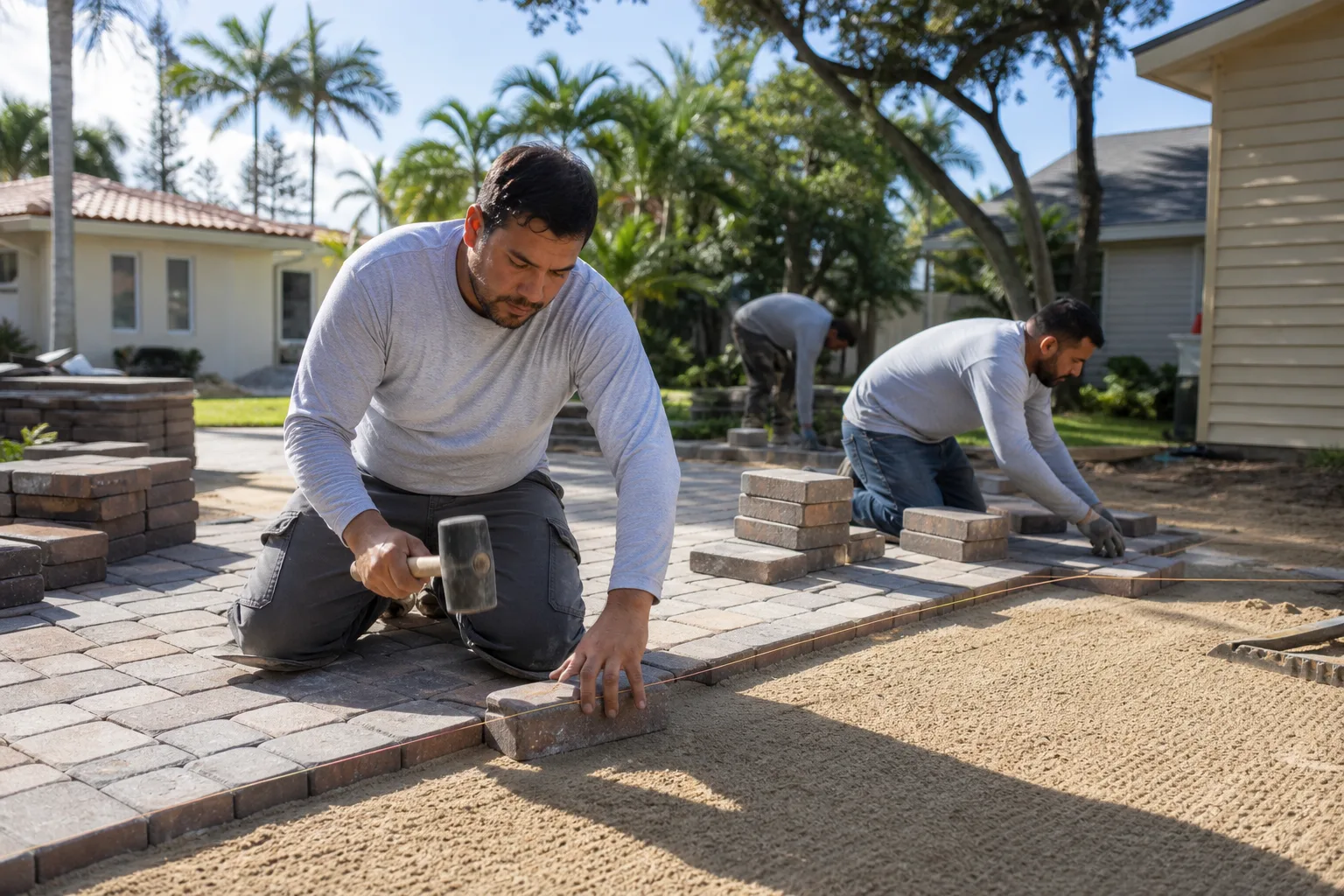
Some driveway problems are worth investigating yourself: a single loose paver, a stain, a bit of sand settled out of the joints. Others aren’t. If you’ve got pavers heaving or rocking across a whole section, joints migrating toward the street, or water pooling at the garage apron after a rain, the base is the suspect, and tearing into it is not a DIY job once caliche is involved. Driveway work is excavation, compaction, and drainage engineering over a hardpan layer that will punish a wrong call. It’s also permit work: Clark County requires a grading permit over 500 square feet, and the base inspection has to happen before paving. A driveway that was installed unpermitted can create problems at resale, and we’ve seen it more than once in Enterprise.
Rowan Construction Group Enterprise offers free estimates in Enterprise. Call (833) 630-4077 to schedule a walkthrough. Bring any written estimate you’ve already received; we’ll review it line by line at no charge and tell you what the scope leaves out.
Frequently Asked Questions
A paver driveway in Enterprise typically runs $14 – $28 per square foot installed, depending on material: concrete pavers at $14 – $22, travertine at $18 – $28, and porcelain pavers at $22 – $30. A 500-square-foot driveway typically lands between $7,000 and $14,000. Call (833) 630-4077 for an exact quote on your lot – estimates are free.
Over caliche, plan on 6 – 8 inches of Class II base rock, compacted in two or more lifts to 95% relative density. The exact depth depends on where the hardpan sits on your lot, which is why the first step is probing the soil, not quoting the pavers. Get the depth and the compaction target written into your scope.
Yes, in most cases. Clark County requires a grading permit for driveway work over 500 square feet, which covers most full replacements in Enterprise. The permit includes a base inspection before paving, so the compaction gets checked before it disappears under the surface. Ask your contractor for the permit number before work starts, and call (833) 630-4077 if you want us to walk you through what your property needs.
Light-colored, dense concrete pavers from Belgard, Pavestone, or Techo-Bloc are the practical choice for an Enterprise driveway: they reflect more heat and hold color under high UV. Travertine stays cooler underfoot but needs sealing in some grades; porcelain resists staining but costs more and needs a driveway-rated thickness. Call (833) 630-4077 and we’ll price all three for your square footage.
Yes, free. Bring any written estimate and Rowan Construction Group Enterprise will review it line by line, including base spec, edge restraint, joint sand, and exclusions, at no charge. Call (833) 630-4077 to set that up. It’s the fastest way to spot a vague bid before you sign it.
Plan on one to two weeks for a typical residential driveway, including excavation, base compaction, paver installation, and joint sand. If a Clark County grading permit is required, add review time before the crew can start; that window runs a couple of weeks or more in a busy season. Get the schedule in writing with the scope.
The Bottom Line
The single most important decision on an Enterprise driveway isn’t the paver color or the pattern. It’s the base. Caliche sits 6 to 18 inches below most lots, and a 6 – 8 inch compacted Class II base with proper drainage and edge restraint is what keeps a driveway from heaving in three years. Get that spec written into the scope, get the permit pulled, and compare bids by what’s in them, not the total. Concrete pavers at $14 – $22 per square foot are the practical choice in this market; travertine and porcelain are worth the premium where their advantages matter. The rest is color.
Rowan Construction Group Enterprise builds driveways on written specs with a 365-Day Done Right Promise, and every base depth and compaction step is documented with a photo record. If you’re comparing options, we’ll review a competitor’s estimate at no charge. Call (833) 630-4077 for a free estimate.
Written by the team at Rowan Construction Group Enterprise.