
Last updated November 18, 2026



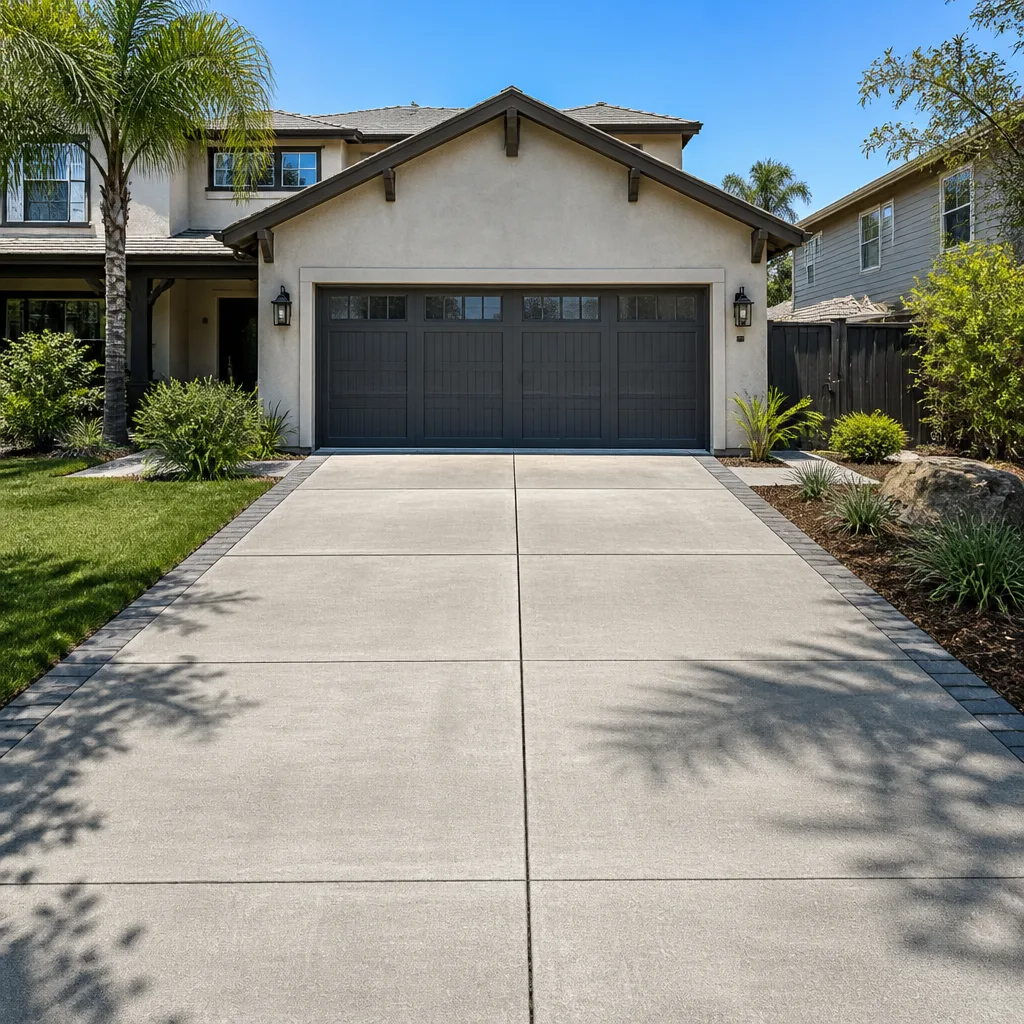




Free written scope consultation - allowances, timeline, and change-order rules on paper before a single trade is scheduled
How to Hire a Construction Contractor in Enterprise: A Step-by-Step Guide
A bid that comes in 18% below the others isn’t a deal. It’s a document that tells you exactly which line items the contractor plans to renegotiate once demolition has started and you have no leverage. We’ve watched homeowners in Enterprise sign the lowest number and pay the highest final cost, not because they were careless, but because nobody told them what to compare. This guide gives you a line-by-line bid comparison framework, shows you how to pull a Nevada license in under three minutes, and walks through the clauses that decide who eats a surprise cost. By the end you’ll know what a fair Enterprise bid looks like and what a lowball bid is hiding.
Quick Answer
Hire a construction contractor in Enterprise by verifying their Nevada State Contractors Board license is active, confirming general liability and workers’ comp coverage at the right dollar minimums, and comparing at least three written bids line by line rather than by bottom-line price. The winning bid names permit fees, debris haul-away, temporary protection, subcontractor markups, and inspection time as separate line items, and it contains a signed change order clause before any hammer swings.
Styles & brands we work with
- Kitchen remodeling
- Bathroom remodeling
- Home additions & ADU
- Roofing
- Windows & doors
- Driveway & pavers
- Fence
Table of Contents
- Step 1: Verify the Contractor’s Nevada License
- Step 2: Read the Certificate of Insurance
- Step 3: Compare Bids Line by Line
- The Five Line Items Low Bids Leave Out
- Step 4: Get the Change Order Clause Right
- Step 5: Run a Reference Check That Reveals Schedule Reliability
- What’s Different About Hiring in Enterprise
- Common Mistakes to Avoid
Step 1: Verify the Contractor’s Nevada License
Every construction contractor working in Enterprise needs a license from the Nevada State Contractors Board (NSCB). Verifying it takes under three minutes and it’s the single most useful thing you can do before you talk price. Go to the NSCB license search, enter the license number from the contractor’s bid or business card, and read the status field carefully.
Here’s what the status actually means for your wallet:
- Active: The license is current, the bond is in place, and the contractor can legally contract residential work. This is what you want to see.
- Inactive or expired: The contractor cannot legally contract new work in Nevada. If they sign your job anyway, your recourse through the NSCB’s residential recovery fund is compromised.
- Suspended or revoked: Walk away. Suspension usually follows a failure to pay a judgment, a bond lapse, or a disciplinary action you don’t want to inherit.
Check the license classification too. Residential work in Enterprise falls under the appropriate residential classification for the scope. A contractor licensed only for commercial work can’t legally take your kitchen remodel, even if they’ve done a hundred of them elsewhere. Note the license number, the classification, and the expiration date. Save a screenshot. If a contractor’s license goes inactive mid-project, you want a dated record of what you verified and when.
Under Clause 1 of our Haven Standard, the price is written before anyone starts. That’s easy to promise. A license check is how you make sure the person promising it can legally finish the job.
Step 2: Read the Certificate of Insurance
A certificate of insurance (COI) is a one-page document listing a contractor’s policies, dollar limits, and expiration dates. Contractors hand these out freely, which is exactly why you should read them instead of glancing at the logo. Two coverages matter for a residential project in Enterprise.
General Liability
General liability covers property damage and bodily injury caused by the contractor’s work. If a crew member knocks over a load-bearing wall or a tool punctures a water line, this is the policy that pays. For a residential remodel, the coverage limit you want to see is at least $1,000,000 per occurrence. Read the aggregate limit too, since that caps how much the policy pays out across all claims in a policy period.
Workers’ Compensation
Workers’ comp covers injuries to the contractor’s own employees. This is the coverage homeowners undervalue and it’s the one that protects you personally. If an uninsured worker is hurt on your property, you can be exposed to a claim. Nevada requires most construction employers to carry workers’ comp. Read the certificate to confirm the policy is active and covers the classification of work being performed. A roofer’s certificate that lists only “clerical” classification is a red flag.
What to Check on the COI
- The named insured matches the contractor’s legal business name on the bid.
- The policy expiration date falls after your project completion date.
- The certificate lists a current general liability policy at or above $1,000,000 per occurrence.
- Workers’ comp is active with a classification matching the trade.
If a certificate is expired or the numbers are missing, ask for an updated one directly from the insurer, not the contractor’s office. A legitimate contractor will send it the next business day without a fuss.
Step 3: Compare Bids Line by Line
Most hiring guides tell you to get three bids and pick the middle one. That’s not a method, it’s a coin flip. The Enterprise approach we recommend is to build a comparison table and fill it in from each written quote. Print the bids, sit at the kitchen table with a highlighter, and look for what’s missing as much as what’s there.
Here’s a comparison framework that surfaces hidden costs before you sign:
- Write one column per contractor. Label the top of the page with each bidder’s name and their bottom-line price.
- List every line item from every bid in the left column. If one contractor charges for debris haul-away and two don’t mention it, that missing row is a finding, not a blank.
- Mark with an “X” anything a bid omits rather than prices. Missing pricing is not included-in-the-price. It’s unspoken.
- Convert every allowance into a real number. A $500 tile allowance on a 400-square-foot bathroom floor covers cheap ceramic and nothing else. Call the number.
- Total each bid honestly, adding estimated costs for the “X” rows. The gap between the lowest bid and the highest usually shrinks dramatically once you do this.
- Compare the change order clause. Hold two bids side by side and look for a sentence describing what happens if a wall turns out to be load-bearing or the substrate is wet.
If you want a second set of eyes, Rowan offers a Free Second Opinion on any written estimate. Bring us a competitor’s quote and we’ll review it line by line, no charge, whether you hire us or not.
The Five Line Items Low Bids Leave Out
Lowball bids aren’t necessarily cheap contractors. They’re documents with hidden cost transfers. These five items show up in honest bids and vanish from dishonest ones:
- Permit fees. Enterprise projects that alter structure, plumbing, or electrical require permits, and Clark County charges real money to issue them. A bid with no permit line usually means the contractor plans to skip the permit or to ask you for the fee once work has started.
- Debris haul-away. Demolished tile, old cabinets, and roofing shingles don’t fit in your trash bin. Haul-away includes dumpster rental, landfill fees, and labor. Roughly $400 to $900 on a typical kitchen remodel.
- Temporary protection. Floor sheeting, dust walls, and masking on adjacent rooms are a line item. A bid that omits them means either your floors go bare or the protection is a separate bill.
- Subcontractor markups. Most general contractors use specialist subs for plumbing, electrical, and HVAC. A real bid shows the sub’s price and the general contractor’s fee, either as a line or a stated percentage.
- Inspection hold time. Inspections add scheduled gaps to the project, and the general contractor’s overhead runs in those gaps. If a bid assumes zero inspection time, either the contractor doesn’t plan to pull permits or they plan to ask you to pay for waiting later.
Every one of these items is defensible in a written bid. They’re not barriers, they’re the boring parts of an honest number.
Step 4: Get the Change Order Clause Right
Change orders are where the bottom line lives or dies. A change order is a written amendment that adds or removes scope, price, or schedule from the original contract. When it’s well-written, it protects both sides. When it’s vague, it’s a blank check.
Nevada Revised Statutes Chapter 624 governs contractor licensing and contract behavior, and it gives you a useful frame for what a change order clause should contain to be enforceable. Practically, you want the clause to state:
- The circumstances that justify a change order (unforeseen conditions, customer-requested additions, code-mandated upgrades discovered mid-build).
- That no change proceeds until a written change order is signed by both parties.
- That the change order states the added cost, the added time, and the amended scope in dollars and days, not percentages.
- That any “allowance” overage above a stated threshold requires a change order rather than a verbal OK.
Here’s the discipline that matters. Under our Haven Standard, no work proceeds on a change until the change order is signed. That’s not a slogan, it’s a process rule. It’s also why our projects across 4,000-plus jobs finish within a few percent of the agreed price. The number in writing before the work is the number you pay.
If a contractor’s bid contains the phrase “additional work billed at time and materials” without a change order process behind it, ask them to rewrite it. If they resist, that’s your answer.
Step 5: Run a Reference Check That Reveals Schedule Reliability
Most reference checks go wrong because they ask whether the contractor was “easy to work with.” Everyone at the end of a finished project says yes. The question you need to ask is whether the work finished on the schedule and at the price. Here’s a reference-check script that gets you there.
- “What date did the project start, and what date did the final walkthrough happen?” The gap between these two dates tells you more about schedule reliability than anything else.
- “Did the final invoice match the original bid, and by what percent did it differ?” A homeowner who remembers an exact number to the dollar is a homeowner who paid close to it.
- “How were change orders handled? Did you sign anything before the work was done?” Verbally approved changes are the top cause of cost surprises.
- “How many days in a row did you go without a crew on site?” Long gaps usually mean the contractor booked overlapping jobs, and your project was the second priority.
- “What was the single biggest surprise, good or bad?” The answer tells you whether the contractor’s communication was honest.
Ask for references from jobs completed in the past 12 months. A contractor whose last three references are from 2019 either isn’t working or doesn’t want you to see recent work. For a Home Addition or ADU in Enterprise, ask for two references from that specific type of project.
What’s Different About Hiring in Enterprise
Enterprise has a few conditions that change which bid line items matter most. If you’re comparing contractors who’ve worked here and contractors who haven’t, use these as a filter.
Soil and Drainage
Caliche is widespread under Enterprise. That hardpan layer sits beneath a thin topsoil and can be a foot thick in some pockets. During demolition on any exterior work – a paver drive, a fence line, a home addition footprint – a contractor who hits caliche needs equipment to break it up and haul the broken material away. A bid without a line for rock excavation or subgrade replacement is a bid written for a different city. If you’re pricing a driveway, this is the single biggest swing in the number, and our Driveway & Pavers in Enterprise page covers how we price around it.
Summer Heat and Scheduling
Roofing, exterior painting, and paver work in Enterprise get scheduled around the summer heat. A June roof job starts at dawn because shingle adhesives and workers both behave badly at 3 p.m. in July. If a bid gives you a start date in August and a flat 10-day schedule, ask how the crew handles heat hours. A contractor who hasn’t built heat hours into the plan will hit them anyway, and the change order that follows is usually the customer’s problem unless the schedule was written correctly.
HOA and Fence Rules
Many Enterprise neighborhoods are governed by HOAs with specific fence height, material, and color rules. Fence Installation in Enterprise bids should list the HOA approval step as a line item with a real cost and duration. A bid that skips it means you’re the one making architectural committee calls after the material has been ordered.
Common Mistakes to Avoid
- Hiring on the bottom-line number alone. A bid is not a single number, it’s a scope. Two bids that differ by 20% almost always differ by 20% in what they include, not what they cost.
- Accepting a verbal quote. A price with no written scope and no written warranty is a conversation, not a contract. Under Clause 1 of our Haven Standard, the price is written before anyone starts, every time, on every trade.
- Skipping the workers’ comp check. Homeowners in Enterprise have been exposed to claims after an uninsured worker was hurt on their property. If the COI doesn’t list active workers’ comp, don’t sign.
- Not asking about permit responsibility. If the contract doesn’t say who pulls the permit, that’s a gap the contractor will close at your expense mid-project. Permits should be named, priced, and assigned.
- Scheduling a summer exterior project without heat hours in the plan. Roofing and paver crews in Enterprise lose productive hours in July. Ask how the schedule compensates.
- Confusing “priced to bid” with “priced to finish.” A bid that notes “price subject to conditions” or “as-needed” in scope language is a bid that intends to change later. Ask for the flat price in writing with the full scope attached.
- Not one photograph on file. Every visit to our projects includes a documented photo record as a standard deliverable. If a contractor shows up without ever documenting the condition of the substrate or the shingle layer count, you’ve lost your evidence if a question comes up six months in.
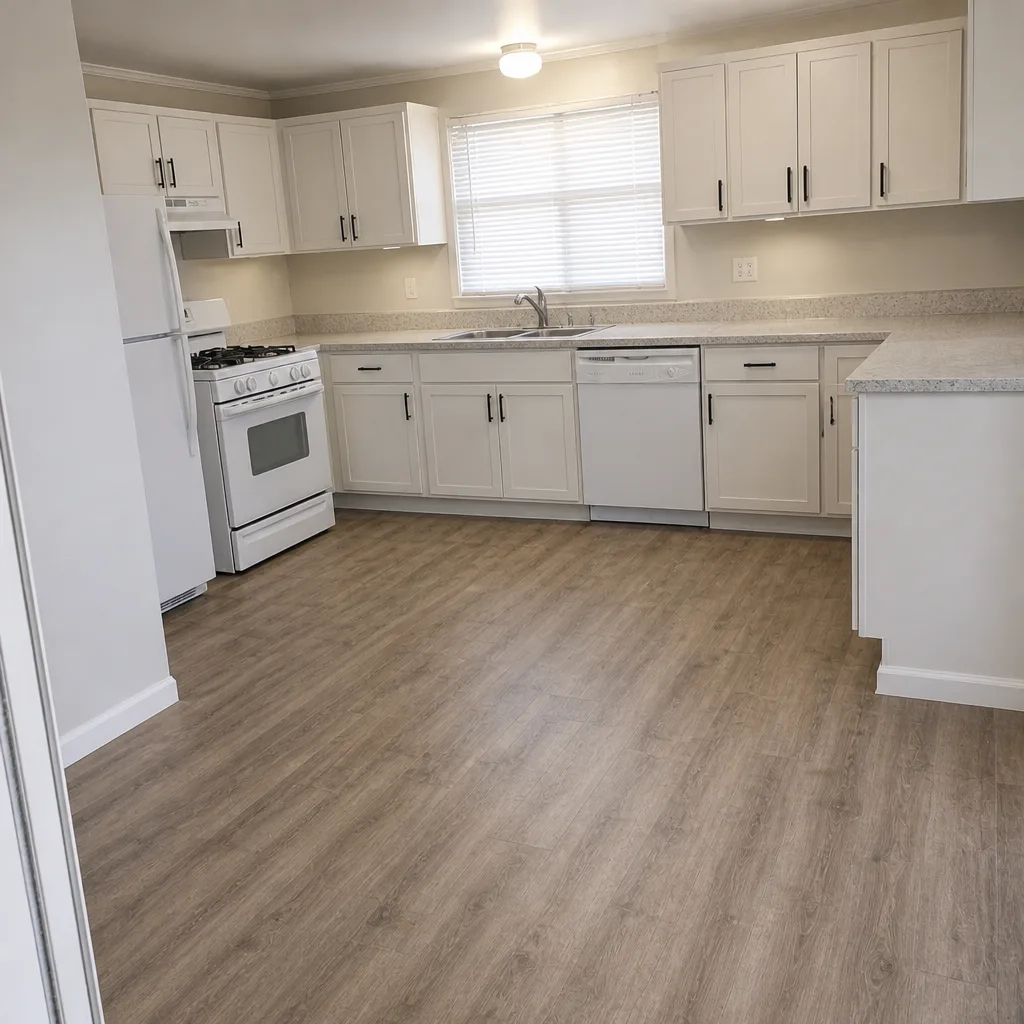
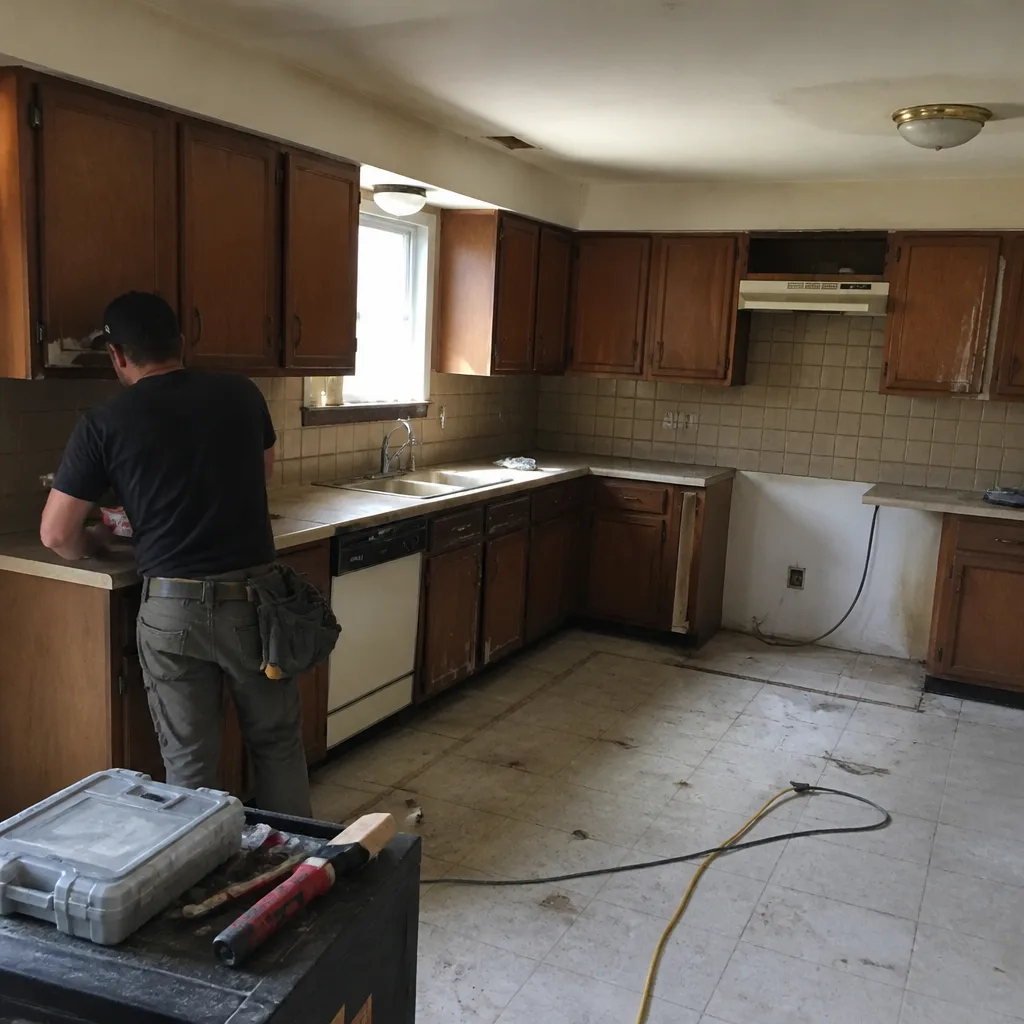
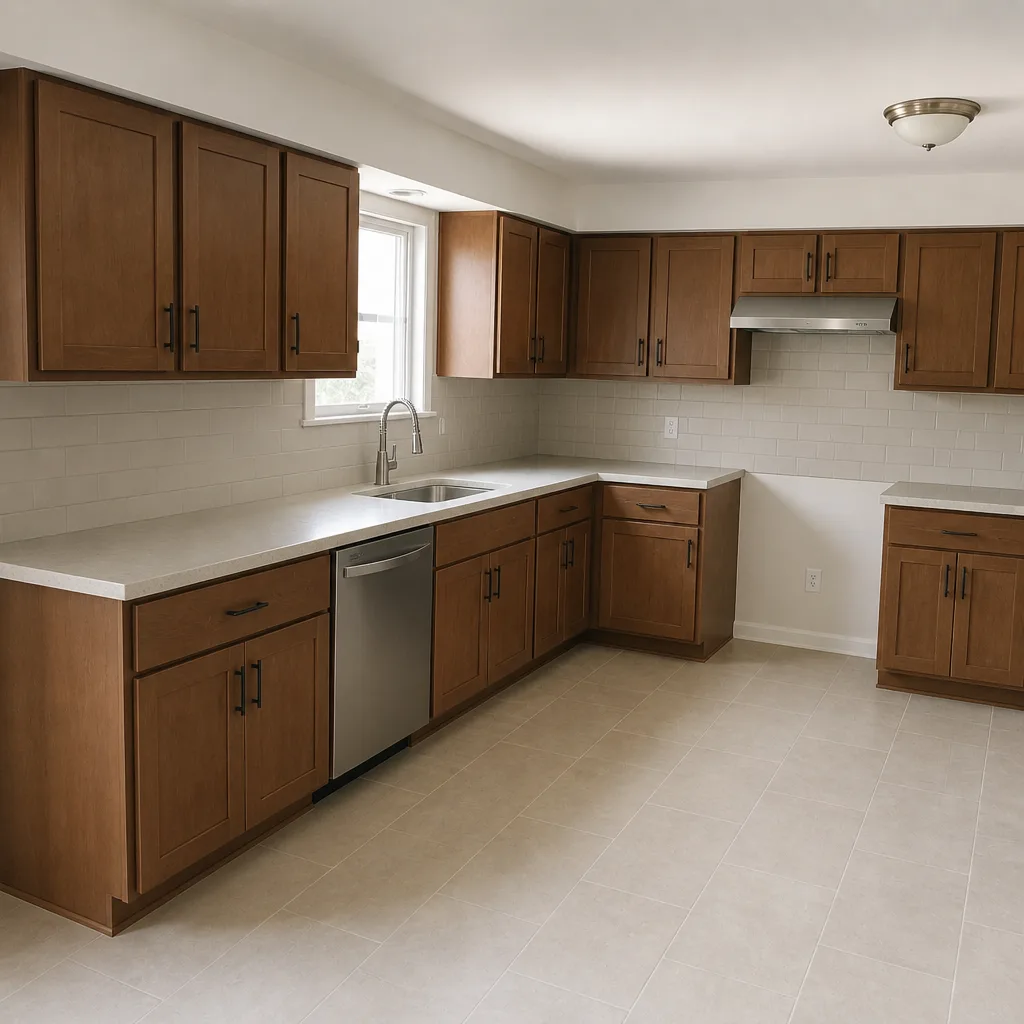
See the difference
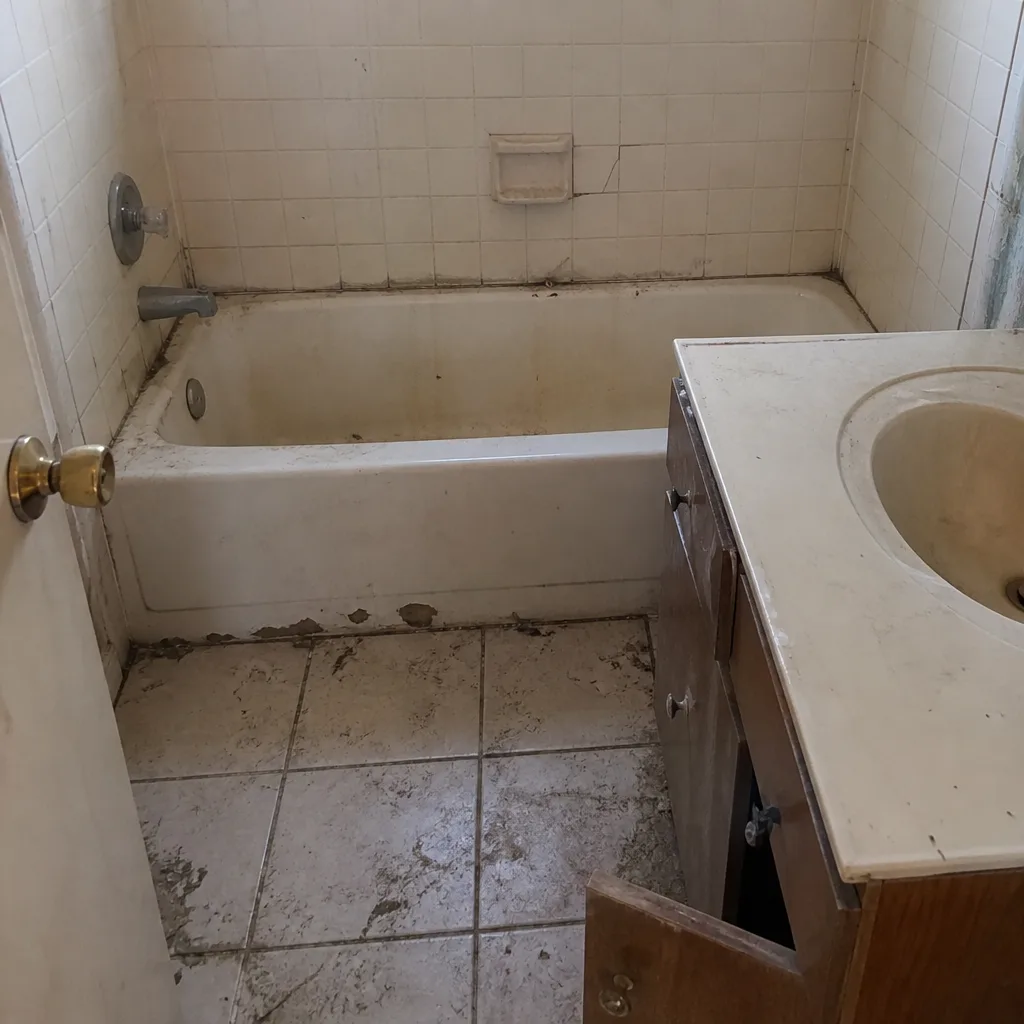 Before
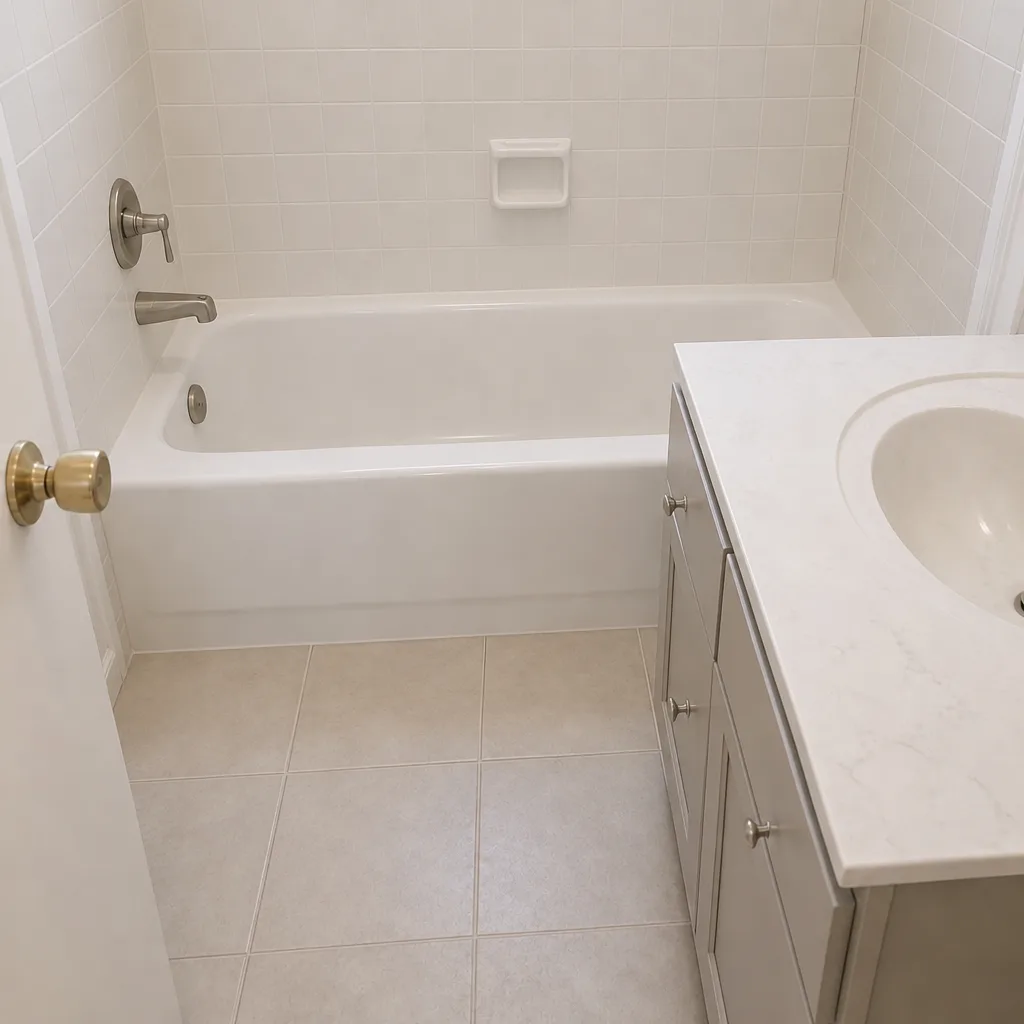 After
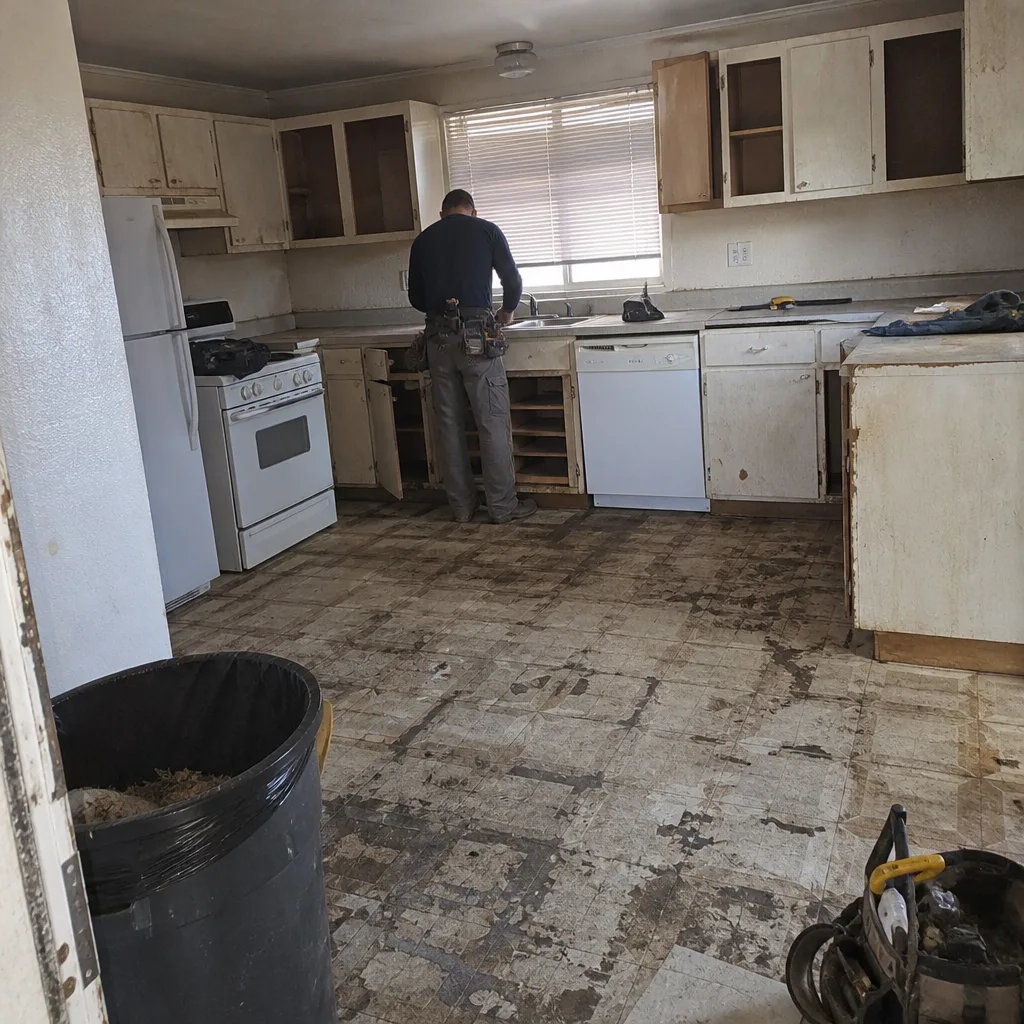 Before
 After
 Before
 After
When to Call a Professional

Some work is DIY territory. Painting a bedroom, installing a dimmer switch, hanging a fence gate – fine. But five categories on a home in Enterprise really should go to a licensed contractor:
- Anything that touches the structural envelope – a wall removal, a new window opening, a home addition, an ADU. Caliche and slab conditions here make structural work a professional job.
- Roofing – steep pitch, height, and Nevada wind uplift requirements make roof work genuinely dangerous. Do not go up on a roof yourself to inspect it.
- Electrical panel work or new circuits – the risk is fire and shock, and Nevada requires a licensed electrician for both.
- Gas line work – any alteration to a gas line is a licensed-plumber job, full stop.
- Permitted work of any kind – anything that requires inspection by Clark County has to be pulled by a licensed contractor.
Rowan Construction Group Enterprise offers free estimates across seven trades: Kitchen Remodeling, Bathroom Remodeling, Roofing, Windows and Doors, Fence Installation, Driveway and Pavers, and Home Additions including ADUs. Call (833) 630-4077 for a free estimate. Our technicians have up to 19 years of experience, and a live person answers every call. You can also start with our Rowan Construction Group Enterprise home page to see what each trade looks like in writing.
Frequently Asked Questions
Go to the Nevada State Contractors Board license search, enter the contractor’s license number, and confirm that the status reads “active.” Check the classification matches residential work and note the expiration date before you sign anything. An inactive or suspended license means the contractor cannot legally contract new work in Enterprise.
A fair bid lists permit fees, debris haul-away, temporary protection, subcontractor markups, and inspection hold time as separate line items. A lowball bid leaves those out but doesn’t lower the work – it just defers the cost to a change order after demolition, when you have no leverage. Compare bids row by row, not by bottom line.
Look for at least $1,000,000 per occurrence on general liability, with an active workers’ comp policy covering the classification of work being performed. Check the expiration date on the certificate of insurance falls after your project’s expected completion date. If the numbers are missing or the coverage is unclear, ask for an updated certificate directly from the insurer.
Yes. Any scope, cost, or schedule change should be captured in a signed change order before work proceeds, no matter the size. Under Nevada’s contractor statutes this protects both sides, and under our Haven Standard it’s the reason our projects finish within a few percent of the agreed price across 4,000-plus jobs.
Schedule depends on scope, permitting, and heat hours for exterior work. A bathroom remodel runs a few weeks; a kitchen runs several; a home addition typically runs months depending on inspections. Get the schedule in writing as part of the bid, with inspection hold time as a named line item rather than an assumption. Call (833) 630-4077 for a written scope and schedule on any of our seven trades.
Ask past clients for start and finish dates, the final invoice versus the original bid in percentage terms, and how change orders were handled. Detailed answers on those three questions tell you more about schedule reliability than any statement about whether the contractor was “nice.” Request references from jobs completed in the last 12 months.
The Bottom Line

Hiring a construction contractor in Enterprise comes down to three habits. Verify the license on the NSCB database before you talk price. Read the certificate of insurance for real dollar limits and active coverage. And compare bids by line item, not by bottom line, because the number that’s 18% lower is the number with the most omissions. A written price with a written scope and a written warranty, before any work starts, is the standard to hold every bid against. If your bid list is still being built, call us – a free second opinion on any written estimate is standing policy. Our track record of staying within a few percent of the agreed cost on every job comes from that discipline, not from a promise made on the day of signing.
Call (833) 630-4077 to schedule your free estimate. Written line-item pricing, a documented photo record on every visit, and the 365-Day Done Right Promise back every project we take on in Enterprise. Whether you’re pricing a bathroom, a roof, or something larger, we’ll hand you a number in writing and a scope that matches it.
Written by the team at Rowan Construction Group Enterprise.