
Last updated November 18, 2026








Free written scope consultation - allowances, timeline, and change-order rules on paper before a single trade is scheduled
Construction Warning Signs: An Enterprise Homeowner’s Reference Guide
By the time a construction defect is visible from the street, it has already cost two to five times more to fix than it would have if caught during rough framing. Cracking stucco, uneven pavers, a sagging roofline: each of these is a late-stage symptom of a problem that was observable weeks or months earlier, when the sheathing was still bare and the fix was a roll of house wrap instead of a stucco tear-off. Most “red flag” contractor lists recycle the same vague warnings about cash payments and door-knockers. This guide takes the opposite approach: it teaches Enterprise homeowners to read the physical evidence of a job site in progress, identify defect patterns before drywall covers them, and document what they find in a format that holds up in a dispute. You’ll learn what a substandard crew leaves behind, how to read a stucco scratch coat, and why a permit delay blamed on the county is sometimes a warning about the contractor’s wallet, not the building department.
Quick Answer
The clearest construction warning signs in Enterprise are physical, not conversational: missing moisture barrier at the sheathing, unprotected rebar ends, concrete poured without slump testing, unsealed penetrations, and absent temporary bracing. Combine those site conditions with behavioral flags – permit delays blamed on the county, mid-job subcontractor swaps without written notice, invoices that don’t match the schedule of values – and you have a reliable early-warning system. Document each issue with angled, timestamped photos and measurements so a claim stands up with the Nevada State Contractors Board.
Styles & brands we work with
- Kitchen remodeling
- Bathroom remodeling
- Home additions & ADU
- Roofing
- Windows & doors
- Driveway & pavers
- Fence
Table of Contents
- Five Job-Site Conditions That Reveal a Substandard Crew
- Reading a Stucco Scratch Coat Before the Finish Goes On
- Ponding Water in a Slab Pour and What It Means for Strength
- Behavioral Warning Signs With Financial Roots
- Invoices That Don’t Match the Schedule of Values
- How to Document a Suspected Defect
- Taking a Dispute to the Nevada State Contractors Board
- How to Prevent These Problems Before You Sign
Five Job-Site Conditions That Reveal a Substandard Crew
Walk a job site in Enterprise at 4 p.m. on a framing day and you can learn more about the crew than you would from any reference call. These five conditions are the ones we look for first, in every trade from roofing to Home Additions & ADU in Enterprise, because each one is cheap to get right and expensive to fix later.
- Missing moisture barrier at the sheathing. House wrap or building paper should cover the entire wall assembly, lapped correctly with seams taped, before siding, stucco lath, or windows go on. Bare oriented strand board exposed to weather for weeks is a moisture problem waiting to be sealed in.
- Unprotected rebar ends. Vertical rebar dowels for a slab or block wall should be capped or taped. Exposed ends are both a trip hazard and a sign that the crew isn’t finishing its stages.
- Mixed-batch concrete without slump testing. Every ready-mix delivery should produce a slump test record and cylinder samples. If your contractor can’t produce those, you have no way to prove the concrete met spec.
- Unsealed penetrations. Every pipe, wire, and duct that passes through a wall or roof needs a sealed collar. Gaps around a plumbing rough-in or an electrical conduit are where water and air get in.
- Absent temporary bracing. Tall framed walls, gable end trusses, and block walls under construction need bracing against wind. Enterprise sits in a valley where gusts of 40 mph are ordinary in spring – unbraced framing is a real structural risk, not a nicety.
None of these five take a licensed inspector to spot. If you’re home during demolition or framing, walk the site at the end of the day and photograph what you see. The written photo record we deliver on every Rowan Construction Group visit exists for exactly this reason: evidence, collected before it’s covered up.
Reading a Stucco Scratch Coat Before the Finish Goes On
Stucco in Southern Nevada goes on in three coats: scratch, brown, and finish. Most homeowners only see the finish – the color, the texture, the curb appeal. The scratch coat, applied over lath and a moisture barrier, is where the structural work lives, and it’s readable if you know what to look for while it’s still bare.
The scratch coat should be uniformly gray, firmly adhered to the lath, and scratched with horizontal grooves so the brown coat has a mechanical key to grab. Look for these warning signs:
- Hairline cracks in a spiderweb pattern. This usually means the coat was mixed too wet or cured too fast – common in June, when Enterprise temperatures push past 105°F and a thin coat dries before it has cured. It signals the mix was not intended for our climate.
- Delamination at edges. Tap the surface near corners and openings with the handle of a screwdriver. A hollow sound means the coat has separated from the lath. That coat will eventually crack the finish.
- Missing or inadequate lath. You should see the lath pattern at seams and at the edges of the wall. No visible lath, or lath that looks loose or overlapped wrong, means the coat is not structurally attached.
- Thickness under 3/8 inch at the scratch. Scratch coat that’s too thin gives the brown coat nothing to build on, and the finish will telegraph every frame and stud.
- No weep screed at the bottom of the wall. Every stucco assembly needs a weep screed at grade to let moisture drain out. Missing weep screed is a code issue and a long-term water problem.
Bring a notebook and a flashlight. Check elevations inside closets and behind shutters where a crew might have gone thin. If you see delamination or missing lath, take photos and request that the coat be evaluated before the brown coat goes on – after that, correction means a tear-off, and the cost multiplies.
Ponding Water in a Slab Pour and What It Means for Strength
Ponding water in a fresh slab pour looks like exactly what it sounds like – standing water pooled on the concrete surface during the pour and the first hours of cure. A little bleed water is normal. Pools that don’t drain, though, deserve a question.
Water that sits on top of a slab is a sign the concrete mix was wetter than spec, that the subgrade is not draining, or both. The extra water dilutes the cement paste and weakens the concrete’s compressive strength. A slab poured at 6-inch thickness with 4,000 psi mix design might test out below 3,500 psi if the water-to-cement ratio got pushed. In a driveway, that shows up as spalling and cracking within 5 to 10 years. In a garage slab or a slab for an ADU, it can affect load capacity.
What to check before the pour and during:
- Subgrade should be compacted and crowned. Test with a level or a hose – water should run off, not pool.
- Slump test records for every truck. The batch should have a slump test documented at the truck. Standard residential pours run between 4 and 5 inches of slump; anything noticeably wetter needs a conversation.
- Water added on site is a flag. If a crew is adding water from a hose to make the mix easier to work, the mix design is out the window.
- Ponding after the pour. If water is still pooled 4 hours after the finish, photograph it and note the time. Cylinder samples should be taken to verify strength at 28 days.
Ready-mix producers like Quikrete and Sakrete brand their bagged and ready-mix products with spec sheets – ask to see the design mix for the pour. A contractor who can’t produce a mix design, a slump record, and cylinder samples is asking you to trust their guess.
Behavioral Warning Signs With Financial Roots
Not every warning sign is physical. Some of the most important are administrative, and they have a common root: the contractor’s cash position. When money is tight, the work and the paperwork both drift.
Permit delays blamed on the county. Every contractor in Enterprise waits on Clark County sometimes. But a contractor who repeatedly blames the county for delays without showing you the permit application, the plan review comments, or a dated submittal is likely dealing with a cash-flow problem or a paperwork problem – and either way, the job is not being pushed. Ask for the portal login and the plan check status. A real contractor shows you the system.
Subcontractor changes without written notice. The plumbing sub, the drywall sub, the stucco crew – if the faces change mid-job, ask why. Swaps usually happen because the original sub wasn’t paid or was pulled to another job. Either way, it’s a warning that your job has slipped in priority.
Invoices that don’t match the schedule of values. The schedule of values is the line-item breakdown of what each phase costs. An invoice should map to it one-to-one. An invoice for “framing – $45,000” when the schedule says framing is $38,000 at 80 percent completion is a red flag. So is a draw request that doesn’t show the phase percentage completed.
Under Clause 1 of the Haven Standard, we put the price in writing before any work starts and no change proceeds without a signed change order. That discipline exists precisely because the invoice-versus-schedule mismatch is such a common warning sign – written scope and signed change orders close the gap.
Invoices That Don’t Match the Schedule of Values
The schedule of values is the single most useful piece of paper a homeowner can hold on a job over $50,000. It breaks the contract price into phases – demolition, framing, rough plumbing, rough electrical, insulation, drywall, finish, cleanup – with a dollar number next to each phase. Every draw request invoices against one of those phases.
What a good draw request looks like:
- The phase name matches the schedule exactly.
- The dollar amount equals the scheduled value multiplied by the completion percentage claimed.
- The percentage is supported by photos or an inspector visit.
- Retainage (typically 5-10 percent held back until final completion) is shown separately.
What a warning-sign draw request looks like:
- A lump-sum invoice with no phase name.
- A phase billed ahead of its actual progress.
- A draw request for materials that aren’t on site yet.
- A change order added into an invoice without a signature.
- A request to “catch up” the invoicing because the schedule “wasn’t updated.”
The schedule of values is not a formality. It is the contract’s internal architecture, and every dollar on it should be traceable to work you have seen. Pull this document out at every draw and match it to photos, not to the contractor’s summary phrase.
How to Document a Suspected Defect
Documentation is the difference between a complaint and a claim. The Nevada State Contractors Board (NSCB) reviews hundreds of complaints each year, and the ones that move forward have one thing in common: clear, dated, well-framed evidence. Here’s the format we recommend to every Enterprise homeowner who calls us for a second opinion.
- Wide-angle photo first. Stand back and frame the whole wall, room, or slab so the photo shows where the defect sits in context. Include a landmark – a door, a window, a hose bib – so a reviewer can orient.
- Close-up photo second. Move in so the defect fills the frame. A second close-up with a tape measure or a coin for scale.
- Timestamp and note. Note the date, the time, and what you observed. If a crack got longer overnight, photograph again and note the delta.
- Measurement. Length, width, and depth of the defect in inches. A 1/8-inch hairline is different from a 3/8-inch crack, and the NSCB reviewer needs to know which one you have.
- Video walk-through. A two-minute narrated video from the doorway to the defect is often the single most persuasive document. It shows the defect in situ.
- Written request to the contractor. Send it in writing (email or text, not a phone call) with a request for a written response within a stated window. This creates a paper trail.
Keep everything in one folder, digital or physical, and keep a running log. The photo record we deliver on every Rowan Craft visit is structured this way by default – because evidence collected on the day it happens is worth ten times what gets reconstructed from memory three months later.
Taking a Dispute to the Nevada State Contractors Board
If documentation doesn’t resolve the issue, the NSCB is the right venue for a Nevada homeowner. The board licenses and regulates contractors in the state, and it has the authority to investigate complaints, order corrections, and in serious cases take disciplinary action. Filing is free for homeowners.
What the NSCB needs from you:
- The contractor’s license number (ask for it in writing before work starts; it should be printed on the contract and on any written price).
- Your written contract, the schedule of values, and all change orders.
- Invoices and proof of payment.
- Your dated photo record with measurements.
- A written summary of what was promised versus what was delivered.
The single biggest reason NSCB complaints get dismissed is missing documentation – no photos, no measurements, no written timeline. The second biggest is that the contractor wasn’t licensed in the first place; the board does not have jurisdiction over unlicensed work. Verify the license number before the contract is signed, not after. This is why every Rowan Construction Group job carries a written price, a written scope, and a written warranty before any tool comes out of the truck.
How to Prevent These Problems Before You Sign
The cheapest defect to fix is the one that never gets built. Everything in this guide reads backward to a decision you make before the contract is signed. Ask the contractor to put these in writing:
- Written price, written scope, written warranty. Not a verbal estimate. Not “call for a quote.” A flat written number with a line-item scope and a written warranty.
- Signed change orders. No change proceeds without one. This is the discipline that keeps projects within a few percent of the agreed number.
- Schedule of values. Get it as an exhibit to the contract.
- License number and insurance certificate on the contract. Check the license with the NSCB before signing.
- Photo record commitment. Every visit, every day. Ask to see an example from a previous job.
- Written response window. If a defect is called out in writing, how many days does the contractor have to respond in writing?
We’ve built Rowan’s enterprise practice around that list because the alternative is the pattern above. When you’re considering a Driveway & Pavers in Enterprise project, or a Fence Installation in Enterprise job over any real distance, ask for the same documentation – the schedule of values and written change orders apply just as much to hardscape as to framing.
Common Mistakes to Avoid
- Only photographing defects from one angle. A wide shot without a close-up is a mood board; a close-up without a wide shot has no context. Take both, every time.
- Trusting a phone call instead of an email. Verbal commitments are worth nothing in a dispute. If you raised an issue, put it in writing the same day and ask for a written response.
- Letting stucco brown coat go on before you’ve seen the scratch coat. Once the brown coat is up, the scratch coat is invisible. Check it on the day the scratch cures, not after.
- Paying a draw without the schedule of values in hand. If you don’t have the schedule, you can’t verify the invoice. Request it as a contract exhibit before work starts.
- Not verifying the license before signing. The NSCB can’t help you if the contractor isn’t licensed. Two minutes on the board’s website is worth more than any reference call.
- Dismissing a permit delay as “the county.” Every crew waits on Clark County sometimes, but a pattern of delays blamed on the county, with no plan check status to show for it, is a warning about the contractor.
- Fixing a defect verbally. “They said they’d take care of it” is not documentation. A signed change order or a written warranty response is.
See the difference
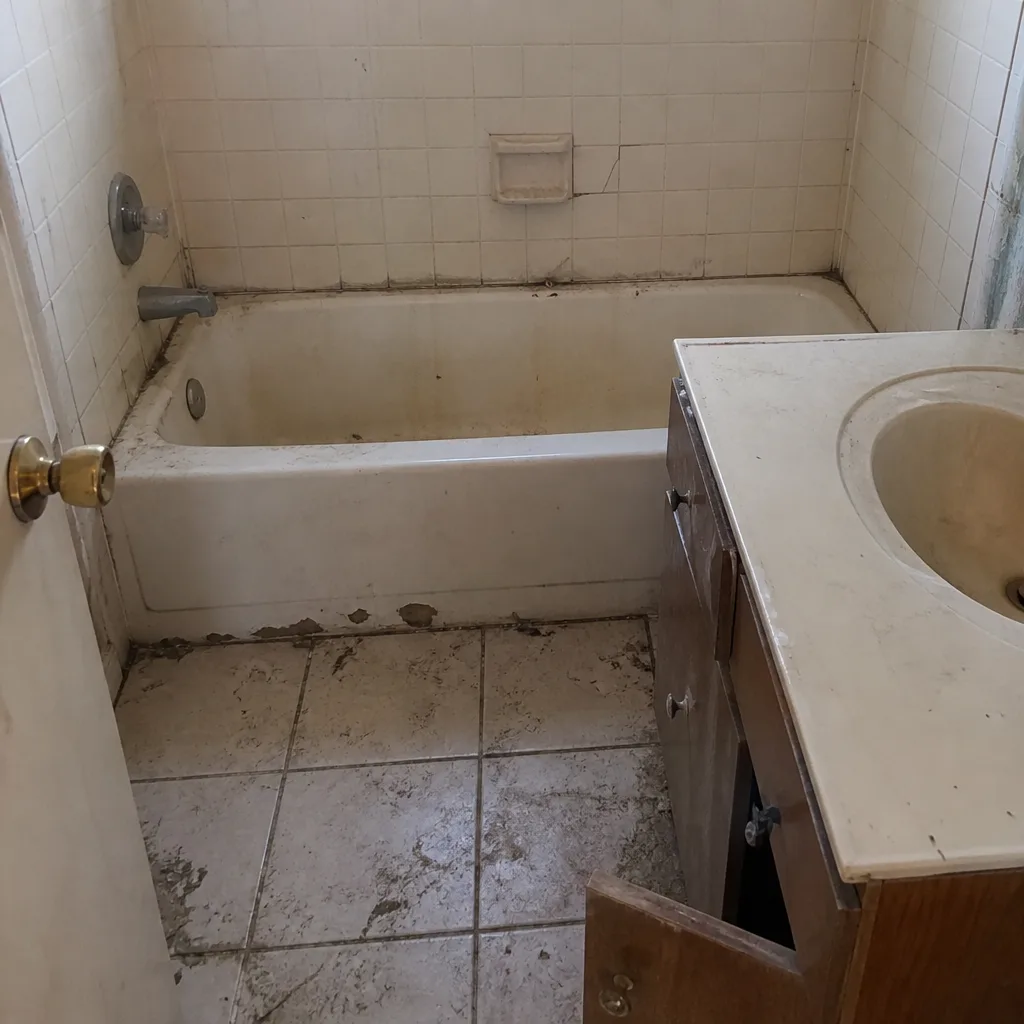 Before
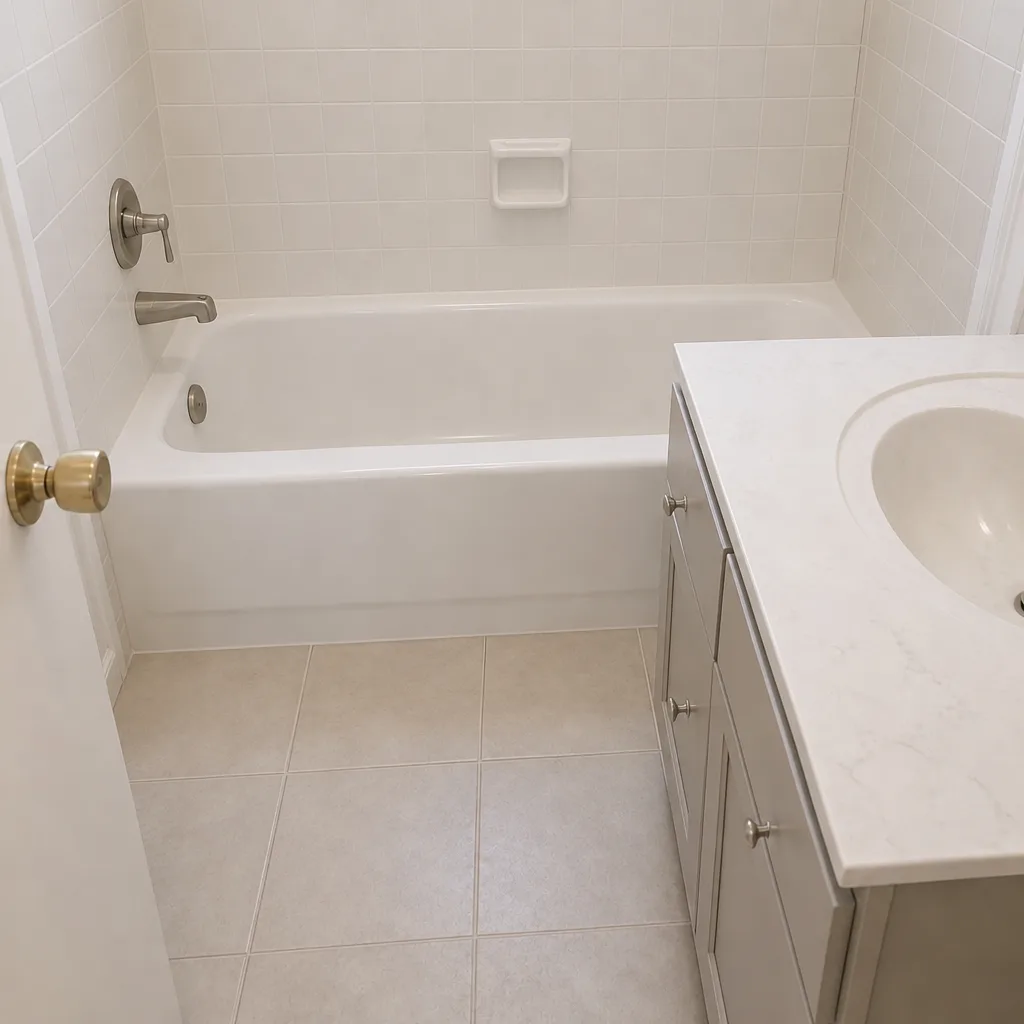 After
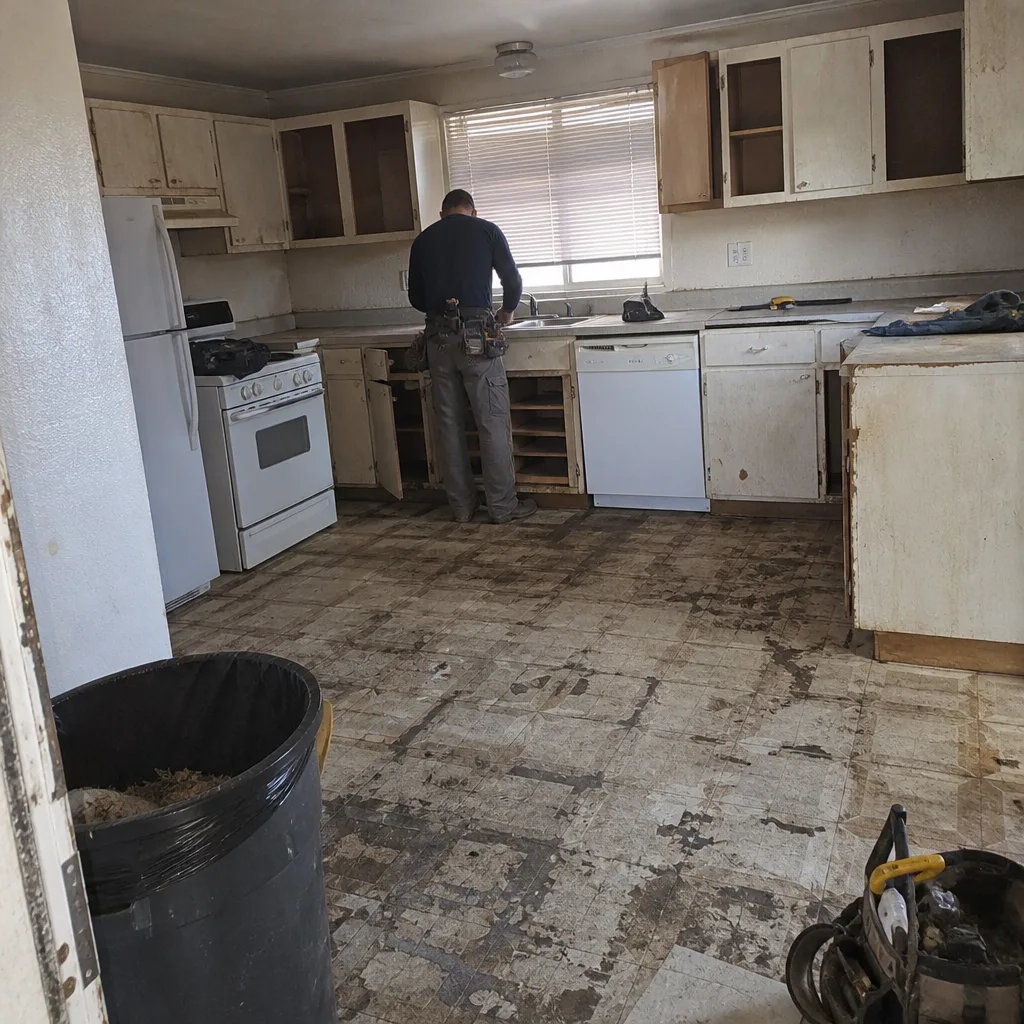 Before
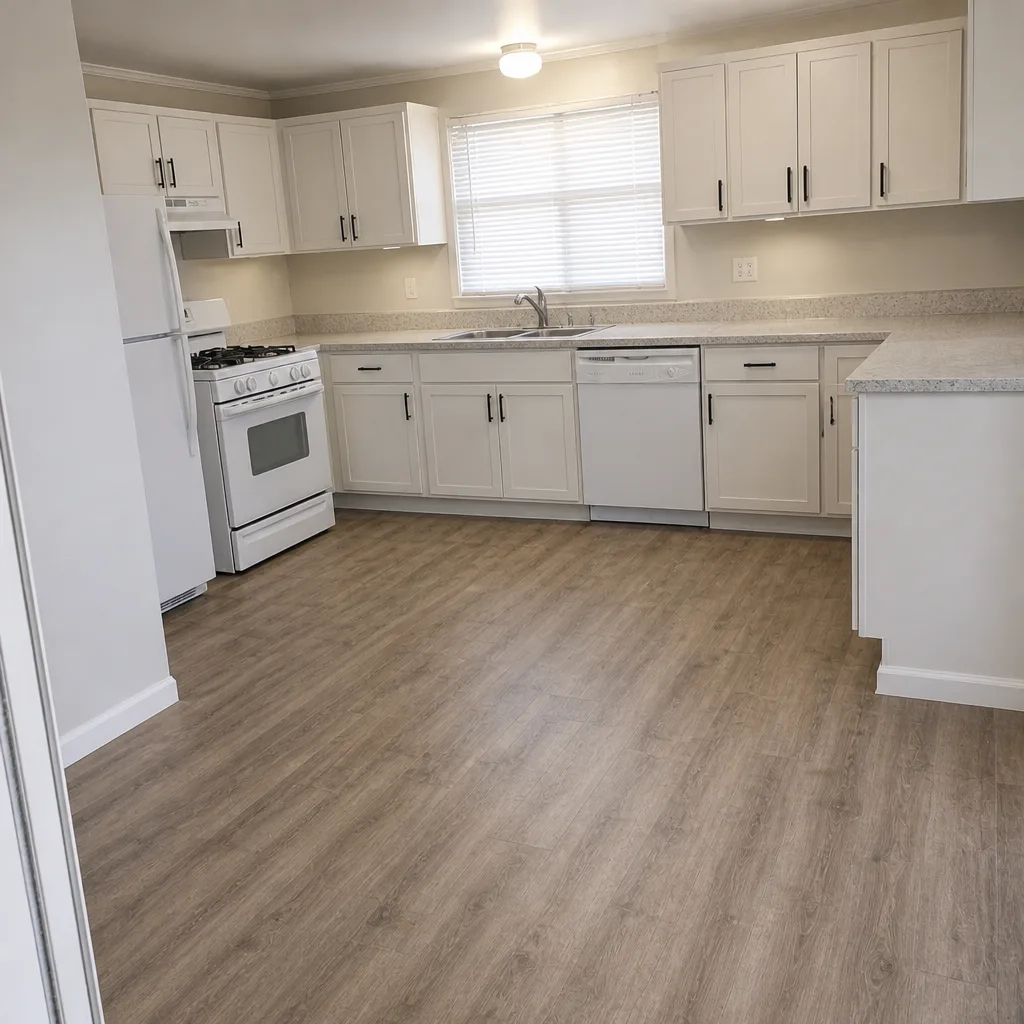 After
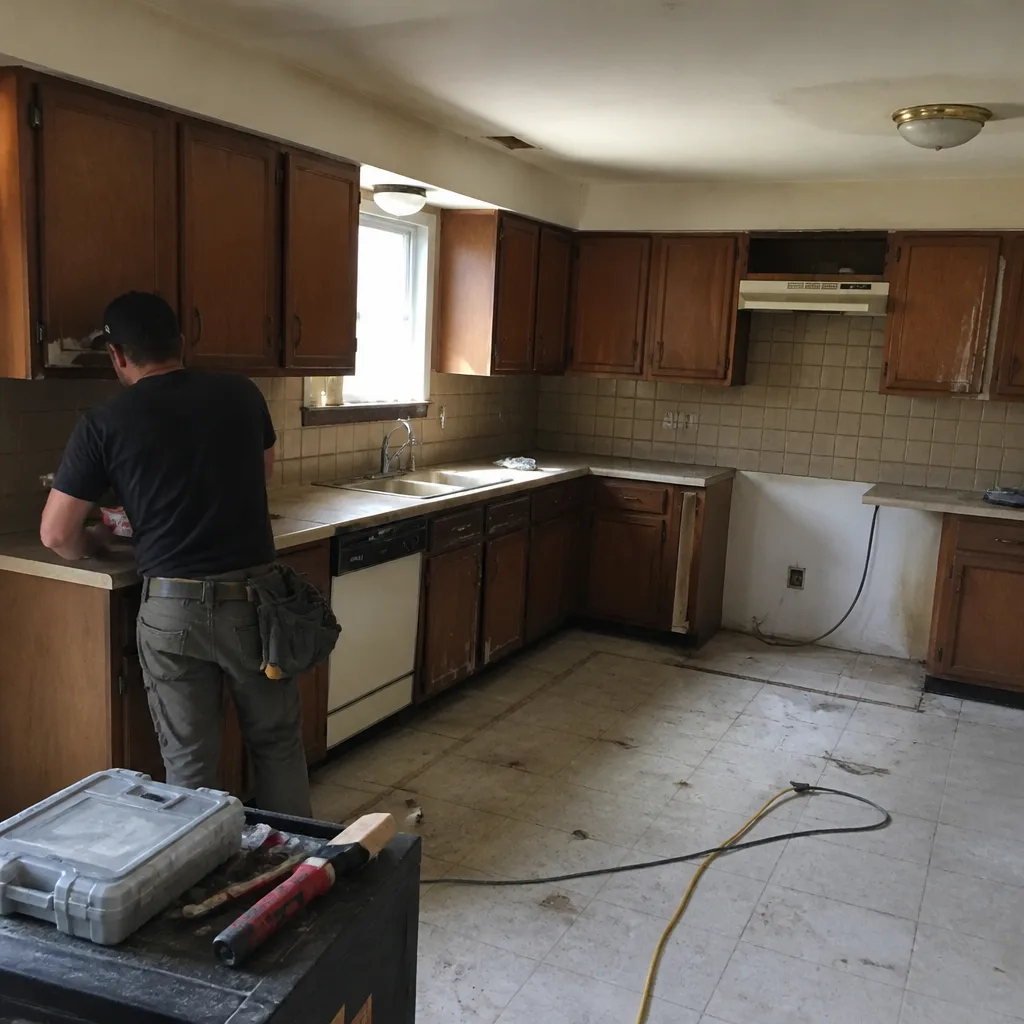 Before
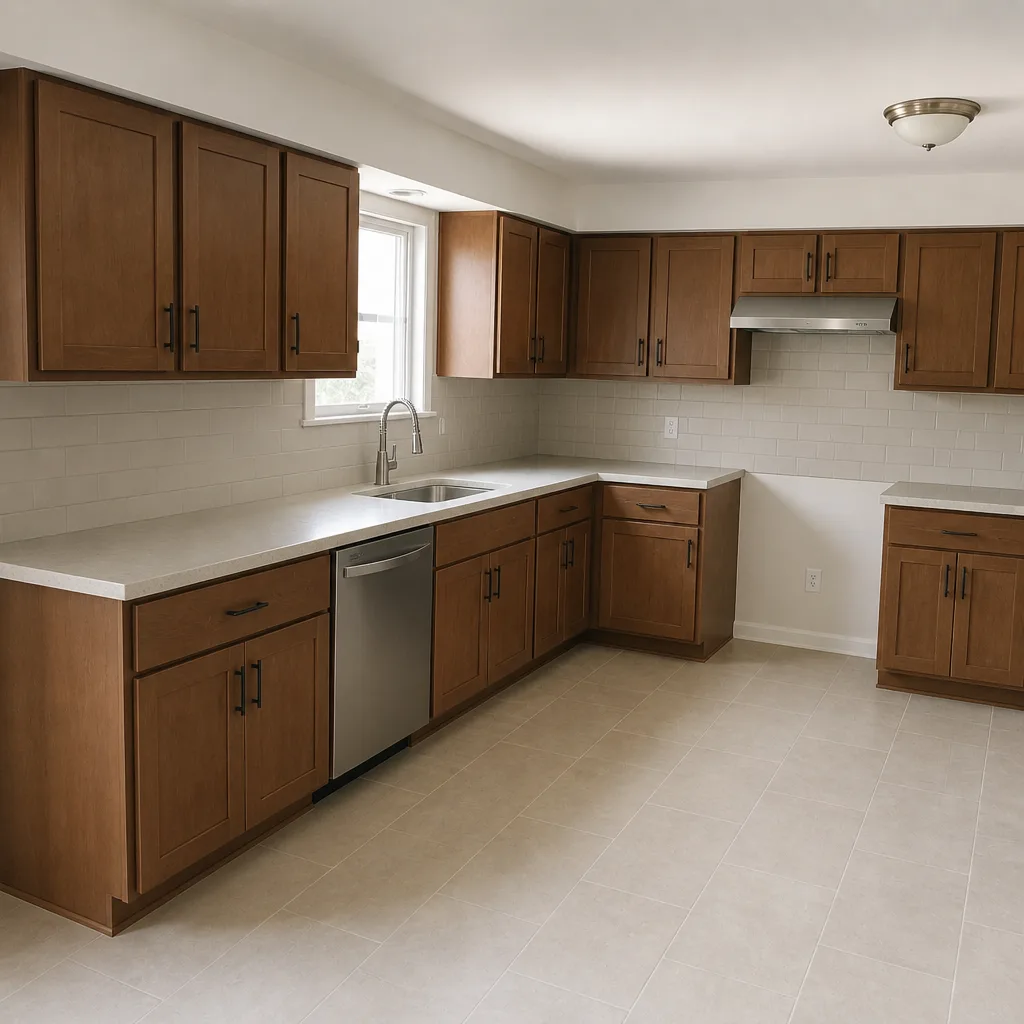 After
When to Call a Professional
Some conditions deserve a second set of eyes before you sign anything or after the crew has already packed up. Call a licensed professional if you find missing moisture barrier inside a wall, delaminating stucco scratching, ponding water on a slab after the finish, or any crack that has grown more than 1/8 inch in a season. Call us if a permit delay has run more than 30 days without a plan check status you can see. Call if the faces on your job keep changing, if an invoice doesn’t match the schedule of values, or if you suspect the crew is pouring concrete without slump records. And call before you pay a disputed draw – the sooner a real inspection happens, the smaller the repair. Rowan Construction Group Enterprise offers free estimates in Enterprise, including a line-by-line review of any written bid you already have – call (833) 630-4077 and we’ll look at the documents with you.
Frequently Asked Questions

The most common are stucco delamination from scratch coats mixed too wet for desert heat, slab ponding from wetter-than-spec concrete, and unsealed penetrations where plumbing and electrical meet the wall. Enterprise sits in the Las Vegas Valley, where 100°F+ summers and spring winds accelerate any mix or cure problem the crew skipped. Every one of these is cheaper to correct during rough-in than after finish.
Look up the license number on the Nevada State Contractors Board website. The number should be printed on the contract, the written price, and any change order. If a contractor won’t put the license number on the contract, that’s the single strongest warning sign in this guide – call (833) 630-4077 and we’ll review the paperwork with you.
No. A little bleed water is normal. Pools that don’t drain within a few hours, or that show up because water was added on site, are the ones that matter. Ask for slump test records and 28-day cylinder sample reports for every truck; if the contractor can’t produce them, the compressive strength can’t be verified.
Yes. If the invoice doesn’t match the phase and percentage in the schedule, you can request a corrected invoice and withhold payment until it’s resolved. Put the request in writing the same day. A corrected invoice that maps to the schedule is not an unusual request – it’s the expected process on any project with a written scope.
The Nevada State Contractors Board has a stated investigation process, and timelines vary by case complexity. The complaint is free to file, and the board’s jurisdiction depends on the contractor being licensed. Bring dated photos, measurements, the contract, the schedule of values, and the invoices – the file quality drives the pace of the review.
Yes. Every Rowan Construction Group project is permitted through Clark County as required by the scope, and every job starts with a written flat price, a written scope, and a written warranty before any work begins. No change proceeds without a signed change order. That discipline is why we deliver a written price and a documented photo record on every visit – call (833) 630-4077 for a free estimate and a line-by-line review of any bid.
The Bottom Line
Construction warning signs are readable long before they show up in the finish. The five site conditions – missing moisture barrier, unprotected rebar, untested concrete, unsealed penetrations, absent bracing – are visible during framing. Stucco scratch coat and slab ponding are visible during rough-in. The behavioral warnings – permit delays blamed on the county, mid-job subcontractor swaps, invoices that don’t match the schedule of values – are visible on paper. Document all three with wide shots, close-ups, measurements, and timestamps, and the Nevada State Contractors Board will take a complaint seriously if it comes to that. For any Enterprise project – whether it’s a Fence Installation in Enterprise, an Home Additions & ADU in Enterprise, or a Driveway & Pavers in Enterprise pour – the goal is the same: get the written price, read the site, and document what you find. Start with our Rowan Construction Group Enterprise home page or call (833) 630-4077 for a free estimate on Enterprise work and a line-by-line second opinion on any written bid you already have in hand.
Written by the team at Rowan Construction Group Enterprise.