Last updated November 18, 2026







Free written scope consultation - allowances, timeline, and change-order rules on paper before a single trade is scheduled
DIY vs Professional Bathroom Remodeling: What’s Safe to Do Yourself
Tile your own shower floor and you’ve broken no law. Move a drain two inches without a plumbing permit and you’ve created a problem that surfaces years later, usually at the worst possible moment: the buyer’s inspection, when a Clark County appraiser flags an unpermitted rough-in and the fix comes out of your pocket. That’s the real dividing line in bathroom remodeling, and it has almost nothing to do with how handy you are. It’s about which tasks cross the licensed-trade boundary that governs permit validity and insurance coverage. This guide draws that line task by task, with the dollar math on when DIY labor savings evaporate, so you can decide what’s genuinely safe to handle yourself in an Enterprise home and what needs a licensed contractor.
Quick Answer
In Nevada, you can legally demolish, paint, patch drywall, set tile on an existing substrate, install a vanity that connects to existing shutoffs, and hang a mirror or cabinet without a licensed contractor. Anything that touches supply lines, relocates a drain, adds or moves a circuit, or puts electrical equipment inside a wet zone requires a licensed trade and a permit through Clark County. The safe split is cosmetic and surface work on your side; plumbing, electrical, and waterproofing on the licensed side.
Styles & brands we work with
- Kitchen remodeling
- Bathroom remodeling
- Home additions & ADU
- Roofing
- Windows & doors
- Driveway & pavers
- Fence
Table of Contents
- Where the Licensed-Trade Boundary Actually Sits
- Task-by-Task: What Nevada Requires and What It Doesn’t
- What “Rough-In” Means and Why Touching It Changes Everything
- The Dollar Threshold: A Worked Example on a $4,500 Project
- Three DIY Tasks That Look Safe but Aren’t
- How to Structure a Hybrid Project That Protects You
- The Resale Consequence Nobody Talks About
- Common Mistakes to Avoid
- When to Call a Professional
Where the Licensed-Trade Boundary Actually Sits
Nevada doesn’t license “bathroom remodeling” as a category. It licenses trades. A general contractor holds a license that lets them manage a whole project; a plumbing or electrical contractor holds a specialty license for their trade. When you do work on your own primary residence, state law generally lets you act as your own contractor for cosmetic and finish work. What it doesn’t let you do is perform regulated trade work that requires a licensed professional, and it doesn’t exempt you from pulling the permits the county requires.
Here’s the practical map. Work that touches the supply side of your plumbing (the pressurized lines), relocates or adds a drain, or alters the drain-waste-vent system is plumbing work. Work that adds a circuit, moves an outlet, installs a heated floor mat, or places any electrical device inside the wet zone around a tub or shower is electrical work. Both require a licensed trade and a permit. On the other side of the line: demolition, drywall, painting, cabinet installation, tile set over sound substrate, trim, and fixture swaps that reuse existing connections.
In our experience across Enterprise and the surrounding valley, most homeowners who get into trouble didn’t set out to break a rule. They watched a video where a drain got relocated, didn’t realize that step crossed a legal line in Nevada, and assumed the finished tile made it fine. The tile doesn’t make it fine. The permit does.
Task-by-Task: What Nevada Requires and What It Doesn’t
This is the table to screenshot before you pick up a tool. It reflects how Clark County handles residential bathroom permits in Enterprise and the broader Las Vegas valley; the county building department is the authority, and requirements can shift, so confirm specifics when you pull your permit.
- Demolition and haul-away: No license, no permit. Safe to DIY. Wear respiratory protection if you’re tearing out older materials.
- Painting, drywall patching, trim: No license, no permit. Safe to DIY.
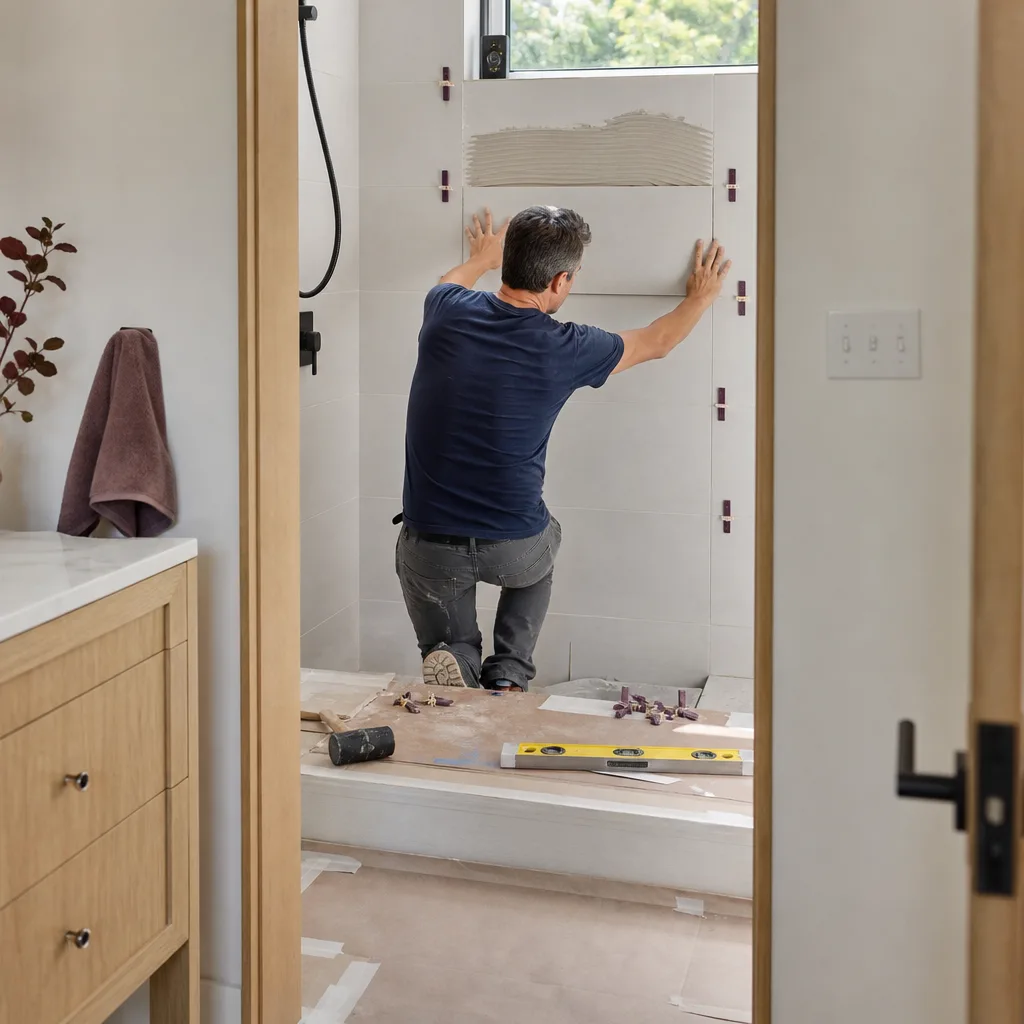
- Tile set over existing sound substrate: No license, no permit. Safe to DIY, but only if the waterproofing beneath is intact. See the hidden-risk section.
- Vanity swap onto existing shutoffs: No license required if you’re reusing the existing supply and drain locations. Safe to DIY with care.
- Fixture swap (faucet, showerhead, toilet): No license required when you’re replacing a fixture at the same connection point. Safe to DIY.
- Supply line changes or new supply runs: Requires a licensed plumber and a permit. Not DIY.
- Drain relocation or new drain: Requires a licensed plumber and a permit. Not DIY. This is the big one.
- Electrical within the wet zone: Requires a licensed electrician and a permit. Not DIY.
- New circuit, outlet, or heated floor: Requires a licensed electrician and a permit. Not DIY.
- Shower pan and waterproofing membrane: No license strictly required, but this is where DIY failures do the most damage. High-risk DIY.
Read that list once more with the resale consequence in mind. The “no license, no permit” rows are genuinely yours to take. The others aren’t, no matter how confident you are.
What “Rough-In” Means and Why Touching It Changes Everything
Rough-in is the stage of a project where the plumbing and electrical infrastructure goes in before the walls close up: the pipes behind the wall, the drain under the floor, the wiring run to the boxes. Rough-in is inspected before drywall, because once the wall is closed, the inspector can’t see the connections. That’s the whole reason rough-in inspections exist.
Here’s the counterintuitive part. Replacing a fixture at the same connection point doesn’t change the project’s permit category. Moving the connection even slightly does. Swap a toilet in the same spot and you’ve done a fixture replacement. Shift the flange or move the drain a couple of inches for a different toilet layout and you’ve done a plumbing alteration, which requires a permit and a licensed plumber, and which reopens the rough-in inspection. The physical distance is trivial. The legal distance is not.
In Enterprise, we’ve walked into plenty of bathrooms where a vanity had been “just swapped” and the drain had quietly moved six inches to make it work. The tile and the vanity looked fine. The problem was invisible until someone pulled the permit to sell the house. When you’re planning a bathroom that involves anything beyond a fixture swap, it’s worth thinking about the whole project early. A written scope from a contractor, whether for the full bathroom or a larger addition, keeps the permit picture clear. If your plans extend past the bathroom, our Home Additions & ADU in Enterprise page covers how we handle permits from the ground up.
The Dollar Threshold: A Worked Example on a $4,500 Project
DIY labor savings are real on cosmetic projects and they evaporate fast once permits, failed inspections, or redo costs enter the picture. Here’s the math on a typical small bathroom project: a tile floor and a new vanity with top, $4,500 total if a licensed crew does the whole thing.
- Fully DIY cosmetic version: You rip out the old floor, set new tile, and swap the vanity onto existing shutoffs. Materials run about $2,200 to $2,800 with mid-grade porcelain tile and a mid-range vanity. Your labor is free. You save roughly $1,700 to $2,300 over the contracted price, and no permits are involved.
- DIY with a drain relocation: You decide the new vanity needs the drain moved four inches. That’s a plumbing permit and a licensed plumber. In the valley that permit and plumber typically add $400 to $800, and now you’ve also got a rough-in inspection to pass. Your tile work depends on their rough-in being correct first, so the schedule gets more complex.
- DIY gone wrong: The drain relocation gets done without a permit, or the shower waterproofing that you didn’t realize was compromised starts leaking. Now you’re paying for tile demolition, new waterproofing, plumber time to undo and redo the work, and the permit you should have pulled. That redo routinely runs $2,000 to $4,500 on a project this size.
Look at where the numbers land. The break-even point on a $4,500 cosmetic project is simple: if the DIY version saves you $2,000 with no permits and no redo, it’s a good trade. Add a single permit, a failed inspection, or a redo and the savings are gone or negative. That’s the threshold. DIY pays when it stays inside the cosmetic boundary. It stops paying the moment you cross it.
Three DIY Tasks That Look Safe but Aren’t
Some tasks pass the “looks simple” test and fail the “is this actually safe” test. In a bathroom, the environment is the problem: constant moisture, tight electrical zones, and surfaces that hide what’s beneath them.
Installing a vanity light near a GFCI zone. A vanity light looks like a fixture swap. But bathroom electrical sits within zones that require ground-fault circuit interrupter protection, and once you’re inside that zone, the rules about what can be installed and how it’s bonded tighten. Hanging a light where there wasn’t one means new wiring, a permit, and a licensed electrician. This isn’t paperwork theater; a wet-zone electrical fault is a genuine shock hazard.
Applying liquid waterproofing over an existing membrane. A liquid membrane painted over an old one looks like a cheap fix. It usually isn’t. Membranes bond to prepared substrates, and an old layer that’s failing doesn’t give the new one anything to grip. The result is a waterproofing layer that looks sealed and isn’t, and the failure shows up as moisture in the substrate months later. Waterproofing is the one part of a tile shower where DIY shortcuts have the highest cost of failure.
Re-caulking over failing grout without removing the substrate. Caulk over failing grout traps moisture behind it rather than sealing it out. The grout has already failed; the caulk just hides the evidence. The right move is to remove the compromised material and address why it failed, which often means looking at movement or moisture behind the tile. In our experience in Enterprise, the bathrooms with the most hidden damage are the ones where a cosmetic patch was applied over a problem no one investigated.
If a task involves water, wiring, or waterproofing and you’re not licensed for the trade, the safe answer is a licensed professional. Our Rowan Construction Group Enterprise home page lays out how we handle the trades a bathroom touches.
How to Structure a Hybrid Project That Protects You
The hybrid project is the best of both worlds when it’s structured right. You do demolition and painting, which saves real labor dollars. A licensed crew handles plumbing, electrical, and waterproofing, the tasks that need the license and the inspection. That split works when both sides agree on scope in writing before anybody starts.
Here’s how we structure it, and how you should think about it regardless of who you hire:
- Write the split down. Who does what, in detail: demolition including haul-away, drywall and substrate prep, plumbing rough-in, electrical rough-in, waterproofing, tile, vanity install, finishes, and painting. If it isn’t in the written scope, it’s a gap someone will fill at extra cost.
- Sequence the licensed work. Plumbing and electrical rough-in must be inspected before the walls close. That means the licensed work is scheduled around the inspection, and your demolition and substrate prep finish before the trade work starts.
- Put the price in writing. For the licensed portion, get a flat written price with a written scope. For the parts you’re doing yourself, know your own material costs before you commit to the project budget.
- Handle changes with a signed change order. When a project is split, changes are where scope creep lives. Under Clause 1 of the Haven Standard, no work proceeds on a change until the change order is signed. That protects you from a bill you didn’t agree to and protects the contractor from doing work no one wrote down.
- Photo-record the work. Documented photos of the rough-in before it’s covered are worth keeping. We provide a documented photo record on every visit as standard, and in a split project those photos are your proof of what’s behind the wall.
The hybrid structure works because it puts the right work with the right hands. You handle what’s safe to handle; a licensed crew handles what isn’t.
The Resale Consequence Nobody Talks About
An unpermitted improvement can become a liability at resale. When a buyer’s inspection flags work that wasn’t permitted, the seller is often asked to fix it before the transaction closes, and the fix on finished work means opening it up. That’s the scenario where the unpermitted drain relocation from earlier in this guide comes due: at the seller’s expense, during the most time-sensitive transaction of their life.
This is why the licensed-trade boundary matters beyond quality. It’s not just about whether the work was done well. It’s about whether the record exists. Permits and inspections create a paper trail a future buyer, appraiser, and lender can verify. Unpermitted trade work leaves no record, and the absence of a record is what turns into a problem. If you’re planning a larger project that touches structure or major systems, the same logic applies to additions, roofing, and site work. Our Fence Installation in Enterprise and Driveway & Pavers in Enterprise pages cover the exterior side, where brands like Techo-Bloc and Cambridge Pavers come into play and where permits matter just as much.
Common Mistakes to Avoid
- Assuming “I’m doing it myself” exempts you from permits. It generally doesn’t for regulated trade work in Nevada. The permit follows the work, not the worker.
- Relocating a drain “just a few inches” without a plumber. A tiny move reopens the rough-in inspection. This is the highest-cost mistake on the list.
- Waterproofing over old waterproofing. A failing membrane under a new layer is invisible until it leaks. Remove the old layer and fix the substrate first.
- Caulking over failing grout in an Enterprise bathroom. It traps moisture instead of sealing it. The moisture stays behind the wall, where it does damage.
- Hanging a new light without checking the GFCI zone. A vanity light inside the wet zone is electrical work, which needs a licensed electrician and a permit.
- Doing a hybrid project without a written split of scope. When the work is divided and nothing is written down, the gaps become arguments. Signed scopes and signed change orders prevent that.
- Skipping the photo record. Photos of the rough-in before it’s covered are cheap insurance. We include them on every visit as standard, and so should anyone you hire.
When to Call a Professional
Call a professional the moment your project touches a supply line, a drain, a circuit, or a wet-zone electrical device. Call when you’re replacing a shower pan or waterproofing membrane and the existing materials are failing, because the failure underneath is what costs the most to fix. Call when you’re planning a project with multiple trades, because sequencing licensed work around inspections is where DIY hybrids go wrong. Call when you want the price in writing before anyone starts, and you want the record that comes with a permit and an inspection.
Rowan Construction Group Enterprise offers free estimates in Enterprise, with a written price and written scope before any work starts. Call (833) 630-4077 to schedule yours. If you already have a competitor’s estimate, we’ll review it line by line at no charge as a second opinion. Our technicians have up to 19 years of experience, and every crew is background-checked and uniformed, with a live person answering calls 24/7.
See the difference
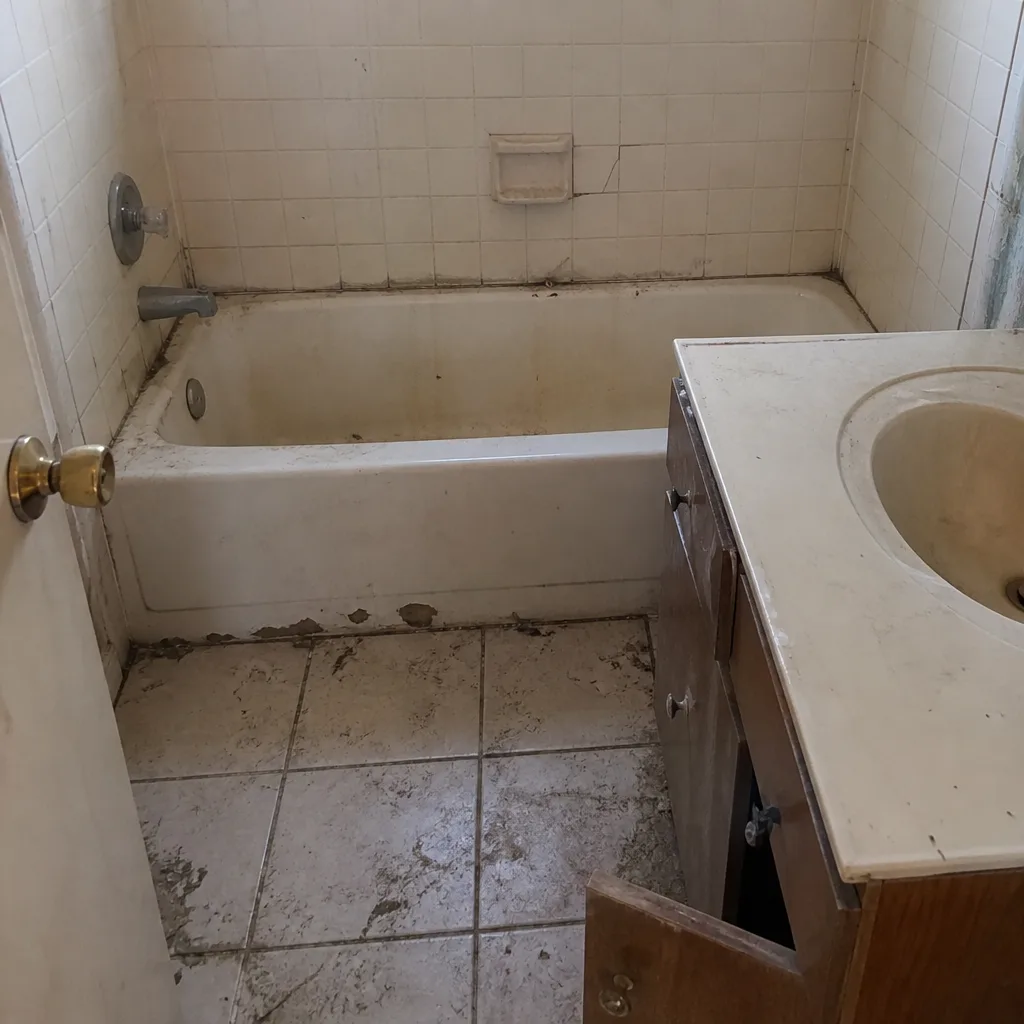 Before
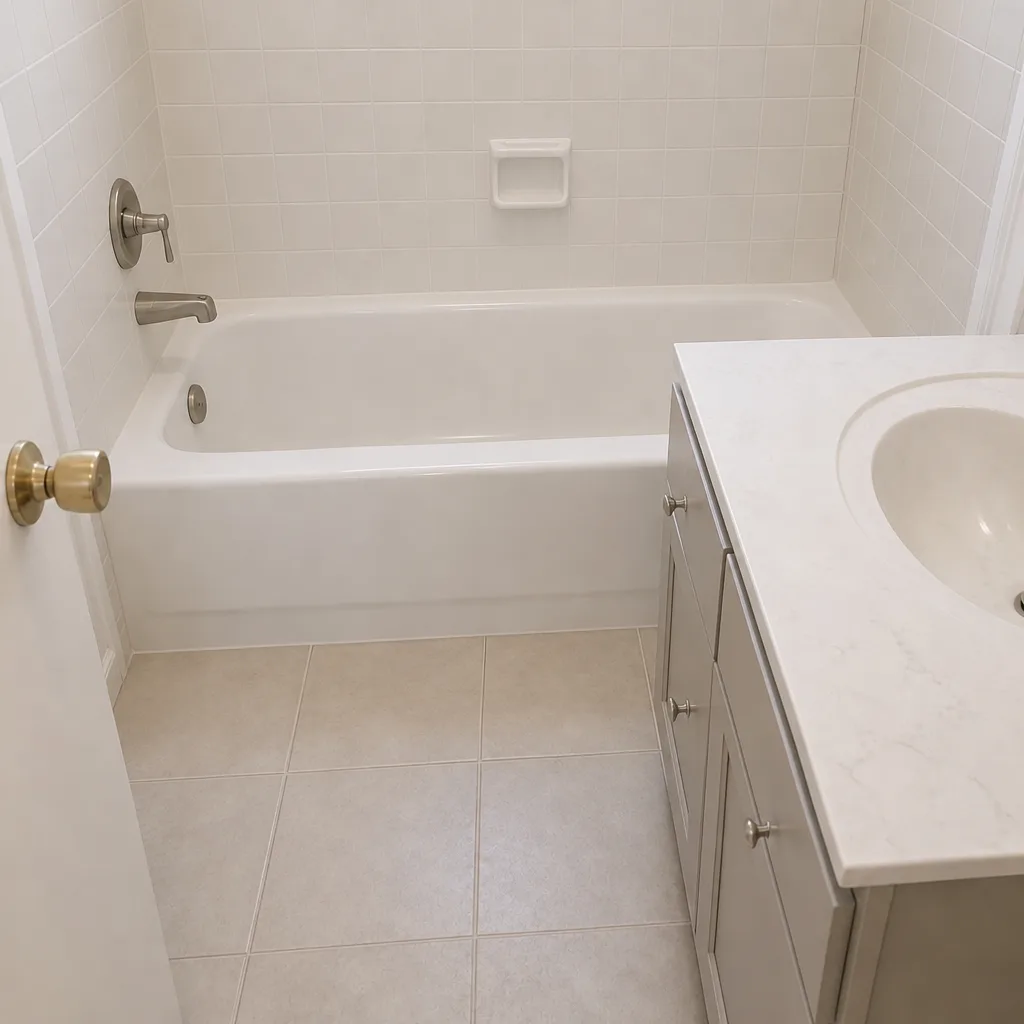 After
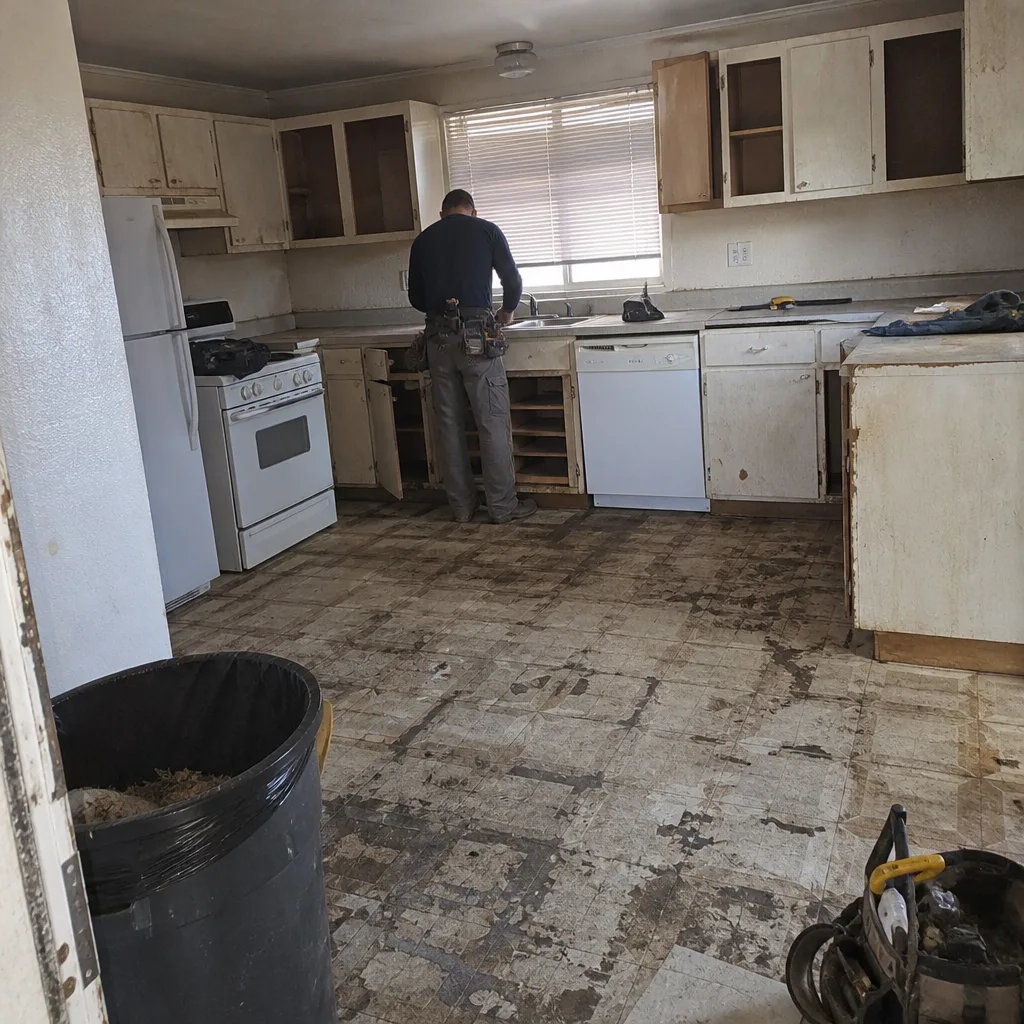 Before
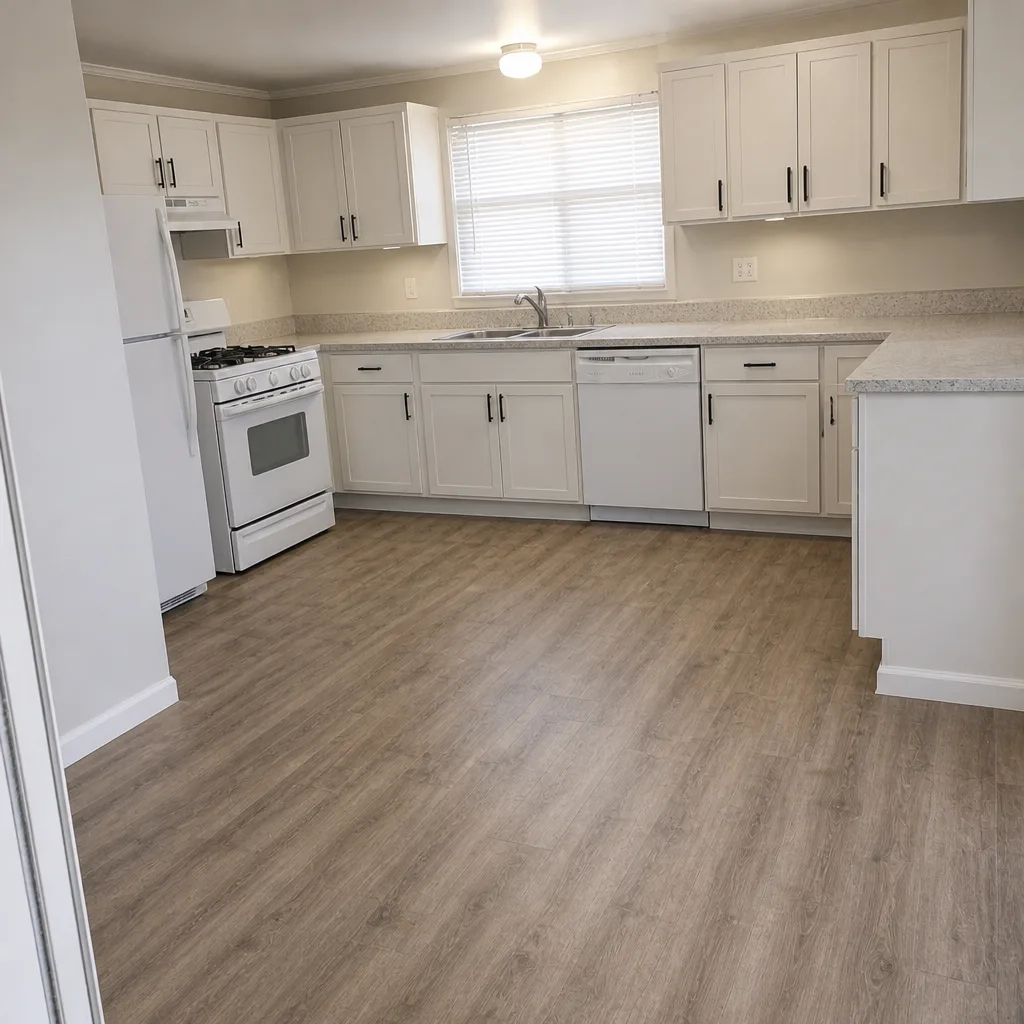 After
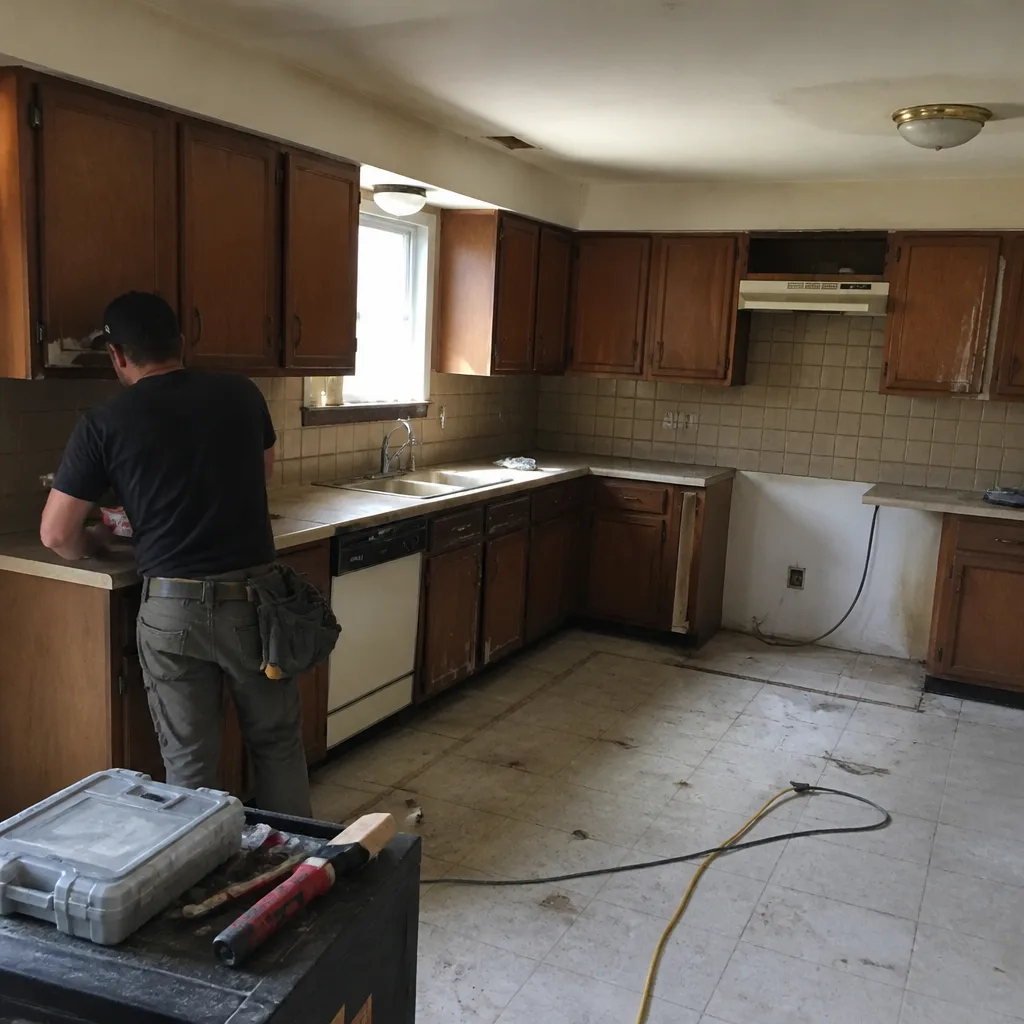 Before
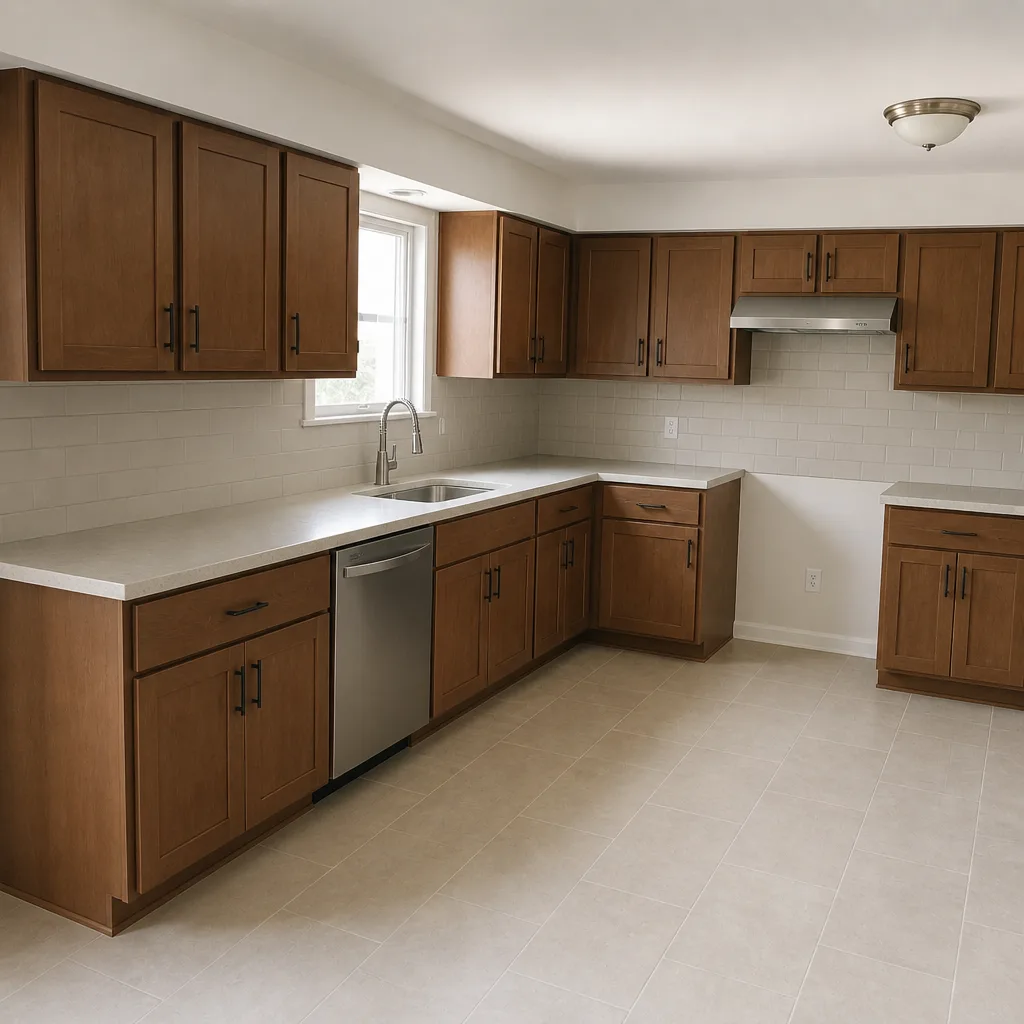 After
Frequently Asked Questions
You can legally do cosmetic and finish work on your own primary residence without a contractor license, including demolition, drywall, painting, tile over sound substrate, and fixture swaps at existing connections. You cannot legally do regulated trade work like plumbing relocation or wet-zone electrical yourself; those require a licensed trade and a Clark County permit. When in doubt, confirm with the county building department before you start.
A plumbing permit plus a licensed plumber to relocate a bathroom drain typically adds $400 to $800 in the Enterprise and Las Vegas valley market on a small project. That number covers the permit and rough-in work on a simple relocation; complex relocations that affect the drain-waste-vent system run higher. Call (833) 630-4077 for an exact quote; estimates are free.
It shouldn’t. Our flat written price and written scope are agreed before work begins, and under Clause 1 of the Haven Standard, no work proceeds on a change until the change order is signed. That discipline is why our projects finish within a few percent of the agreed cost. If a contractor’s price isn’t written, it’s not a price.
Yes. A licensed contractor pulls the permits for the trade work it performs, and the rough-in inspections happen before the walls close. Unpermitted trade work is what turns a finished bathroom into a liability at resale, which is exactly why the permit and the inspection matter more than the tile. Call (833) 630-4077 to talk through what your project requires.
A hybrid bathroom project commonly runs three to five weeks depending on tile, fixtures, and inspection scheduling. Your demolition and painting shorten the schedule, but plumbing and electrical rough-in inspections set the critical path, so they can’t be compressed. Call (833) 630-4077 and we’ll give you a realistic timeline in writing.
No. Caulking over failing grout traps moisture behind it instead of sealing it out, and the moisture often causes damage to the substrate. The grout has already failed, so the right fix is removing the compromised material and finding out why it failed. A licensed contractor can assess the underlying cause before a cosmetic patch gets applied.
The Bottom Line
The DIY-versus-hire question in bathroom remodeling comes down to one test: does the task touch a supply line, a drain, a circuit, or wet-zone electrical? If not, it’s genuinely yours to take, and the labor savings are real. If it does, it needs a licensed trade and a Clark County permit, and the savings from doing it yourself are erased by a single permit, failed inspection, or redo. The $4,500 worked example makes the threshold concrete: cosmetic DIY can save you $2,000, but crossing the line can cost more than the whole job. Get the boundary right, and the rest follows. For a free estimate from Rowan Construction Group Enterprise in Enterprise, call (833) 630-4077.
Written by the team at Rowan Construction Group Enterprise.